Has Contemporary Environmentalism Failed the Environment?

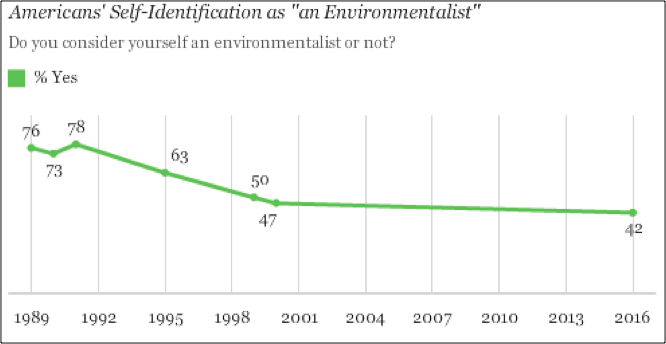
It would be hard to imagine a time when nearly four out of every five Americans would declare themselves to be environmentalists. And it would be even harder to fathom that same figure applied to both Democrats and Republicans. Yet this was the case less than three decades ago.
Medium 042816 Graph

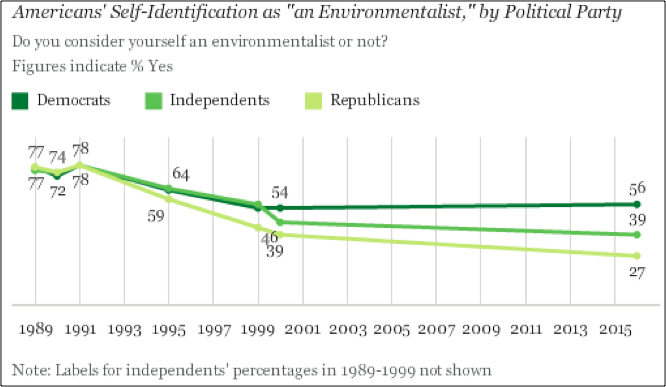
A recent Gallup poll found 42 percent of Americans would identify themselves as environmentalists today, down from 78 percent in 1991. Additionally, when broken down by party affiliation, only 27 percent of Republicans consider themselves environmentalists versus 56 percent of Democrats. Compare that to 1991 when Americans of both parties shared the same high percentage of 78 percent.
Medium 042816 Graph 2

So what’s changed in the last 25 years? Some of the general decline can be attributed to the tangibility of environmental problems. In the late 1980s and early 1990s, combatting important problems — like the deterioration of the ozone layer and cross-regional air pollution leading to acid rain — mobilized national and international support for solutions because people could see the environmental damage happening right in front of their eyes. Under Republican administrations, policymakers from both parties worked together to ratify the Montreal Protocol and pass amendments to the Clean Air Act. The reality of today’s marquee environmental issue, climate change, is that most Americans do not see its negative effects on a daily basis.

There’s also an inverse relationship between Americans’ concerns about the economy and concerns about basically everything else. In times of prosperity, Americans feel the freedom to worry about a variety of issues. Yet when the country enters a period of economic uncertainty and discontent, many other issues fall away.

Yet those reasons don’t explain the growing party gap in identifying with environmentalism. It may be fair to fault a variety of stakeholders on all sides. But one can’t ignore that there has been a major evolution where environmentalism has become ideological rather than rational.

The result is the environmental movement being perceived as just another special interest. A number of organizations leading the charge on environmental issues have transformed into partisan political machines as opposed to being issue-based, results-oriented advocates. These groups seem to take greater pleasure — and raise more money — out of simply attacking their opponents instead of seeking actual solutions.

Regardless of your stance on the science of climate change, it is undeniable that many environmental groups who claim to be advocate for a solution on this issue have ceased to persuade the public and instead have engaged in the politics of shame against those who disagree with them. This trend within environmentalism is vividly illustrated in the New York State Attorney General’s investigation into Exxon for allegedly misleading to the public regarding the risks of climate change. While many environmental groups have touted this investigation, few point out the simple fact that it achieves nothing in the effort to curb greenhouse gas emissions while offending those who believe such political speech is Constitutionally protected.

This is how contemporary environmentalism is failing the environment. Gallup argues, “While dwindling identification of the public as environmentalists may not be a welcome development for supporters of the environmental movement, it may not reflect a substantial weakening of the movement and its ability to achieve its objectives.” Yet it’s actually their objectives that have changed. Many environmental groups have shifted from promoting solutions to simply serving as political vehicles to admonish those they perceive to be their enemies. What would better serve our environment and our climate would be laying the groundwork for a bipartisan path to generate thoughtful consensus on policy.

Make no mistake: there is space for bipartisan compromise on these issues. Look no further than the recent bipartisan work on energy reform legislation backing clean energy sources like nuclear and hydropower. And there’s the recent creation the bipartisan House Climate Solutions Caucus, aiming to find solutions a broad spectrum of Americans can get behind to confront global warming. The question at hand is whether contemporary environmentalism once again can be inclusive and solutions-oriented.

I’ve been involved in partisan politics and I’ve had experience in energy and environmental policymaking debates. From that experience, I’ve learned partisan politics itself isn’t the culprit; it plays a very important role in our democracy. From my observations, if those who truly strive for smart clean energy policy want Americans to stop thinking of environmentalism as a four-letter word, they should be wary of anyone who uses environmentalism as a veil for their own political agenda.
Big Data vs. Big Personalities: Environmentalists Failing the Grade

Here’s What You Need to Know

This past week, Gallup released a poll that found 42% of Americans would consider themselves to be environmentalists, whereas the same poll in 1991 garnered 78% of Americans polled.

In a new Medium post, Delve Executive Vice President Matt Moon explains the shift:

  • Party Gap: Today, only 27% of Republicans consider themselves environmentalists versus 56% of Democrats. In 1991, Americans of both parties shared the same high percentage of 78%.
  • What’s Changed? Twenty-five years ago, the deterioration of the ozone layer and cross-regional air pollution leading to acid rain were problems Americans could see with their own eyes. Today, climate change has very few short term tangible features and rising levels of economic uncertainty and discontent limit Americans’ concern for non-economic policy issues. But, these factors only provide a limited explanation.
  • Have Environmentalists Failed The Environment? The environmental movement has become ideological rather than rational, leading to environmentalism being seen as just another special interest. Many major environmental groups are now partisan political operations as opposed to results-oriented advocates. They seek to attack opponents instead of search for solutions to the problems facing our environment today.
  • Room for Reform: There is space for bipartisanship on today’s environmental issues, as seen in the recent bipartisan work on energy reform legislation backing clean energy sources like nuclear and hydropower, and the recent creation of the bipartisan House Climate Solutions Caucus seeking solutions that a broad spectrum of Americans can support to confront global warming.

Gallup’s figures leave a grim prognosis for contemporary environmentalism, but more disturbing still is the impact that prognosis will have on honest attempts to address environmental challenges. The question at hand is whether contemporary environmentalism once again can be inclusive and solutions-oriented.

News You Can Use

WORDS MATTER
Speaking in London last week, President Obama urged British voters to remain in the European Union, but he may have done more harm than good. During the press conference, Obama used the British English word “queue” in place of the American English “line.” The seemingly minor choice of phrase raised eyebrows. The Washington Post reports: “Some Brits quickly grew suspicious – was Obama pandering to his audience with this Britishism? Or was this a secret sign that someone British had been helping him craft his speech?” Whatever the intentions of Obama’s remarks, they may have missed their intended mark as the pro-Brexit group, Vote Leave,posted a video pulling selected remarks in which the President pointed out the irrelevance of Brexit on the Anglo-American relationship.

EVERYONE’S A LITTLE BIT IMPLICITLY BIASED
At a roundtable discussion on gun violence, Hillary Clinton seemed to catch inspiration from the parody Broadway show Avenue Q’s musical number, “Everyone’s a Little Bit Racist.” While discussing the issue of race, Clinton said “We all have implicit biases,” and that these biases have been part of our “DNA going back probably millennia.” Clinton called on Americans to be more honest and open about their racial biases even as her campaign faces difficult questions surrounding their candidate’s support for 1994 criminal justice reforms that have become controversial in some circles.

SILICON VALLEY’S JUDGMENT DAY
Last week, “Benchmark VC Bill Gurley posted a 5,700-word piece sounding the alarmabout the state of over-funded Silicon Valley companies and the investors who over-funded them.” Peter Kafka of Re/Code explains: “This is the most important part of Gurley’s essay: He sketches out a scenario in which companies that have gotten used to easy money but have yet to build a business that makes money, find that they need to raise more money — and that the easy money is gone.” It remains to be seen if or when judgment day will arrive for Silicon Valley’s overfunded startups and their investors.

BUBBLING DEBATE
The Soda Wars have come to the Democratic Presidential campaign. While campaigning in Philadelphia, Clinton became the first presidential candidate to explicitly endorse a tax on sugary drinks, claiming it both increases government revenue and promotes community health. Sanders, on the other hand, criticized the regressive nature of that tax, arguing it disproportionately hurts low-income and middle class Americans. For those who suggest Bernie never met a tax increase he didn’t like, his supporters now have a retort.

THE LEANING TOWER OF EU DEBT
While most people think of Greek debts, Middle Eastern refugees, and the potential for Brexit as the biggest dangers facing the European economy, the American Enterprise Institute’s Desmond Lachman argues the real danger may be the Italian economy. Italy, the Eurozone’s third largest economy with over $2 trillion in public debt, has seen banking shares decline by 40% so far this year. “At a time that Europe faces the real risk of a Brexit or a Grexit,” Lachman notes, “The last thing that it needs is financial market turbulence in Italy.”

21st CENTURY LOBBYING
Alaska Sen. Lisa Murkowski recently used hyper-targeted Facebook advertising to lobby employees at the Department of the Interior on approval for construction of an 11-mile road connecting two remote Alaskan towns. The advertisement used Facebook’s geotargeting technology and garnered the video over 3,100 views during the one-day ad blitz. While the ad was also seen by Facebook users in a few surrounding buildings, the tactic could provide a radical new way for lobbyists and advocacy groups to force their issues to be seen by the decision makers they seek to influence.

MONEYBALL? NEVER READ IT
After seeing the power of “big data” put to use in the 2008 and 2012 Obama campaigns, traditional candidates like Hillary Clinton and Ted Cruz sought to follow suit, engaging in a political arms race to build the best statistically-driven campaigns of the 2016 cycle. Meanwhile, outsider candidates like Bernie Sanders and Donald Trump have decimated the conventional wisdom of late by running “broader, more emotional appeals to voters rather than trying to slice the electorate into ever-narrowing segments.” The question is, can big data ultimately trump big personalities? That remains to be seen.

Mark Your Calendars

Tuesday, May 3: Indiana Primary
Tuesday, May 10: Nebraska Republican Primary & West Virginia Primaries

Subscribe here to get TL;DR in you inbox each week.

Doha Dancing and Obamacare Opioids

Here’s What You Need to Know

What does Doha have to do with the 2016 elections? A lot more than you think. Earlier this week in Doha, Qatar, the Organization of the Petroleum Exporting Countries (OPEC) and Russia failed to agree to an oil production freeze in an attempt to respond to declining oil prices and overproduction. Negotiations fell apart after Saudi Arabia demanded Iran also cap its oil production.

What happened in Doha won’t stay in Doha and has significant political ramifications here in America:

  • Presidential Campaign Game Changer? Low oil prices mean low prices at the pump for American consumers, thus removing from the 2016 Presidential campaign debate the time-honored political troupe of bemoaning pain at the gas pump. But this pain has been replaced by another challenge. Low oil prices are thanks in part to the fracking revolution that has made America into the Saudi Arabia of natural gas. But that boom has turned to bust as low prices have made it difficult to keep operations afloat, resulting in struggling economies in battleground states like Ohio and Pennsylvania that will have an impact in November.
  • Middle East Instability – With More To Come: With President Obama traveling in Saudi Arabia this week as part of his foreign farewell tour, the failed Doha negotiations have the potential to define his Middle East legacy as one of complete failure. As Ian Bremmer of the Eurasia Group explains, “Geopolitically, the impact of low oil prices is concentrated in the Middle East, where political structures are brittle and based on oil wealth-supported patronage.” Low oil prices increase the potential for chaos in a region already steeped in turmoil. And the next leader of the free world will have to construct a foreign policy within these conditions in order to address the region’s instability.
  • Wild Markets, Wildcard Voters: The fallout from this failure has led to increasedvolatility in an already unstable oil market. Crude oil futures fell internationally as traders were caught off-guard by the meeting’s failure. In a recent interview, oil analyst John Kilduff at Again Capital, claimed oil could fall to $20 a barrel before rebalancing. Geopolitical unpredictability has a multiplier effect on economic unpredictability. And economic unpredictability that has fed much of the discontent we have seen from voters this primary season will only get larger.

What seems like just another failed negotiation among rival oil producers is a game changer for this November and beyond.

News You Can Use

TAXPAYER-SUBSIDIZED POLITICO REPORTERS?
A new document released from California’s Office of Business and Economic Growth reveals Politico is set to receive a $205,000 tax credit from the state for opening a Sacramento bureau. The Daily Caller reports: “According to the document, in 2017 the number of employees in the bureau must be 34 and the minimum salary would be $50K. By 2020 the employee head count rises to 41.” There has been a longstanding debate on whether state and local governments should engage in job creation tax incentives, and it appears that the stakeholders now include journalists.  

OBAMACARE INCENTIVIZING OPIOID USE?
A new Obamacare initiative aimed at rewarding quality of care may in fact be fueling America’s opioid epidemic. The patient satisfaction survey used to determine the reward payments to hospitals asks patients multiple questions regarding the hospital’s attention to their pain management. Yet, a 2012 study found that more satisfied patients spend more on prescription drugs and have higher mortality rates, and a 2014 study found that “over 48% of doctors reported prescribing inappropriate narcotic pain medication because of patient-satisfaction questions.” It’s yet another example of how increased government involvement in healthcare can lead to unintended consequences.

THE INTERNET NEVER FORGETS
Last week UC-Davis reportedly spent $175,000 in an attempt to remove from the Internet a 2011 photo of a campus police-officer pepper spraying peaceful student protesters on its campus. The Sacramento Bee reported that “the payments, made to two separate firms—a company called Nevins & Associates and a second called IDMLOCO—were meant to polish the school’s damaged reputation.” UC-Davis soon learned a lesson efficiently explained by Esquire’s Luke O’Neil “On the Internet, any cover-up is just another opportunity to remind everyone that the crime happened in the first place.”

FACEBOOK BUBBLES
Megan McArdle of Bloomberg View writes “Even as Americans talk more and more about diversity, they are increasingly dividing themselves into like-minded bubbles where other people, with other experiences and viewpoints, almost never penetrate.”Social media amplifies this problem, as sites like Facebook tailor our newsfeeds based on our “likes” – showing us more content that we agree with than content that we don’t agree with. McArdle argues this phenomenon is influencing the 2016 presidential race as voters appear less interested in the broader political landscape and “people are not even aware that there is another side that doesn’t share their thinking.” This phenomenon may help explain the increasingly unpredictable electorate that has shocked the political elites of both parties.

BIPARTISAN OPPOSITION TO LEW RULES
Politico featured a letter from “a group of bipartisan high-ranking Treasury officials from six presidential administrations” sent to Treasury Secretary Lew on Tax Day, encouraging him to reconsider his recent decision to curb inversions through increased regulatory measures. They argued, “Current rules regarding corporate inversions don’t need revision. Instead, we urge you to focus your attention on addressing the competitive disadvantages that harm capital investment, employment, and economic growth in the United States.” These former senior economic, tax, and financial policy experts said the only solution to the problem would be comprehensive tax reform that would “level the playing field with international competitors.”

FREE TRADE’S “LOSERS” ARE WINNING
Historically the U.S. has favored free trade policies, but 2016 has proven to be a paradigm-shifting year as presidential candidates from both parties have opposed President Obama’s Trans-Pacific Partnership (TPP). Irwin Stelzer of The Weekly Standard writes, “Voters are convinced free trade is inimical to their interests, and even if it were a good thing our trading partners don’t play fair.” What has changed is a perception of the “balance of winners and losers” in these agreements. Yes, free trade results in lower priced goods for consumers. But, what voters focus on are the layoffs of blue-collar workers whose industries have shifted overseas. If a campaign hopes to revive the popularity of free trade, they will need a new message that addresses voters’ concerns rather than wonky explanations.

QUANTUM LEAPING TRUDEAU
The collective media horde hailed Canadian Prime Minister Justin Trudeau’s seemingly spontaneous explanation of quantum computing this past week. But the reality is far from the fawning media reports. After spending the morning touring Perimeter Institute for Theoretical Physics, Trudeau had encouraged reporters to ask him the question and his answer did not stand up to expert scrutiny. It seems the media was so enamored with the fact that Trudeau had an answer that they forgot to actually listen to it.

BREXIT-ICSM
EU Commissioner for Financial Stability Lord Jonathan Hill calls for “for more scepticism in the debate about Europe,” noting, “Thirty years ago it was the Euro-enthusiasts who were the utopians. When people like me asked what the Euro might mean for Britain’s economy, we were told not to worry and that everything would be fine. But today the Outers are the utopians. It is Leave campaigners who give sweeping assurances and try to close down the argument about what might happen after June 23rd if Britain votes to leave. We needed scepticism before and we need it now.”

Mark Your Calendars

Tuesday, April 26: Connecticut, Delaware, Maryland, Pennsylvania, and Rhode Island Primaries
Tuesday, May 3: Indiana Primary

Subscribe here to get TL;DR in you inbox each week.

Inversions, the Car Bubble, and Bernie’s Slackivists

Here’s What You Need to Know

Last week the Obama administration announced plans to curb the practice of American companies shifting their headquarters’ overseas to avoid U.S. taxation, commonly referred to as corporate tax inversions. The decision promptly killed a $160 billion merger between U.S. pharmaceutical giant Pfizer and Ireland-based Allergan, as Pfizer sought to take advantage of the Emerald Isle’s significantly lower corporate tax rate.

  • Business leaders and economic experts have explained tax inversions are not the problem, but rather a negative symptom of the true issue of an “antiquated, outdated tax system” producing the highest corporate tax rate of any OECD nation. They argue government regulators should address the core issues of the taxation leading companies to seek inversions, rather than attack the inversions themselves.
  • Indeed, America has gone from the best corporate tax rate in the industrialized world in the 1980’s to the worst rate in the industrialized world today, even as other countries (most recently Britain) reduce their rates to encourage business investment and growth.
  • Of the remaining presidential candidates, Donald Trump has most readily taken up this argument and put forth strong language in his tax plan, which calls for the corporate tax rate to be decreased from 35 to 15 percent, and will eliminate the need for inversions. His Republican opponent, Ted Cruz has gone so far as topropose eliminating the corporate tax altogether. Nearly all of the Republican field included some reduction in the corporate tax rates in their tax reform and economic growth proposals.
  • On the Democratic side, Bernie Sanders drafted a letter in response to the proposed Pfizer-Allergan merger calling on the U.S. Treasury to impose new tax rules eliminating the incentives to engage in tax inversions. Hillary Clinton alsoproposed an “exit tax” program to crack discourage American corporations from moving abroad.
  • Both political parties seem to agree on the basic premise that corporate tax inversions are bad for American industry, yet Congressional intervention on the issue has stalled as Democrats promote measures to specifically block the inversions, while Republicans demand a more permanent solution to the problem through comprehensive tax reform, which they have organized a task force on as recently as last month.

Despite these latest efforts to decrease the appeal for American companies to move abroad, experts still expect corporate tax inversions to continue  until the federal tax code is completely overhauled to place the U.S. marginal corporate tax at a rate competitive with other economically developed countries.

News You Can Use

SAY WHAT?
A Hillary Clinton campaign donor confirmed the use of a noise machine to prevent reporters from hearing a fundraising speech in Colorado last Thursday. Stan Bush, a reporter for Denver’s CBS-4 tweeted about the machine and posted a video of the noise, writing “campaign dsn’t want reporters to hear fundraiser speech. Turned on a static noise machine pointed at us when she spoke.” The fundraiser took place at the home of Colorado Governor John Hickenlooper, a superdelegate who has endorsed Clinton. This comes after last July, when the Clinton campaign roped off reporters at a parade. Reporters covering the Clinton campaign have repeatedly complained of lack of access to the candidate and information.

PRIMARY CARE EXPERIMENT
On Monday, the Obama Administration announced the new Comprehensive Primary Care Plus program, calling it “the largest-ever initiative to transform primary care in America, an effort to give doctors more flexibility and reward them for producing better results for their patients.” The experimental program will be limited to 20 states and regions chosen by the Administration which will partner with private insurers, expanding its reach beyond government payments. The good news? Nearly everyone agrees that this type of delivery reform is necessary, Democrats and Republicans alike. The bad news? The reforms are complex and it will be difficult to make them work.

HUD-WINKED
The Government Accountability Office has determined two political appointees at the Department of Housing and Urban Development (HUD) may be required to returnsix-months salary after they reportedly refused to allow a civil servant to speak with the House Committee on Oversight. The Committee was investigating an alleged administration deal to avoid a possibly damaging lawsuit by stymying a separate HUD investigation into the potential litigant.

ECONOMIC AMBIGUITY
Economists are now debating whether or not the economy actually grew at all last quarter. The U.S. deficit increased more than expected, to $47.1 billion in February, causing many economists to revise their GDP forecasting. CNBC/Moody’s economists revised their 0.9% growth forecast down to 0.5%. Atlanta Fed’s GDPNow dropped expected expansion to a mere 0.4%. At the same time, a new CNBC report advises caution when looking at GDP numbers, suggesting that based on an analysis of all quarterly reports since 1990, the average margin of error comes in at 1.3 percent.

LIES, DAMN LIES, AND GUN STATISTICS
At a recent New York campaign event Hillary Clinton charged that, “Most of the guns that are used in crimes and violence and killings in New York come from out of state. The state that has the highest per-capita number of those guns that end up committing crime in New York come from Vermont.” With 7,686 guns recovered from New York crime scenes in 2014, it is surprising to think so many would come from a tiny state from Vermont. In fact, The Associated Press notes, only 55 of them came from Vermont. By inserting the term, “per capita,” Clinton makes Vermont’s small size into a statistical disadvantage to misleadingly attack her opponent. She isn’t the first or last politician to skew statistics, but she did provide the latest example of how to sort good oppo from bad oppo.

CAR-MAXED OUT?
While the media has not been shy in covering the massive increase in student loan debt over the last decade, it has failed to bring to light another equally enormous debt crisis: car loans. Edward Niedermeyer, unpacking this phenomenon for The Federalist, reveals that “car loans have grown at roughly the same rate as student loans. Together, loans for cars and education contributed 90 percent of the growth in consumer debt since the end of 2012.” While the student loan crisis is framed by the media as just that – a crisis – the auto loan crisis is often framed as higher auto sales and touted as a portion of economic growth. Even more unnerving, “Auto Asset Backed Securities (ABS), securitized bundles of car loans not unlike the mortgage-backed securities at the heart of the 2008 credit crisis, are the hidden driver of the auto debt boom.”

SLACKTIVISTS FEEL THE BERN
Apparently Bernie Sanders has found a way to transform online “slactivists” into true activists. As Nancy Scola writes for Politico, “Sanders’ organizational success — fueled by free or low-cost, off-the-shelf apps like Hustle and Slack — is the lesser-known counterpart to his campaign’s prowess in raking in campaign cash from hordes of shallow-pocketed donors online … Sanders’ virtual volunteers do campaign work that has traditionally been handled by paid operatives … such as identifying likely voters or turning out people to campaign events. The goal is to till the ground in primary and caucus states so that when Sanders’ paid staffers arrive, they can devote their attention to voters who aren’t yet sold on the 74-year-old democratic socialist.” His digital field organizing may be the key to his unexpectedly vigorous challenge to the Clinton campaign. It remains to be seen if these tactics will prove transferrable to younger, hipper candidates.

Mark Your Calendars

Thursday, April 14: CNN Democratic Presidential Primary Debate
Tuesday, April 19: New York Primary
Tuesday, April 26: Connecticut, Delaware, Maryland, Pennsylvania, and Rhode Island Primaries

Subscribe here to get TL;DR in you inbox each week.

Panama Papers, Saudi Oil, and Brand Backstories

Here’s What You Need to Know

Earlier this week over 2.5 terabytes of data containing 11.5 million documents from the world’s 4th largest offshore law firm, Mossack Fonseca, were leaked by anonymous sources to German newspaper Suddeutsche Zeitung and the International Consortium of Investigative Journalism (ICIJ). The documents revealed staggering hidden wealth of international politicians, leaders, and celebrities. Here are some of the most interesting revelations from and related to the unprecedented data breach:

  • A COLD WELCOME IN ICELAND: Iceland Prime Minister Sigmundur David Gunnlaugsson has stepped down, “an apparent casualty of the Panama Papers leaks,” that revealed his previously undisclosed links to Mossack Fonseca. The leaks triggered mass protests in the capital calling for his resignation.
  • PUTIN’S MONEY TRAIL: CNBC notes “the papers show Putin’s close aides were involved in a $2 billion money trail with offshore firms and banks.” Putin’s spokesperson claimed “western spy agencies were behind an all-out ‘information attack’ against him to destabilize Russia before elections.” Yet, Jake Bernstein of the IJIC said the timing of the “Panama Papers” release and the Russian elections was “perfectly coincidental.”
  • MORE THAN 140 CHARACTERS: “ICIJ says it has found evidence that some 140 leaders and politicians, and potentially hundreds of other individuals, established companies in Panama over the nearly 40 years for which it has obtained records,”The Wall Street Journal reports, mentioning family members of Chinese President Xi Jinping, the Saudi king, Malaysian Prime Minister Najib Razak, and “several former British members of Parliament as well as the deceased father of Prime Minister David Cameron.”
  • WHAT’S CLINTON GOT TO DO WITH IT? As The Daily Caller reports: “A billionaire and a Russia-controlled bank named in the Panama Papers have links to Hillary Clinton through two separate lobbying efforts … Clinton is not implicated in the Panama Papers, which pertain to offshore bank accounts set up by the Panamanian law firm Mossack Fonseca. But the Democratic presidential candidate’s connections to two subjects named in the leaked documents show the vastness and depth of her international relationships.”
  • WHY NO AMERICANS? First, according to Politico, “Tax evasion overall is a far larger problem in developing countries, where norms around paying taxes are weak and rules designed to stop such evasion are ineffective. And when wealthy Americans do want to evade taxes, they turn to Bermuda, or the Cayman Islands, or Singapore. They don’t park their money in Panama.” Politico also reports that “some professors have suggested that Americans may have disguised their accounts at Mossack Fonseca behind another party.” When asked about the lack of Americans in the leak, the editor of German newspaper Süddeutsche Zeitung, one of the leading publications behind the leak mysteriously responded, “Just wait for what is coming next.”

Perhaps the most important revelation of the entire Panama Papers affair is the new reality that private institutions, not just government agencies, must seek to protect themselves from crippling data breaches. Sony and other companies have been victims of hacking and leaks, but the sheer volume of information shared from the private files of Mossack Fonseca rises to a new level that may very well be the new normal for large multi-national corporations protecting sensitive documents and records.

News You Can Use

BYGONE BANK TELLERS
Forget Bernie, it looks like Fintech might break up the banks. A new report from Citibank describes how a shift to mobile banking “means that there will be less need for bank branches, and the people who work inside them.” Citi predicts another 30% in staff reduction over the next ten years, resulting in another 1.8 million job losses. The silver lining? The number of full-time employees in U.S. banks has been decreasing at a much slower rate of 13% over the last ten years, and Citi believes the industry changes will lead to “a rebalancing of staff from transaction-based roles to advisory-based roles.”

A POST-OIL SAUDI ARABIA?
In a strong signal that the era of oil riches may be coming to an end, Deputy Crown Prince Mohammed bin Salman of Saudi Arabia unveiled his vision for a $2 trillion Public Investment Fund designed to diversify Saudi Arabia’s economy. As part of the fund, Saudi will sell about 5% of shares in Aramco’s parent company in an IPO within the next year with the goal to increasingly diversity investments. However, “an International Monetary Fund study in 2014 noted there were ‘many examples of failure’ by countries trying to reduce reliance on energy production and few successes.” So, despite growing the largest fund on earth – bigger than the world’s four largest publicly traded companies combined – the fund’s value may not be enough to reduce Saudi’s reliance on oil and secure their national economy.

TRUMPING THE MEDIA
Writing for Neiman Reports, Juliet Eilperin declares, “campaigning and campaign coverage are being transformed” by “the nanosecond news cycle [that] incentivizes reporters to publish as soon as possible and often to elevate snark over substance.” These effects may help explain new research pointing to the media as the catalyst for the rise of Donald Trump. As Republican pollster Jan van Lohuizen and analytics expert Luke Thompson write, “Trump was getting 50 percent of the exposure when there were more than a dozen candidates – and it has increased since.” Moreover, “a spike in media coverage preceded Trump’s rise in the polls by a full month,” indicating that the media coverage increased before he became the front runner. After all, as CBS President and CEO Les Moonves said, Trump “may not been good for America, but it’s damn good for CBS.”

BRAZILIAN BREITBART
“Good morning patriots…Enough of communism and enough of collectivism!” It seems the US is not the only country rallying behind a political outlier out of anger with the current political system. Rodrigo Constantino, right-wing blogger and libertarian think tank director, is leading a movement of Brazilian citizens frustrated with an economy that shrunk almost 4% last year and a corrupt class of political elites. Constantino draws many of his talking points from the late Tea Party activist and journalist, Andrew Breitbart, raising concerns familiar to many Americans over the size of government, as well as the pervasiveness of its programs. All this while members of six of Brazil’s 20 political parties, including the party of the current president, are being investigated in a wide-ranging bribery scandal that has many in the country calling for the impeachment of incumbent President Dilma Rousseff.

FROM WHITE HOUSE CUTTING ROOM
A video of French President Francois Hollande uploaded by the White House omitted audio of the French President using the phrase “Islamist terrorism” at last week’s bilateral meeting. On Friday evening, The White House claimed “a technical problem was responsible for video uploaded online that dropped audio,” and when they became aware of the error, the replaced the faulty version of the video. Yet, according to MRCTV, “the White House pulled the original, unedited version from WhiteHouse.gov and YouTube and then re-uploaded the video with the words ‘Islamist terrorism’ silenced.” Only after MRCTV drew attention to the omission was the video containing the unedited audio uploaded.

OBAMACARE SWITCHEROO
A new report from Avalere Health found that only 3.2 million of the 9.6 million customers on HealthCare.gov in 2016 chose the same insurance plan they had in 2015. 2.4 million customers switched to a new plan and 4 million customers were new to the market. Avalere notes that some shoppers left the exchange for other sources of coverage such as Medicaid or an employer. Avalere’s Caroline Peterson explained, “These data underscore how turbulent enrollment in the exchange market has been.” Carpenter added that the data highlighted the price sensitivity of exchange consumers, noting, “As premiums change from year to year, consumers shop around for the best deal. This may lower monthly costs, but may disrupt care continuity.”

BRANDS BORROWING BACKSTORIES
“Brands have been borrowing geographies–and the stories that come with them–for decades.” For example, Dos Equis is a German-based Vienna-style lager, Tresemme is manufactured in Saint Louis, not France, and Haagen-Dazs hails from the Bronx. Texas entrepreneur Tom Kartsotis’ latest project, Shinola – a luxury watch brand manufactured in Detroit – is the latest to join this list. Paying homage to the dying craft of American watchmaking and the struggling city of Detroit, “virtually everything about Detroit–the locals, the factory, its workers–would become a prop in service of the Shinola brand,”writes Inc.’s Stacy Perman. Perhaps most audacious, though, was using Detroit’s economic peril as an opportunity to amplify Shinola’s message.”

CAN INNOVATION SAVE OBAMACARE?
“The ACA has set off a Big Bang-size explosion of startups,” writes Jeff Bercovici for Inc. Examples include Honor, an app utilizing uber-like algorithms to facilitate inexpensive and seamless in-home senior care that went from targeting wealthy families looking to keep Baby Boomers in their homes, to supporting hospitals now incentivized by the ACA to lower their readmission rates. Or Aledade, a healthcare IT startup that “gives primary care physicians the digital tools and know-how to form ACOs” under new Obamacare regulations. Venture capitalist Bob Kocher summed up the phenomenon, saying “Anytime you take a sector and apply a whole bunch of regulatory changes and economic incentives to it, it creates enormous opportunities for new entrants to come and take advantage.”

Mark Your Calendars

Saturday, April 9: Wyoming Caucus (D)
Tuesday, April 19: New York Primary
Tuesday, April 26: Connecticut, Delaware, Maryland, Pennsylvania, and Rhode Island Primaries

Subscribe here to get TL;DR in you inbox each week.

March Jobs, the Union Jack, and Obama’s BFFs

Here’s What You Need to Know

The Bureau of Labor Statistics (BLS) will release its monthly jobs report tomorrow bright and early at 8:30am, and predictions suggest the national unemployment rate will remain steady around 4.9% after February’s gain of 242,000 jobs.

But are those the only figures that matter? The BLS definition of being unemployed means one must have made efforts to find employment within the past four weeks. While the unemployment rate will be in all the headlines and talk show chatter, it leaves out those who might want employment but have given up looking.

Here are the top 4 things that matter in the monthly jobs report that you won’t see in the news. (Warning: You may become smarter than most reporters if you keep reading):

  1. Labor Force Participation: The country’s labor force participation rate is probably the most important figure because it helps determine what portion of the overall population is unemployed but not counted in the official unemployment rate. The labor force participation rate shows how unrepresentative the current unemployment rate might be. The recent labor force participation rates have been the lowest since the late 1970’s, which is why the low official employment rates has not been widely celebrated.
  2. Average Hourly Earnings: Looking at average hourly earnings could also help indicate how positive the jobs report really is. If hundreds of thousands of new jobs are created, that’s good. But if average hourly earnings go down, it stands to reason that these new jobs might not be paying well enough for people to make ends meet.
  3. Jobs Gained or Lost by Sector: Take a look at targeted business sectors’ jobs performance to get a sense of how vital industries are doing. For example, review employment figures for oil, gas, and mining interests to see how market conditions and government actions are contributing to the job market in that industry.
  4. The “U-6” Figure: BLS refers to the unemployment rate mentioned above as the “U-3.” The trouble with the “U-3” measure of unemployment, as we mentioned earlier, is that while it ignores a substantial segment of unemployed people, it treats the underemployed as fully employed. As you’ve worked as little as an hour in the past month, the BLS considers you “employed.” There is, however, another figure referred to as the U-6. This measures the unemployed and the underemployed, giving a more complete picture of the state of the American labor force. 

By looking at these figures, you can get a better understanding of what tomorrow’s report really indicates for the U.S. economy, and cut through attempts to spin the figures in order to suggest they’re better or worse than they actually are.

News You Can Use

BUBBLE BUSTER
Do you live in a bubble? A new quiz written by the American Enterprise’s Charles Murray can tell you. Questions about what type of neighborhoods you’ve lived in, your TV viewing habits, whether you’ve held a job that “caused something to hurt at the end of the day,” and how many Evangelical Christians you’ve befriended determine your score. The higher you score, the thinner your bubble.

DO YOU KNOW JACK?
Last week, New Zealanders voted to retain the “Union Jack emblazoned” flag. While some commentators suggested the overwhelming endorsement of the incumbent design was due to the proposed alternative looking more “like a tea towel” than a proud nation’s standard, others saw it as the latest in a long list of Commonwealth referendums that maintained the status quo (e.g., Belfast’s 2012 referendum to unsuccessfully limit the flying of the Union Jack and the failed 2014 Scottish independence vote). The Guardian’s Martin Kettle went so far as to speculate that it is a promising sign for the UK’s Brexit referendum in June.

WHAT YOU DON’T KNOW CAN HURT YOU
Last week, Credit Suisse CEO Tidjane Thiam publicly criticized his own banking division saying, “When I spoke on October 21 I was not aware of the existence of the positions on that scale,” adding that he would have made deeper cuts then if he had known. The comments were made after it became clear the firm’s investment bankers had been concealing risk exposure from senior management in the run-up to an October 2015 strategic revamp. The incident is just another example of the value of knowing what you don’t know.

UBERING IS TOUGHER THAN IT LOOKS
Fortune reports, “In the last few years, the so-called ‘on-demand’ companies that deliver anything from a home cleaning to a ride to tacos have seen an explosion in popularity. However, their ability to make money from their labor-intensive (and expensive) operations is increasingly coming into question.” Other on-demand companies are discovering that Uber’s successful model doesn’t automatically translate into other markets. “Across a variety of on-demand apps,” writes Farhad Manjoo of The New York Times, “prices are rising, service is declining, business models are shifting, and in some cases, companies are closing down.”

THE NEXT LABOR FIGHT
As debate over the labor practices in the new gig economy continues, regulators are beginning to take note of companies who avoid many labor laws by utilizing contract workers rather than fulltime employees. FiscalNote’s Josh Pudnos explains that the push for greater regulation of the gig economy’s labor force is resembling the fight for minimum wage increases. He pointed out, “Efforts in the states are already underway to classify the services performed via the gig economy.” How the fight over this new and growing “flexible workforce” ends will be determined by which side most effectively marshals support among policymakers and the public. What’s clear from Pudnos’ assessment is the fight has already begun.

HILLARY’S TRUMP PLAYBOOK
As Hillary Clinton gears up for a general election battle with Donald Trump, USA Todayreports her team is dusting off the playbook she planned to use against former New York City Mayor Rudy Giuliani in the 2000 U.S. Senate race. Giuliani did not end up running due to a prostate cancer diagnosis, but Clinton aides think her planned approach to dealing with the rough-and-tumble Rudy will work against Trump. Delve CEO Jeff Berkowitz, who previously worked for Mayor Giuliani, told USA Today it was unlikely to work. “Trump is growing the base by being confrontational [while Clinton has yet to energize the Democratic base]. I suspect Trump is going to be immune” from Clinton’s never-tested 2000 playbook.

WHO ARE OBAMA’S BFFs?
Drawing on years of observations and conversations with President Obama, Jeffrey Goldberg of The Atlantic has placed world leaders on a continuum that reflects “the state of their relations with Obama—from actually warm to ice-cold.” The list reveals few major surprises, but highlights the difficulty Obama has had navigating a rapidly shifting world. For example, from the outset of his presidency, Obama cultivated a close relationship with Turkish Prime Minister Recep Tayyip Erdogan, but as the Obama years come to a close, Erdogan barely ranks above Israeli Prime Minister Benjamin Netanyahu, with whom Obama has had a notoriously difficult relationship.

TIME FOR A NEW ERA OF COMPETITION
From across the pond, The Economist declares, “America is meant to be a temple of free enterprise. It isn’t.” The magazine cites economic observers who suggest the U.S. firms’ high profits are evidence of low levels of competition. To increase competition, the magazine suggests, “the first step is to take aim at cosseted incumbents” by better policing mergers and loosening copyright and patent laws. “The second step is to make life easier for startups and small firms” by limiting the expansion of red tape and regulation. Such a prescription would mean disruption for some, but it might “lift Americans’ spirits as well as their economy.” Whether you are an incumbent industry player or an emerging start up, how policymakers answer this challenge will determine your future success.

NETFLIX PULLS BACK THE THROTTLE
It surfaced last week that Netflix has been throttling the quality of its video to AT&T and Verizon wireless customers over the past five years in an attempt to “protect consumers from exceeding mobile data caps.” Tech industry journalist John Shinal highlights the possible hypocrisy of this move, writing, “Given the time frame, however, that means Netflix was throttling video, or slowing its speed, even while it was arguing publicly for new rules that prohibit big Internet providers from doing so.” The debate over net neutrality is far from over but Netflix may have just given telecom giants a new argument for their arsenal.

Mark Your Calendars

Friday, April 1: U.S. March Employment Report released
Tuesday, April 5: Wisconsin Primary
Saturday, April 9: Wyoming Caucus (D)

Subscribe here to get TL;DR in you inbox each week.

FOIA Foibles and Brazilian Bribes

Here’s What You Need to Know

According to recent analysis of government data conducted by the Associated Press: “The Obama administration set a record for the number of times its federal employees have disappointed citizens, journalists and others that despite searching they couldn’t find a single page requested under the Freedom of Information Act.” The study found that in more than one in six cases where a FOIA request is made, government officials claimed no files were available and 77 percent of requests either received censored files or nothing at all.

So does this mean the federal government truly finds nothing at all in every instance? Hardly.

  • A Matter of Diligence: As the Associated Press notes, it’s “impossible to know whether more requests last year involved non-existent files or whether federal workers were searching less than diligently before giving up to consider a case closed.” Vice News investigative reporter Jason Leopold said, “It seems like [the government is] doing the minimal amount of work they need to do.”
  • FOIA Now, Lawsuit Later: When fulfilling FOIA requests, federal employees are required to make a “reasonable search” which leaves much of the process open to interpretation. There are instances where after claiming to find no public records, the federal government will end up finding thousands of pages of documents only after expensive federal lawsuits are filed.
  • Research Skills Lacking: The federal government rarely provides an explanation of how they searched for records when they claim can’t find them. Kel McLanahan, a transparency and national security lawyer in Washington, has said, “They do really crappy searches.”
  • The $$$ Excuse: FOIA requests can be effectively denied when agencies respond by saying that it would be too expensive. In a recent (albeit extreme) example, the Department of Defense told an Oregon software developer their request would require government employees to devote 15 million labor hours and cost at least $660 million.

Why does this matter? Open records requests are how the American public stays informed about the internal workings of their government. Candidates for higher office who have spent the bulk of their careers in government service, likeHillary Clinton and Ted Cruz, can be kept honest by using open records requests to check that their previous statements and actions match their campaign claims. So foranyone interested in government transparency, FOIA request responsiveness is one of the most important metrics to consider.

News You Can Use

WHAT POLITICAL PRISONERS?
The Washington Post’s Richard Cohen asks, “Why did President Obama go to Cuba? … Obama’s visit to Havana does nothing to help the Cuban people…It is a rotten dictatorship, an abuser of human rights, and there was no need for Obama to go there.” Cohen’s concerns were on fully display when, at a press conference with President Obama, Cuban Dictator Raul Castro “bristled” when asked about political prisoners by CNN’s Jim Acosta, insisting there were none. Sadly, just before Obama’s arrival, video emerged of the Women in White, a group of non-violent political dissidents, being beaten and round up by Castro’s thugs.

YOU SAID WHAT?
University researchers have developed a new Face2Face system that maps a person’s facial expressions and movements onto an individual in an existing video in real time. As Greg Kumparak of Tech Crunch writes: “Technology like this will serve to make video less inherently believable. The video’s use of politicians as the editing target is pretty self-aware. In that regard, political hoaxes will hit a lot harder when it’s a video instead of a [photo]shopped picture being forwarded around.”

WHO ARE THE TRUMP SUPPORTERS?
“Do people gravitate to candidates who share their political views, or do they adopt the political views of the candidates they already back for other reasons?” asks Dan Hopkins, writing for FiveThirtyEight. Using a panel survey in place since 2007, Hopkins looks at what Trump supporters doing before Trump came on the scene. In 2012, Trump supporters looked a lot like Rubio and Cruz supporters on economic issues. But, on social issues, Trump supporters were more like Clinton supporters. Still, Trump’s signature issues of trade and immigration, his supporters “were far less sanguine about NAFTA in late 2007 than Cruz or Rubio backers” and “are markedly less likely to have favored a pathway to citizenship in 2012.”

THE BRITISH POP TAX
The Wall Street Journal reports, “U.K. Treasury chief George Osborne unveiled a major shake-up of Britain’s corporate-tax regime, announcing plans to cut the main rate companies pay to the lowest in the Group of 20 major economies and adding a new levy on makers of sugary drinks.” Osborne believes these measures will allow him to close the nation’s deficit by 2020, a goal that may influence the June 23 referendum on whether the U.K. should stay in the European Union. While Brexit supporters claim that EU membership stifles British industry, “Mr. Osborne and his close political ally Prime Minister David Cameron want Britain to continue its membership, saying that the trade, investment and jobs that flow from being part of the EU are critical to the U.K. economy.”

“YOUR URGENT ASSISTANCE IS GREATLY APPRECIATED!”
After last year’s Chinese stock market crash, China’s central bank sent off a request to the U.S. Federal Reserve with the subject line: “Your urgent assistance is greatly appreciated!” asking for the Fed to share its playbook for dealing with Wall Street’s 1987 crash. Within hours, a senior Fed official had responded with a 259-word summary of the Fed’s strategy to calm the markets after the S&P 500 dropped 20 percent on October 19, 1987, along with relevant transcripts and statements. It is unclear what role the counsel played in Beijing’s response to their market troubles, but the exchange clearly shows that past economic disruptions can offer lessons for present and future economic stability.

BRAZILIAN BRIBES
Protests erupted in Brazil last Wednesday after a recorded phone call revealed that President Dilma Rousseff would nominate her predecessor Luiz Inacio Lula da Silva to be her chief of staff to spare Lula from prosecution in criminal court on corruption charges (cabinet ministers can only be tried before the Supreme Court). Detailing the corruption scandal, the Daily Mail reports, “Lula vigorously denies involvement in the scandal, in which investigators say construction companies conspired with Petrobras executives to overbill the oil giant to the tune of $2 billion, paying huge bribes to politicians and parties along the way.” The release of the recordings caused an uproar in Brazil’s Congress as well as protests in the streets with calls for President Rousseff’s resignation.

THIS MESSAGE WILL SELF-DESTRUCT
Lawmakers in San Francisco are reportedly using the self-destructing messaging app, Telegram, to evade public records laws. The app, which allows users to set messages to self-destruct after a certain period of time, became famous after it was allegedly used by members of ISIS to promote propaganda messages. A government staffer reported that they are encouraged to use the app as a way of bypassing laws that consider texts and emails to be part of the public record, and several members of San Francisco’s City Council are reportedly using the app. Maybe San Francisco elected officials want government communications so transparent, you can’t even see them.

LABOR AND LACE
Calais, northern France was once home to over 300 lace factories, but now serves as home to just two as competition from cheaper Asian rivals has crippled the industry. One of the two remaining factories, Desseilles Laces, laid off staff in 2013 to save money and stay in business, but may now have to shutter its factory permanently after French courts ruled they must rehire five workers laid off in 2013, and pay two-and-a-half years of salary in arrears. French lawmakers have pressed for labor reforms to avoid situations like Desseilles Laces, but socialist politicians and labor unions have thus far blocked meaningful reform measures.

Mark Your Calendars

Saturday, March 26: Alaska, Hawaii, and Washington Democratic Caucuses
Tuesday, April 5: Wisconsin Primary
Saturday, April 9: Wyoming Caucus (D)

Subscribe here to get TL;DR in you inbox each week.

Encryption, Elections, and Revolutions​

Here’s What You Need to Know

The debate over privacy policies and encryption of tech devices has received banner headlines due to the U.S. Department of Justice seeking access to the San Bernardino shooter’s iPhone from Apple.

But the issue of privacy and encryption goes deeper than just this one battle and important legal precedents will be set before all is said and done.

  • How Encryption Went Dark: Historically encryption technology was legally classified as a “munition,” treated by the government as a military grade weapon. With the rise of the tech industry in the 1990’s, the government deregulated encryption technology to accommodate new consumer electronics. Since government regulators relinquished control, however, law enforcement officials have argued the world of crime has “gone dark.”
  • No Room For “Privacy Absolutism”: New York venture capitalist Fred Wilsonwarns against the tech industry’s “privacy absolutism” posture: “I do not think that because we now have the technology to lock things down (strong encryption) and because the industry that develops and maintains all of this technology has a strong libertarian bent that we should just abandon the framework that has worked in our society for hundreds of years.”
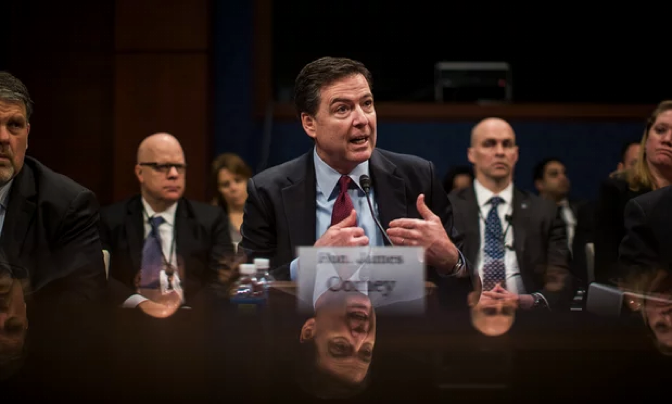
  • Finding The Middle Ground: FBI Director James Comey has called on government investigators and tech companies to “find a middle ground that allows for strong encryption but accommodates law enforcement efforts.” This attitude has led the government to adopt a hesitant posture when addressing encryption issues like the WhatsApp case, but as federal investigators continue to bump into corporate encryption, these cases will have to come to some resolution.
  • What’s The Obama Doctrine? While The New York Times reported on divisions within the Obama administration on this issue, President Obama made it clear at the SXSW Interactive conference last week that these changes would either be made in a responsible manner now or in a rushed, imperfect manner in the wake of another tragedy.

The debate and legal challenges regarding encryption is far from over, but where the courts land on this issue is undoubtedly going to be a key bellwether for what many describe as one of the fundamental legal questions of our era.

RULE 40 UPDATE:

As we discussed in a previous TL;DR and Medium post the RNC’s Rule 40 (as currently written) requires any candidate to be considered for nomination by the Republican Convention to have received the majority of delegates from no fewer than eight states in order to be placed into consideration. So, after the latest round of contests here’s where the candidates stand:

  • Donald Trump: Majority of 9 delegations (South Carolina, Alabama, Georgia, Massachusetts, Tennessee, Hawaii, Mississippi, Florida, Northern Mariana Islands)
  • Ted Cruz: Majority of 4 delegations (Texas, Kansas, Maine, Idaho)
  • John Kasich: Majority of 1 delegation (Ohio)

Since many of the remaining contests are winner-take-all, it will get more difficult for Cruz and Kasich to meet the current Rule 40 threshold. It will also be more difficult to keep accruing delegates without winning a state. That will leave candidates not named Trump to either hope for (or push for) a rules change or pray that Trump is unable to win a majority on the first ballot, giving many delegates the opportunity to vote for a different candidate.

News You Can Use

DEMS’ SCOTUS “FAIRY TALE”
Many Democrats claim the Senate has a Constitutional obligation to take up consideration of President Obama’s nominee to replace Supreme Court Justice Antonin Scalia. Despite relatively limited precedence to analyze, The Washington Postdetermined, “the Senate majority can in effect do what it wants – unless it becomes politically uncomfortable. Democrats who suggest otherwise are simply telling supporters a politically convenient fairy tale.” Senate Democrats can hold the opinion that Republicans are wrong not to take up the President’s nominee, but they cannot claim the majority is failing to honor their Constitutional duties.

FREE TRADE’S NEW NORMAL
For the first time in decades, opposition to free trade appears to be the leading sentiment among America’s political leaders. While left-of-center Democrats have long blamed free trade agreements for job losses, strong fears regarding open trade among Republicans are relatively new. This shift in public opinion poses a new challenge for business and free trade groups as they seek support for the Trans-Pacific Partnership and other trade deals.

REGULATING A REVOLUTION
U.S. House Majority Leader Kevin McCarthy recently announced an Innovation Initiative to remove government-made obstacles to innovation and bring government itself into the 21st Century. Such reforms are crucial to supporting “the sharing economy … that economist Klaus Schwab is calling it The Fourth Industrial Revolution.” At the same time, ordinances like one in Seattle would allow drivers for the popular ride sharing service, Uber, to unionize as independent contractors, potentially “creating anti-competitive effects for other drivers and less convenience for riders.”

BREMAIN TO BE FREE?
Writing for The Telegraph on President Obama’s plan to address the U.K. public directly to urge them remain in the European Union, London’s mayor Boris Johnsonremarks, “There is no country in the world that defends its own sovereignty with such hysterical vigilance as the United States of America. This is a nation born from its glorious refusal to accept overseas control. … So why is it essential for Britain to comply with a system that the Americans would themselves reject out of hand?”

MERKEL GETS TRUMP’D
In the first election since her decision to open the country to refugees last fall, Chancellor Merkel’s Christian Democrats (CDU) had their worst ever results, while the Alternative for Germany (AfD), an anti-immigrant party, saw record support. “The main source of the AfD’s support was from voters who hadn’t cast a ballot in the last election,” Politico’s Matthew Karnitschnig notes. “It also poached hundreds of thousands of voters from the established parties, in particular, Merkel’s CDU.” As a result, Karnitschnig predicts, “Merkel will face renewed calls from within her party to get tough [on refugees].”

LIKEABLE ENOUGH TO WIN?
Art Markman of Fast Company asks, “Do you need to be likable in order to be an effective leader?” Assessing the presidential candidates, Markman argues likeability combines agreeableness – how much you want others to like you – and sincerity – how much people believe their interaction with you is authentic. Sanders is viewed as more sincere than Clinton, who often comes across as agreeable but insincere. Trump and Cruz too are interpreted as sincere but too often disagreeable. In this election, argues Markman, “Being seen as sincere ups your chances that others will follow your vision. But leaders viewed as agreeable yet insincere run the risk that followers will question their vision …”

BITCOIN FOR CENTRAL BANKS
Computer scientists working with the Bank of England have devised a new proto-currency, called RSCoin, to create a government-supported version of the popular peer-to-peer transaction currency, Bitcoin. As The Telegraph reports, “RSCoin would be a tool of state control, allowing the central bank to keep a tight grip on the money supply and respond to crises. It would erode the exorbitant privilege of commercial banks of creating money out of thin air under a fractional reserve financial system.” The new currency has the potential to radically disrupt portions of the financial sector by offering a functioning digital currency with the backing of a government authority behind it.

SO GAFFE-ABLE
Clinton and Sanders both made some serious gaffes earlier this week. In an MSNBC town hall on Monday, Clinton compared her approach to Libya to the current approach to Syria claiming, “Libya was a different kind of calculation and we didn’t lose a single person.” Clinton seemed to have forgotten the 2012 terror attacks on the US consulate in Benghazi that left four Americans dead. In the same forum, Politicoreported, “Sanders falsely assumed an audience member who asked a question about violence against religious and ethnic minorities was Muslim.” The audience member cut off Senator Sanders to correct him, saying “I’m Hindu.”

CAN WE GET A REFUND?
Still recovering from Day Light Saving’s spring forward? Well, The Washington Post’sPhilip Bump revealed on Friday, if you’ve watched every GOP debate, “you’ve spent a full day of your life listening to the candidates talk.” And, it should be no surprise that the candidate who has talked the most is Donald Trump, tallying in at 3.3 hours.

Mark Your Calendars

Tuesday, March 22: Arizona & Utah primaries, Idaho Democratic Caucus
Saturday, March 26: Alaska, Hawaii, and Washington Democratic Caucuses

Subscribe here to get TL;DR in you inbox each week.

Agenda Setting, Under the Radar

Here’s What You Need to Know

Flying under the radar of the presidential campaign circus is an effort by Congressional Republicans to help define what should be debated and discussed when both parties have nominated their general election candidates, including the all-important topic of tax policy.

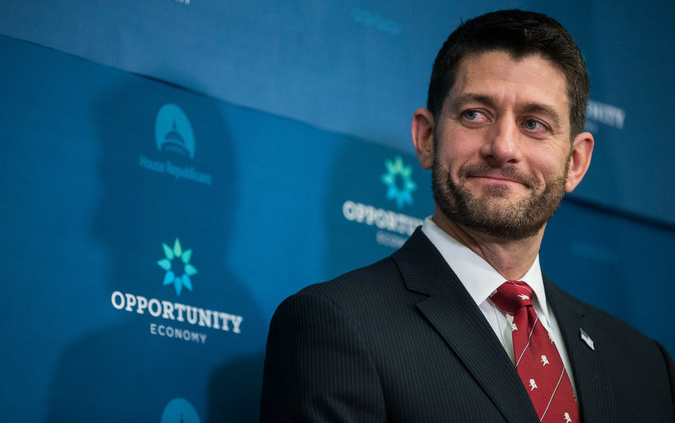
In mid-January, Speaker of the House Paul Ryan announced at the annual House Republican issues conference that members would be working on a “bold, pro-growth agenda to be presented to the country,” touching on national security, jobs, health care, poverty, and constitutional authority. Three weeks later, Ryan announced the members of six task forces that would be charged with developing that agenda. Last week, the Task Force on Tax Reform released their mission statement, principles, policy reforms, and outcomes they want to achieve.

Here are four things you need to know about the House Republicans’ tax reform agenda and tax force …

  • It’s The Economy, Stupid: It might seem obvious, but it’s important to note that the Tax Reform Tax Force’s mission statement is squarely focused on growing the economy for the following reason: to contrast themselves with Democrats who want to use the tax code for social engineering. Using tax reform to talk about creating jobs vs. creating more government is the messaging playing field Congressional Republicans want to play on in a chaotic, unpredictable election.
  • Aligning With The Nominee: There’s a reason why Paul Ryan reached out to Donald Trump and Ted Cruz earlier this week: lay the groundwork for the top of the ticket and down-ballot candidates to get on the same page when it comes to the party’s bread and butter of economic issues. Notice that the Tax Reform Task Force’s recommendations have some specificity, but not too much – all in the effort to make sure that any nominee can subscribe to the mission.
  • The Brady Bunch Of One: While the other task forces have multiple members, notice that House Ways & Means Chairman Kevin Brady is the only member of the Tax Reform Tax Force. One could speculate on why this is the case. But it will be up to the honorable member for Texas’ 8th Congressional District to lay the groundwork on this critical issue for the general election and for 2017.
  • Handicapping From Corporate Tax Officials: As reported by Politico Morning Tax, “a new survey from the accounting firm BDO found that almost four in five public company tax directors believe tax reform would happen if the next president is a Republican. Only one in three believe tax reform could get enacted under a Democrat. Tax directors most want a corporate rate cut in tax reform … And while planning for tax reform under the next president is a pressing concern (21 percent), the issues most weighing on tax directors are international tax planning and the Organization for Economic Cooperation and Development’s BEPS Project (48 percent).”

News You Can Use

SCOTUS SHORT(ER) LIST
President Obama’s Supreme Court list got shorter this week when U.S. Attorney General Loretta Lynch and 11th Circuit Court Judge Adalberto Jordan both removed themselves from consideration. A spokeswoman for Lynch explained, “Given the urgent issues before the Department of Justice, [Attorney General Lynch] asked not to be considered for the position.” Jordan cited a “personal, family situation” as justification for the request. The remaining names generally listed as potential nominees include D.C. Circuit Judges Sri Srinivasan, Patricia Ann Millett, Merrick Garland, as well as 9th Circuit Judges Jacqueline Nguyen and Paul Watford.

FOIA’D DOCS SHOW HOW FOIA REFORM DIED
Despite President Obama’s campaign push for government transparency, a recent Freedom of Information Act (FOIA) request by the Freedom of the Press Foundation revealed the Obama administration has been working to undermine attempts at FOIA reform in Congress. In a set of Department of Justice talking points the potential changes to FOIA standards allowing for greater transparency were described as, “not necessary and, in many respects, will undermine the successes achieved to date by diverting scarce processing resources.” The new details have led to criticism from Congressional Republicans and government accountability advocates.

1-800-CEASEFIRE
The Associated Press reports, “The State Department said Wednesday it is working to fix language issues with staff at a 24-hour telephone hotline it set up for Syrians to report alleged violations of the cease-fire that took effect last weekend. Spokesman Mark Toner told reporters that at least some of the volunteer operators taking calls were not fluent enough in Arabic to accurately log the allegations.” Toner also said that “the U.S. was aware of reports that the Syrian government may have used chemical weapons in attacks on opposition forces since the truce came into force. However, he stressed twice that the reports were not confirmed and were still under investigation.”

2016 TECH STACK MAP
Contently’s Shane Snow mapped the presidential candidates’ technology, finding Clinton’s website has the most tracking services and ad tech, followed by Cruz’s site in both categories. Clinton also has the highest online influence, although Sanders has the most shared content, and Trump has the most Twitter and Facebook followers. Regardless of who wins the election, Snow concludes, “Some of the biggest winners of this election—and probably many future elections—will be the software companies selling to everyone.”

2016 DESIGN ON A DIME
Meanwhile, over at Fast Company’s Co.Design site, user experience expert Chris Calabrese evaluates each of the candidates’ website design effectiveness. Calabrese gives Sanders the best site, with Clinton and Cruz close behind. Calabrese says Trump’s site is the worst design, which raises the question of how important websites remain in the age of social media.

TRUMP TV
In their latest Presidential Campaign Ad Scorecard, AdAge reports that Trump’s campaign has spent only $11.5m on campaign ads this election compared to $80.2m for Jeb Bush, $61.8m for Marco Rubio, and $41.3m for Hillary Clinton. “This, of course, is because Mr. Trump constantly says outrageous things that the media breathlessly reports on, saving him from having to spend as much on proper advertising as other candidates,” notes AdAge’s Simon Dumenco. In fact, according to The Economist,Donald Trump is dominating the airwaves. In a measure of presidential campaign coverage on network TV evening newscasts from 2015 to Feb 2016, Donald Trump has averaged over 400 minutes, compared to less than 100 for Rubio and Cruz.

MAKING GOVERNMENT TECH FRIENDLY
When President Obama assumed elected office, he said “Government has done technology and IT terribly over the last 30 years and fallen very much behind the private sector.” This technology gap has resulted in dozens of failed projects (think Healthcare.gov and the F-35 Joint Strike Fighter) and trillions of dollars of waste. Trae Stephens of Founders Fund recommends three critical steps for the government to bridge this gap: 1) “Empower [engineers] to take on ownership and risk and unshackle them from bureaucrats and program managers,” 2) “Give talented people room to solve problems in elegant and creative ways,” and 3) “Reform the requirements process to stem the flow of large program budgets into massive dysfunctional bureaucracies.” The United States has the best tech community in the world. The government must harness this power if the US wants to maintain it’s competitive edge.

PR FOR GOVERNMENT, PAID FOR BY TAXPAYERS
The U.S. government is effectively the second largest PR firm in the world accordingto the Open the Books project. Their report reveals that the federal government spent $4.3 billion on public relations over the last 8 years, including $2.4 billion in salaries and $10.9 million in bonuses going to “Public Affairs Officers” employed by over 200 federal agencies. As Open the Books founder Adam Andrzejewski said in a TV report, “We have taxpayer dollars being spent to convince taxpayers to spend more taxpayer dollars on the growth of government.”

MARCH FROM WASHINGTON?
While accepting an award as 2016 Association Executive of the Year by Association Trends, National Association of Manufacturers President and CEO Jay Timmons called for trade association leaders to reach beyond the Beltway with their message. “Instead of speaking only to Washington,” Timmons said, “We have to speak to the people of this country – outside the Beltway – and offer bold plans and a vision for the future.” While many think of associations as special interests, Timmons argues associations can “Speak out for what is right. And good. And for those who think their voices don’t matter anymore.”

Mark Your Calendars

Upcoming Debates and Speeches:
March 10 – CNN GOP Debate (Miami, FL)

Upcoming Primaries and Caucuses:
March 12
 – Washington DC GOP convention
March 15 – Florida, Illinois, Missouri, North Carolina, and Ohio primaries

Subscribe here to get TL;DR in you inbox each week.

Rule 40 and the Apocalypse

Here’s What You Need to Know

As the dust settles on Super Tuesday 2016 and the pundits declare who “won” each state and how many delegates each candidate received, there is a crucial element missing from the conversation: Rule 40 of “The Rules of the Republican Party”.

Rule 40 states: “Each candidate for nomination for President of the United States and Vice President of the United States shall demonstrate the support of a majority of the delegates from each of eight (8) or more states, severally, prior to the presentation of the name of that candidate for nomination.”

Which means? If only one candidate (aka Trump) earns a majority of the delegates from eight states, that candidate will be the only one placed into consideration at the convention.

So the big question after Tuesday night isn’t who “won” a state or even how many delegates a candidate has, but rather from how many state delegations has a candidate secured a majority of the delegates.

Right now, Trump has a significant lead in this measurement:

  • Donald Trump: 5 states (South Carolina, Alabama, Georgia, Massachusetts and Tennessee)
  • Ted Cruz: 1 state (Texas)
  • Marco Rubio: 0 states

Given these standings there are three scenarios at the convention:

  1. Only Donald Trump reaches the Rule 40 threshold. (Likely)
  2. None of the candidates secure the necessary eight states going into the convention. (Unlikely)
  3. Multiple candidates reach or surpass the eight-state barrier. (Even More Unlikely)

What happens next? Read Delve CEO Jeff Berkowitz’s Medium post, “The (Rule) 40 Horsemen of the GOP Apocalypse,” for more details.

Don’t worry though, we’re saying there’s a chance: Rule 40 could be changed at or before convention, but doing so will likely result in the grassroots’ pent up frustration – which has been slowly defusing through primary and caucus voting – breaking into open civil warfare.

News You Can Use

GRAYING DEBT
According to economists at the New York Federal Reserve, older Americans held significantly more debt last year than in 2003. As Politico reports, while a portion of this increase is attributed simply to the aging population, this substantial increase in debt has largely come from a surprising source: student loan debt. What is worrying for these indebted seniors is that student loan debt is different than other forms of debt: The Department of Education can take back a portion of Social Security payments to recover the balance of debt. In fact, “the GAO report showed that the number of seniors who had their Social Security benefits garnished to pay their student debt increased six-fold from 2002 to 2013.” Updating the index used for recouping Social Security to keep pace with the poverty line would greatly help some of the most vulnerable Americans. But finding ways to reduce initial loan burden on the front end is the only long-term solution. Any other steps only further indebts these seniors to the government.

SANDERS-CARE
Last Wednesday in South Carolina, Senator Bernie Sanders told reporters that his single-payer health plan “would take ‘a huge bite’ out of poor families’ financial distress.” Yet, analysis by Emory University public health expert Kenneth Thorpediscovered otherwise. Thorpe’s analysis found that between 14.5 and 16.8 million beneficiaries of Medicaid would be substantially worse off under the health-care plan proposed by Bernie Sanders. Additionally, Thorpe argued that Senator Sanders is underestimating the cost of his plan by a whopping $1.1 trillion a year. Despite this and other criticism on the facts surrounding his health-care policy Sanders continues to regularly tout his plan on the campaign trail.

SPIRIT OF THE IRISH
First Spain, now Ireland. Not to mention Brexit. European governance appears to be entering an age of uncertainty. Politico highlights six key takeaways from Friday’s unprecedented elections in Ireland: 1) “Ireland’s political landscape has been transformed.” Voters have rejected establishment parties in record numbers. 2) “Austerity isn’t working” and many voters feel their finances have deteriorated over the the past year. 3) “There’s more than one Ireland” with different demographics of voters extremely split across party lines. 4) “Labour pains” for the Labour party which was decimated, winning less than 8% of the vote. 5) “Irish voters still love a maverick…Ireland has a long history of electing independents, but 2016 is a record breaker.” 6) “Fresh elections may beckon…On Saturday, a Fine Gael strategist said that the chances of a second election ‘very soon is now very, very high.’”

EXIT POLL PSYCHOLOGY
Time and again, we are shown how unreliable exit polls are, especially in the primaries. As Art Markman writes for Fast Company, “There’s a psychological reason for this: the process of making complex choices, like the selection of a presidential candidate, begins with having a weak attitude toward a little information and ends up with holding a consistently strong attitude toward a lot more of it.” Early in the election cycles, voters are more easily swayed by a strong debate performance or an unsightly gaffe. But once voters start leaning towards a candidate and see a candidate as likely to win, they are more likely to jump on the bandwagon and speak of and remember their candidate more fondly.

KINGDOM COLLAPSING?
For fifty years, the Kingdom of Saudi Arabia has been essential to U.S. Mideast policy. Yet, as Sarah Chayes and Alex De Waal argue in The Atlantic, “It’s past time U.S. decision-makers began planning for the collapse of the Saudi kingdom.” They predict that a factional struggle within the royal family, a foreign war, or an insurrection – “either a nonviolent uprising or a jihadi insurgency” – could cause the downfall of the Kingdom in the coming years. Rather than getting caught-off guard when “purportedly solid countries come apart,” Chayes and De Wall advise that “U.S. military and intelligence officials should at the very least, and immediately, run some rigorous planning exercises to test different scenarios and potential actions aimed at reducing codependence and mitigating risk.” And most importantly, U.S. officials “should abandon the automatic-pilot thinking that has been guiding U.S. policy to date.”

FOREIGN POLICY THINK CRANK
The majority of Bernie Sanders’ presidential campaign has focused on issues of domestic policy. But a team of foreign policy advisors has been slowly buildingaround the Vermont Senator, including Lawrence Wilkerson, chief of staff to then-Secretary of State Colin Powell who became a sharp critic of the George W. Bush administration after the War in Iraq began. He notably insinuated that Israel may have gassed Syrians in order to frame Bashar al-Assad. It is unclear whether the Sanders campaign was aware of Wilkerson’s previous statements, but it is yet another example of the absolute necessity of vetting.

“HE’S NOT SUPPOSED TO BE DOING THAT”
Secretary of State John Kerry faced tough questioning last week when testifying before the Senate Appropriations committee. Senator Mark Kirk confronted Kerry with evidence that a terror suspect, recently released from Guantanamo Bay, has begun actively recruiting for Al Qaeda. Kirk was using the case to illustrate the problems of releasing suspected terrorists to terrorist nations. What was Secretary Kerry’s response? “He’s not supposed to be doing that.”

CANDID CANDIDATES
When we watch political debates, “we want our candidates to seem more candid than canned—spontaneous, not staged,” according to Anett Grant in Fast Company. Cues to look out for include verbal contrast and quick-changing facial expressions. When candidates have a “jump-shift” moment and suddenly change the pace of their speech, they communicate more emotion and passion, and appear more candid. On the other hand, when candidates hold the same facial expression for long periods of time, they seem unnatural. Keep an eye out for these habits. After all, “no matter where you stand on the political spectrum, spontaneity is crucial for building trust.”

BYE BYE BITCOIN?
Last Saturday, the G20’s Financial Stability Board said that global regulators may propose regulations to prevent “fintech” innovations such as Bitcoin and Blockchain from destabilizing the broader global financial system. This marks the first time that global regulators have turned an eye to fintech. As Fortune reports, “So far regulators have been treading carefully as countries such as Britain are wary of crimping a sector that is still tiny compared with banking, but could create many new jobs in future.” Mark Carney, Chair of the Financial Stability Board (FSB), said, “The regulatory framework must ensure that it is able to manage any systemic risks that may arise from technological change without stifling innovation.” Despite regulators’ apparent concern over stifling innovation and increased regulatory measures run a risk of harming a new potential source of jobs.

Mark Your Calendars

Post-Super Tuesday Primaries and Caucuses:
March 5
– Kansas, Kentucky (R), Louisiana, Maine (R), Nebraska (D)
March 6 – Maine (D), Puerto Rico (R)
March 8 – Hawaii (R), Idaho (R), Michigan, Mississippi

Subscribe here to get TL;DR in you inbox each week.

Think Tanks, Beliebers, & AOL.com

Here’s What You Need to Know

Two new reports have been released illustrating the importance and influence of third party groups in public affairs campaigns. The Think Tanks and Civil Societies Program at the University of Pennsylvania released their “2015 Global Go To Think Tank Index Report” listing the top think tanks in the U.S. and abroad. The report breaks down the global think tank community by a number of metrics, including each organization’s resources, reputation, quantity of policy proposals, and impact of those policy proposals on policymakers.

Leading the think tank rankings in the U.S. are the Brookings Institution, Carnegie Endowment for International Peace, and the Center for Strategic and International Studies. Also in the top ten were Cato Institute (#6) and the Heritage Foundation (#10). In Western Europe, Chatham House (U.K.), Bruegel (Belgium), and the French Institute for International Relations topped the rankings. World Economic Forum was all the way down the list at #28. So much for the one percent.

Why do these think tank rankings matter? A new study from The Readmond Group, “The Power of Outside Groups in Public Affairs,” shows how third parties like think tanks play a crucial role in large-scale public policy debates. The study demonstrates how outside groups work in an interconnected fashion to achieve their objectives, even when the alliances seem unlikely. From think tanks to advocacy groups to specific ideological pressure groups, the study pulls back the curtain on how coalitions are formed and policies are changed. Clearly, third party groups are worth keeping an eye on.

News You Can Use

ALL ABOUT THE NARRATIVE
A new op-doc by media maestro Mark McKinnon, the lead media strategist for George W. Bush’s 2000 and 2004 campaigns as well as John McCain’s 2012 primary campaign, “lays bare the fundamental narrative strategies that remain at the core of today’s presidential campaigns.” It’s a good lesson for all public affairs efforts. Fun fact: Delve CEO Jeff Berkowitz provided research for several of the 2004 ads featured in the film.

CONGRESSIONAL PRODUCTIVITY IN AN ELECTION YEAR?
It’s conventional wisdom that Congress is less productive during election years. The Presidential race is distracting, neither party is invested in accomplishing anything, and neither party wants to take policy positions that may contradict their nominee. However, after crunching the numbers, Quorum discovered that “Congress is more productive in presidential election years than midterm election years.” In fact, out of the last four Congresses, the most productive years were 2008 and 2012. What does this all mean? If you’re looking to maximize your lobbying effort, it might be better to lean in to election years rather than lean out.

BIPARTISAN BELIEBERS
What is perhaps one of the last things left that unites Americans? According to Bloomberg, the answer is Justin Beiber. After mapping the top 25 tracks played by Democrats, Republicans, and Independents on Spotify, Bloomberg discovered “Sorry” and “Love Yourself” appear amongst the top three tracks for all listeners, regardless of party affiliation. What is slightly less surprising? Religious and country music is played at much higher rates by Republicans while Democrats seem to have a thing for Rihanna. 

ON THE BRINK OF A BREXIT?
As NPR reports: “Britain’s Prime Minister David Cameron is calling for a historic nationwide referendum on June 23 to decide whether the U.K. will remain in the European Union.” In an attempt to assuage the euro-skeptics prior to calling for the referendum, Cameron negotiated new terms for Britain’s membership with the EU with European leaders last Friday. Cameron considers the deal a success, but others aren’t so sure. A poll of polls prior to the negotiations revealed that 52% of voters were in the “remain” camp and 48% wanted to leave, and, the BBC reports, “Critics argue that the final deal falls well short of what Mr. Cameron originally promised when he announced his plan for a referendum, particularly when it comes to returning powers from Brussels.”

MILLENNIAL MESSAGING
In a recent interview, author of “The Selfie Vote” and GOP pollster Kristen Soltis Anderson discussed the party’s young voter gap and how politicians can best communicate their message to millennials. What’s her advice to candidates? “Part of what I tell them is to always think about the way the stuff they stand for will actually affect someone’s day-to-day life.”

AOL.$$$.COM
USA Today reports, “A January study by digital marketing firm Fluent concluded that only 4% of subscribers to political email lists had AOL.com email addresses, while 48% of subscribers had Gmail accounts. But those AOL users accounted for 22% of total donations during the study period — November and December 2015 — with an average donation of $159. Gmail users accounted for only 13% of donations with an average gift of $31.” Why? Older people are more generous and they’re more likely to have an AOL account.

BRAG FOR VOTES
“Busting balls” might just be the new way to become President. With working class appeal, Trump has invented a new way to win. As Mark Cunningham writes for the New York Post, “From the start, Trump targeted the (mostly) white working class, which happens to be 40 percent of the country. And he’s done it not just with issues, but with how he talks — the ball-busting, the ‘bragging,’ the over-the-top promises.” What’s more, Trump doubles on his promises. He’s not just going to build a wall but also make Mexico pay. “Politicians never deliver everything they promise, but the higher they aim, the more likely you’ll actually get something.” No, Trump isn’t playing by the rules. And judging by his poll numbers, voters don’t want him to.

ZENE-FAIL
The HR software startup and former venture capital darling, Zenefits, is now facing a series of hurdles brought on by attempts to circumvent California’s insurance broker regulations. Ben Thompson of Stratechery uses a recent blog post to outline how Zenefits’ actions may have been emblematic of poor judgment, but, “regulations are one of the most effective moats [industry] incumbents have because they already have the infrastructure and revenue streams to deal with them.” Any tech startup entering a highly regulated industry must be ready to face this inevitable challenge.

AIRCRAFT CARRIER ANTIQUATION
American global military supremacy has always relied heavily on the rapid deterrent offered by aircraft carriers, however a recent report by the left-leaning Center for a New American Security suggests other major players on the international stage have begun to adjust their military forces to counter American dominance. The report explains, “In recent years, a number of countries, including China, Russia, and Iran, have accelerated investments in anti-access/area denial (A2/AD) capabilities such as advanced air defense systems, anti-ship cruise and ballistic missiles, submarines, and aircraft carriers.” The report concludes that in order to maintain supremacy the American military must reevaluate its use of carriers and innovate its thinking for future operations.

Mark Your Calendars

February 25 – CNN GOP Debate
February 27 – South Carolina Democratic Primary
March 1 – Super Tuesday: Alabama, Arkansas, Colorado, Georgia, Massachusetts, Minnesota, Oklahoma, Texas, Vermont and Virginia; GOP only: Tennessee primary and Alaska caucus

Subscribe here to get TL;DR in you inbox each week.

Scalia, Unicorns, and Magic Flying Puppies

Here’s What You Need to Know

Before any discussion of the politics of the Supreme Court, take a moment to read Justice Ginsberg’s warm recollection of her “best buddy” and ideological foil, Justice Scalia and remember the impressive career of a truly historic jurist.

Alas, outside the Court’s amicable chambers, Justice Scalia’s passing has launched an intense political scramble among Republicans and Democrats over the future of the Court. Delve CEO Jeff Berkowitz has written a Medium post breaking down the state of affairs in the fight and what may be the best resolution on the matter for the country.

Here’s a key excerpt:

If (when) Obama puts forth a nominee, there is a relatively short list of potential candidates already being circulated. The list includes current Attorney General Loretta Lynch, District of Columbia Circuit Court Judges Merrick Garland, Sri Srinivasan (once described as Obama’s “Supreme Court nominee-in-waiting”), Patricia Ann Millet, Ninth Circuit Court of Appeals Judge Jacqueline Nguyen, California Attorney General Kamala D. Harris and U.S. Senator Corey Booker.

None of [the President’s possible nominees] are likely to pass muster with Republicans, which begs the question, why are Republicans so obstinate? Is it just pure partisan obstructionism, or is there something more? Given the past six years of the Obama administration, they have come to expect the White House to prioritize a nominee who embodies virtue signaling rather than the serious jurisprudence needed for the position of Associate Justice of the U.S. Supreme Court. In other words, his pick will be based on mobilizing liberals during an election year while tagging Republicans as backwards-thinking opponents to a barrier-breaking nominee, not on finding the next great American jurist worthy of replacing Justice Scalia.

Considering the White House will likely end up choosing this course of action, coupled with the intensely divided state of American politics, Mitch McConnell may just be right. Even if his motives are political, a call for allowing the 2016 election to provide a new President (and a new Senate) the opportunity to appoint the next Supreme Court Justice seems like the best thing for a bitterly divided country.

News You Can Use

THE GREAT TECH RESET
If last year VC investors were hunting for ‘unicorns,’ this year, Business Insider reports, they are hunting for ‘cockroaches’ – “companies building sustainable businesses that can survive anything.” The great reset in tech comes as, for the first time since 2011, there was no IPO in January and publicly traded firms like LinkedIn, Twitter and others have taken major hits to their value. “Struggling unicorns” like DropBox, Cloudera, and Jawbone “might find their only option is going public.”

PLAYING THE ECONOMIC BLAME GAME
As China released its latest round of trade data, some global investors are suggesting the Asian nation’s troubles are threatening the world economy. Other sourcessuggest, “The rise of outsider presidential candidates Donald Trump and Bernie Sanders… could be one more reason why stock markets are under pressure and could remain so for awhile.” Whether due to the rise of outsider presidential candidates or China’s unstable economy it remains clear 2016 is shaping up to be a shaky year for U.S. and global markets.

MATH IS HARD
Economists have something to say about Sanders’ policy proposals. First, his agenda would increase the size of the federal government by an estimated 50 percent, surpassing “any government expansion since the buildup in World War II.” According to left-center economists, “The proposals would add $2 trillion to $3 trillion a year on average to federal spending.” Moreover, as the former chairman of President Obama’s Council of Economic Advisers said, “the numbers don’t remotely add up.” We’re looking at “magic flying puppies with winning Lotto tickets tied to their collars.”

ADELE V. TRUMP
As Tevi Troy writes in Politico: “Typically…a GOP candidate attempting to use a popular song risks receiving a snub from the artist, who not only rejects the candidate but then takes shots at his political stands.” But Donald Trump is different; he just doesn’t care. After Adele told Trump he didn’t have her permission to use her songs at his campaign events, he responded by playing “Skyfall” as his helicopter landed at an event in Arkansas and blasted “Rolling in the Deep” as he made an entrance at a later event in New Hampshire. “Shameless and defiant,” Trump is making musical intros great again!

HE WAS FOR IT BEFORE HE WAS AGAINST IT
Even seasoned politicians have fallen victim to shifting their position on issues when they become controversial. Such appears to be the case with Donald Trump and the Iraq war. As Buzzfeed reports, he claimed in a September debate that “he could provide 25 stories showing his early opposition to the Iraq War.” When no stories could be found, he responded by saying, “I wasn’t a politician so people didn’t write everything I said.” But a new search has discovered that Trump did write about the Iraq war. In his 2000 book, The America We Deserve, he called for taking out Iraq’s WMDs – even before Bush was president.

OBAMA BACKS ‘BREMAIN’
President Obama plans to make “a big, public reach-out” to urge voters in Britain to remain within the EU, which the Guardian reports “is likely to focus on the need for the EU to stick together to combat the migration crisis and the growing threat of Russian aggression in the Baltics, Ukraine and Middle East.” However, many in Washington and London fear this message might backfire. Indeed, a new UK citizen petition calls for Obama to be banned from speaking in Parliament in response to his intended “Brexit” intervention. As Conservative MP John Redwood said, “Most British people will feel this is a debate for us and it’s unusual for a foreign country to wish to intervene.”

THE TRUE POLITICAL DIVIDE: VOTERS VS. POLITICIANS
As The Washington Post reports, “According to experts who study polarization, Americans don’t necessarily disagree more on policy. What has changed is the level of mistrust, and even vitriol, Americans have for politicians and their fellow citizens on the other side of the political divide.” This deep mistrust effects the way Americans see and hear themselves and each other. A 2015 study revealed that “Democrats and Republican respondents were far off base in their assumptions about the other party’s demographic makeup and, in some cases, those of their own party as well.” The extent to which one will rally behind the statement, “Democracy breaks down when the average person feels their voice doesn’t matter,” depends on the party of the person who said it. In this case, it was President Obama. How does that make you feel?

Mark Your Calendars

February 20 – Nevada Democratic Caucus & South Carolina Republican Primary
February 23 – Nevada Republican Caucus
February 25 – CNN GOP Debate
February 27 – South Carolina Democratic Primary

Subscribe here to get TL;DR in you inbox each week.

Pin It on Pinterest