Russian Reality, SIGTARP, and Uncle Sam’s Refi

Here’s What You Need to Know

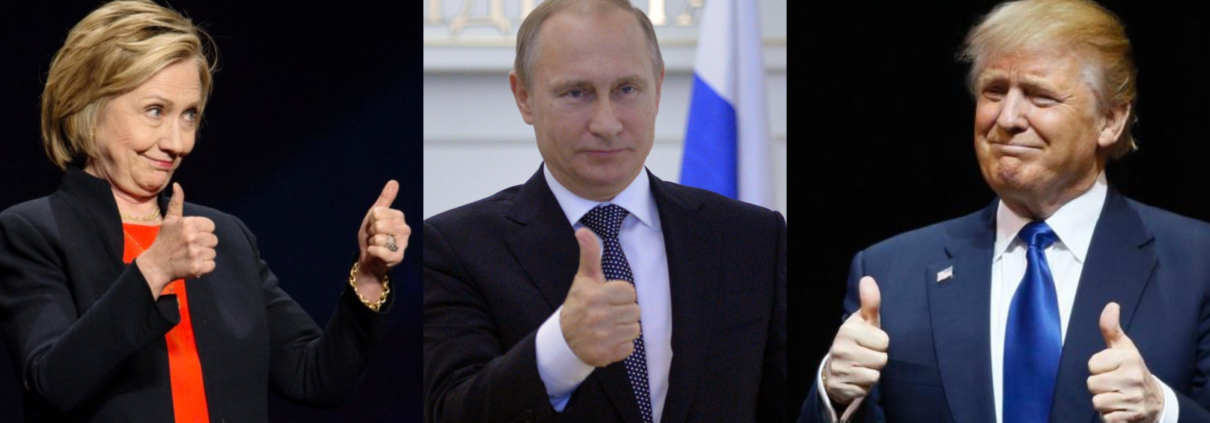
Russia has been mentioned in news headlines on a nearly daily basis for the past couple weeks. Between allegations of Russian involvement in the DNC email hack and Donald Trump’s comments on U.S.-Russian relations under a Trump administration, both Hillary Clinton and Donald Trump have been accused of inappropriate relationships with Russian industrial and political leaders. These accusations are being thrown around as consensus has been formed that Russia presents the greatest geopolitical threat to the U.S., a contention made by Mitt Romney in 2012 that President Obama then mocked.

To Make Sure You’re Properly Armed for Your Facebook Fights, Here Are the Facts You Need To Know About Clinton, Trump, and Russia.

HILLARY HEARTS RUSSIA’S SILICON VALLEY: As Secretary of State, Hillary Clinton worked to convince American companies to invest in an “innovation city” – Skolkovo – which was billed as Russia’s Silicon Valley. The FBI warned tech companies that these types of Russian investments could serve as cover for theft of their proprietary technology. Despite this warning, Clinton brought in top U.S. tech firms, and noted Clinton Foundation donors like Google, Intel, and Cisco. Meanwhile, various Russian leaders tied to the Skolkovo project made multi-million dollar donations to the Clinton Foundation.

PODESTA HID HIS PUTIN CONNECTION: In 2011, current Clinton campaign chairman John Podesta sat on the board of Joule Unlimited, a small energy company that received $35 million from a Putin-controlled tech project called Rusnano. Podesta failed to reveal this on his personal financial disclosure documents required of him when he became a senior advisor to President Obama in 2014.

HILLARY’S URANIUM STAMP OF APPROVAL: In 2013, Russia completed a takeover of Uranium One, a Canadian mining company that gave them control of one-fifth of the uranium production capacity in the United States. Due to the national security implications of the sale, it required U.S. government approval, which included a sign off from then-Secretary of State Hillary Clinton. At the same time, Uranium One’s Canadian sellers continued to make multi-million dollar donations to the Clinton Foundation and former President Clinton received $50,000 in speaker’s fees from a Kremlin-connected Russian investment bank shortly after the deal was announced.

MANAFORT’S URKRANIAN ADVENTURES: Trump campaign chairman Paul Manafort managed the successful 2010 campaign of pro-Russian Ukrainian presidential candidate Viktor Yanukovych. Manafort also helped reshape the image of Yanukovych’s pro-Russian political party before the Ukrainian President was removed from power and exiled to Russia in 2014. In 2005 Manafort served as an advisor on corporate communications strategy for Ukrainian steel and iron magnate Rinat Akhemtov. Akhemtov was a notable supporter of Yanukovych.

TRUMP’S CAMPAIGN CHAIR IS AN OLIGARCH’S MONEY GUY: Manafort managed tens of millions of dollars on behalf of Russian oligarch Oleg Deripaska. Some have reported Deripaska is “close to Vladimir Putin,” but it should be noted that in 2009 Putin very publicly humiliated Deripaska by likening the Russian billionaire to a cockroach and forcing him to tour a factory to witness the state of Russian social unrest.

TRUMP HAS HIS OWN OLIGARCH TOO: Russian oligarch and Putin ally Aras Agalarov helped Trump bring the Miss Universe competition to Moscow in November 2013. At the time, Trump and Agalarov were in discussions to build a Trump Tower in Moscow but the deal never materialized.

News You Can Use

OBAMACARE CONFESSIONAL
From 2009 to 2010, Dr. Bob Kocher served as special assistant to President Obama and an architect of Obamacare. Now he claims, “I was wrong. Wrong about an important part of Obamacare.” He penned a Wall Street Journal op-ed explaining that the consolidation of doctors he and the other policy minds behind Obamacare believed would benefit the healthcare consumer has done the opposite, creating large, inefficient medical bureaucracies. This failure illustrates why reforms perform best when done organically in the marketplace rather than through centralized bureaucracies in Washington. These officials made assumptions about what was best, got it wrong, and saddled the American public with the consequences. In a free marketplace, alternatives would have been present and his error would have been corrected by others without requiring political and policy fights for years to come. Americans are suffering from his error, but at least he got his guilt off his chest.

FOIA FOIBLE AT LABOR
Six years ago, Americans for Limited Government (ALG) requested a set of records from the Department of Labor under the Freedom of Information Act (FOIA). ALG was told the records existed and they were being reviewed. But now federal officials are claiming the documents do not exist and the communication proving otherwise has been deleted. ALG President Nathan Mehrens said, “At best, this is a case of mismanagement. At worst, well, use your imagination. Are they hiding something and trying to run out the clock in order to avoid sunlight into their operations?” It’s another case of FOIA request obfuscation from government agencies over the past several years. So much for the Obama administration declaring themselves the “most transparent administration in history.”

HILLARY’S NOT SO “RIGHT” ON THE MIDDLE EAST
The conventional wisdom is that Hillary Clinton’s supporters are more pro-Israel than Bernie Sanders’ supporters and that there are concerning signs of anti-Semitism among Trump voters. But an analysis from the Brookings Institute shows “there is generally little difference between the supporters of Clinton and Sanders on these issues.” Just over half of both Clinton and Sanders supporters favor punitive measures against Israel on the issue of settlements, and over 80% of Clinton and Sanders supporters say America should generally favor neither side in the Israeli-Palestinian conflict. Conversely, Trump supporters hold decidedly more pro-Israel views, with 74% of them opposing punitive action against Israel and 55% saying U.S. policy should generally lean towards Israel.

SIGTARP VS. SMALL BANKS
The Office of the Special Inspector General for the Troubled Asset Relief Program (SIGTARP) was created in 2008 to investigate and root out crimes committed by banks and their executives related to the financial crisis. Since its creation, the office has charged 102 bankers, including 22 chief executives and presidents, for criminal and civil misdeeds leading up to and during the financial crisis while also recovering more than $10 billion. But critics of the office point out that most of SIGTARP’s investigations have involved community and regional bankers and ignored prominent Wall Street executives that many consider more responsible for the 2008 meltdown. The TARP program is winding down and SIGTARP’s future is unclear, but either way it looks like those still seeking prosecutions of Wall Street executives will continue to be disappointed.

NERVOUS NONPROFITS
Massachusetts nonprofits are on edge as a new proposal has come up in the state legislature challenging the property tax exempt status of nonprofits and schools in certain circumstances. The issue has risen out of the city of Lowell, where the University of Massachusetts Lowell has purchased a large piece of property and has left the city with a substantial budget hole due to the University’s tax exempt status. Some states, like Connecticut and New Jersey, have addressed this problem by limiting the tax exempt status of well endowed, property rich entities like schools and hospitals, but some of these measures have also hurt smaller, traditional nonprofits like local Elks clubs or charities. The challenge for policymakers is to ensure municipalities have the revenue to fund basic services for their citizens while protecting the existence of charities and nonprofits’ ability to function in expensive real estate markets.

THE DNC’S OTHER RUSSIA PROBLEM
Political conventions are often showcases of how proudly American each party is, and videos featuring the U.S. military are commonplace. So it was not out of place that at last week’s Democratic National Convention, retired Adm. John Natham, a former commander of Fleet Forces Command, spoke in front of a video of giant warships. What was out of place was the warships themselves. The vessels were, in fact, Soviet-era Russian Kara-class cruisers. It’s not the first time stock footage has embarrassed a campaign and it probably isn’t the last. But, it does show how a little fact-checking and research can avoid simple mistakes.

SHOULD UNCLE SAM REFI?
A Wall Street Journal editorial recently argued given the staggering and ever increasing national debt, the U.S. government should consider “taking advantage of today’s cheap financing by borrowing for the long term.” Locking in current debt at today’s low rates may only kick the can down the road in terms of actually addressing the looming debt crisis, but it would at least insulate taxpayers from some of the cost of government spending. Without pro-growth policies and comprehensive fiscal reform being enacted, the next best thing may be to make it a little bit more affordable for the American public to pay for deficit spending.

Mark Your Calendars

Monday, September 26: First Presidential Debate, Hofstra University, Hempstead, NY

Oppo Truths, Secret Meetings, and Rocking TPP​

Here’s What You Need to Know

While attending last week’s Republican National Convention, Delve CEO Jeff Berkowitz was interviewed on the often misunderstood art of opposition research, as well as what role national security issues may play in the next Presidential administration.

  • Jeff spoke to Jason Rantz of Seattle’s KIRO talk radio and outlined what goes into a campaign’s political research operation. Jeff explained how the process begins with a vulnerability study of the candidate’s strengths and weaknesses, as well as what issues may exist in their past.
  • The vulnerability study process at Delve is unique because instead of using big questionnaires or relying on a candidate’s memory of their own past for a framework of potential attacks, we dig into every facet of the public record exactly as an opponent’s researchers would. We use this research to expose the narratives that could be used, fairly or unfairly, by a candidate’s opponents.
  • Jeff highlighted the importance of sticking to the facts when launching attacks on an opponent’s record. Dispelling the common misconception of “oppo” as dumpster diving for personal attacks, Jeff explained, “it’s not just about this is a good person or a bad person, it’s also about, if you’re going to choose them to represent you, where do they stand on the issues.”
  • Jeff also discussed how national security and foreign policy issues may be addressed by the next President, citing, “the crucial role of strong American leadership in the world.” Jeff went on to describe how these topics may impact Donald Trump and Hillary Clinton’s general election campaigns.

News You Can Use

ROCKING AGAINST TPP
Last week, a collection of left-wing entertainers launched a “Rock Against the TPP” tour to build opposition to the Trans-Pacific Partnership. The tour listed events in Denver, San Diego, Portland, and Seattle, with celebrities such as actress Evangeline Lilly and musicians Talib Kweli, Anti-Flag frontman Justin Sane, and Jonny 5 of the Denver-based hip-hop group Flobot. With the possibility of Congress voting on TPP in in a lame duck session, and the progressive wing of the Democratic Party feeling betrayed by the DNC, opponents of the trade deal are using celebrities to bring more awareness on this issue to many Americans. No word on whether Tim Kaine will make a guest appearance now that he has changed his tune.

HOW TO STOP OBAMACARE
The platform adopted by the Republican National Convention last week pledges “a Republican president, on the first day in office will use legitimate waiver authority under the law to halt [Obamacare’s] advance and then, with the unanimous support of Congressional Republicans, will sign its repeal.” But, as longtime health care policy analyst Chris Jacobs notes, the “legitimate waiver authority” provided under the law only applies waivers to states, not individuals. These waivers also only apply to a few delineated sections of the law, including the individual and employer mandates. Jacobs suggests a Republican President looking to halt Obamacare should instead focus on blocking insurance payments from the program that were unilaterally determined by the Obama administration for items like reinsurance, risk corridors, and cost-sharing subsidies without clear statutory authority.

SECRET CEO MEETING
Beginning last summer with a secret meeting at JP Morgan Chase’s Manhattan headquarters, a group of America’s top CEOs – including Warren Buffet, Laurence Fink of BlackRock, Abby Johnson of Fidelity, and Mary Barra of General Motors – worked toproduce an open letter and detailed report on the “sorry state” of publically traded companies. The report includes a series of corporate governance “principles” on topics like executive and board compensation as well as earnings guidance. Intended to stir conversation within the business community, this effort could have policymaking reverberations as both parties tackle issues where corporate governance can help or hinder economic growth.

CAR-SHARING’S TAX-BURDEN
As ride-hailing apps like Uber and Lyft compete with car-sharing services like Zipcar and Car2Go, local governments have begun tipping the scales in favor of the former by increasing taxes on latter. New research by DePaul University’s Chaddick Institute for Metropolitan Development shows, “Of the 40 largest U.S. cities, 29 apply taxes of more than 10% on one-hour car-sharing trips, including nine cities with effective tax rates above 30%.” While most public discussion has been focused on how ride-hailing apps’ limited regulatory burdens hurt the taxi industry, it appears local authorities have used the same strategy to place car-sharing services in the same disadvantaged position.

IVANKA’S DRESS FOR LESS
During her primetime speech at the Republican National Convention, Ivanka Trump wore a $138 dress from her line of clothes sold at Macy’s department stores. Yahoo contributor Jennifer Gerson Uffalussy notes, “Wearing a look of her own design while making such a speech certainly affirmed the point of her speech: Ivanka is a mother-cum-scion in her own right.” This wardrobe choice comes after Hillary Clinton was criticized earlier this election cycle for wearing a $12,495 Armani jacket during a speech on income inequality. It’s a good reminder to campaigns that no detail is too small for the spotlight of the news and potential derision from your opponents.

THE NEW SOCIAL NETWORK IS OFFLINE
Modern economic theory has always emphasized the decisions of the individual and assumed individuals operate independently from the direct influence of others. Yet Paul Ormerod, writing for Evonomics, argues that today’s economic policies must acknowledge the fundamental importance an individual’s personal social network has on the outcomes relevant to these discussions. Ormerod’s conclusion is that our policies must move away from seeking to predict and control society, and instead look to build systems that are resilient and robust with the ability to respond well to unpredictable future events. This could be a new way of framing the debate between the innovations that can be produced with market-based policies versus sticking with old, liberal, command-and-control dogmas.

MEDIA NOT A FAN OF THE MEDIA
The state of the American media monolith is not strong. In fact, it’s at an all time low, with American trust in the media hovering around 20%. New York Magazine decided toinvestigate why news has lost the public trust by going straight to the source. The magazine’s survey of journalists and media figures pointed out several issues, including a lack of acknowledgment that news has become an entertainment business and thus does not handle serious issues well anymore. Survey participants also mentioned journalists thinking they know the story before they investigate. And because news is no longer immune to market forces, the media tends to go after the easy stories like gaffes and fuel for political partisanship. The lengthy critique of the media by the media shows that the Fourth Estate is just as troubled as the other three.

Mark Your Calendars

Monday, September 26: First Presidential Debate, Wright State University, Dayton, OH

Convention Preview: Republicans and Democrats on Trade​

This is the third in a series of insights we’ll be providing on different policy platform fights in the weeks leading up to the Republican and Democratic National Conventions.

Here’s What You Need to Know

The platform committee of the Democratic National Convention has adopted decidedly anti-free trade policies and the Republican National Convention’s platform committee has raised more questions about whether America benefits from its current trade agreements than it has in many decades. Both platform drafts are likely to be officially approved in Philadelphia and Cleveland respectively. While not specifically criticizing the Trans-Pacific Partnership (TPP), both platforms have language that took firm positions calling for tough restrictions on trade deals.

There’s been plenty of discussion on how politically unprecedented this is. But, there are fundamental questions on how a few different key political stakeholders will handle the shift.

What Do The White House And GOP Congress Do? Bernie Sanders fell short of his desired platform amendment specifically criticizing TPP, with Democrats opting for language calling generally for tough restrictions on trade deals in order to avoid embarrassing President Obama. The White House must now decide how to get TPP enacted before leaving office. Republicans in Congress – who may lose the Senate – could work with President Obama move TPP in a lame duck Congress. Regardless of who wins in November, TPP will be dead-on-arrival come inauguration day 2017. But yesterday, House Speaker Paul Ryan seemed to dash the hopes of those aiming for lame duck passage, telling Politico he has “got problems” with TPP and “think[s] they made some pretty big mistakes” during negotiations.

What Do Pro-Trade Democrats Do? Despite the especially vocal progressive wing of the Democratic Party, many coastal Democrats like Sens. Patty Murray, Diane Feinstein, and Chuck Schumer still represent constituencies that benefit with hundreds of thousands of jobs created by free-trade agreements. With their party’s standard bearer now officially toughening her stance on these policies, how Democrats balance the needs of their constituents with the demands of their party should be watched closely.

What Do Business Groups Do? On the right, traditionally pro-GOP business associations like the U.S. Chamber of Commerce and the National Association of Manufacturers have already openly opposed the party’s newly critical stance on trade promoted by Donald Trump. Now that Trump’s “America First” policy on trade has officially been adopted by Republican delegates on the platform committee, how will these pro-trade business groups respond? These groups may be exploring the option of using their political muscle to go after anti-trade Republicans.

News You Can Use

WE’RE IN THE DICTIONARY. The Oxford English Dictionary (OED) recently announced their list of new definitions being added to the benchmark of English language and the term “TL;DR” is now among them. The OED defines the term as, “’too long; didn’t read’ (also occasionally ‘don’t read’): used as a dismissive response to an account, narrative, etc., considered excessively or unnecessarily long, or to introduce a summary of a longer piece of text.” We certainly endeavor to make sure our version of TL;DR falls into the latter definition.

S.F. KILLING GOOSE LAYING GOLDEN EGGS. Three San Francisco city supervisors have announced plans to propose a 1.5 percent payroll tax on the city’s tech companies to be voted on in November. The measure has received resounding opposition from other city officials including Supervisor Mark Farrell, who called it, “the worst idea I’ve heard in months,” and Mayor Ed Lee, who’s spokeswoman called it a, “job killing measure.” The tech industry has provided San Francisco with decades of prosperity and the lowest unemployment rate of any city in the country. Singling out the industry out for a tax would likely lead tech firms to find new homes even faster than they are already.

INFLUENCING NOT-SO-REFORMED. Nine years ago, Democrats retook Congress under a banner of ending Washington’s “culture of corruption,” passing lobbying reforms aimed at slowing the spin of the revolving door between Capitol Hill and K Street. But little if anything has changed. Politico’s Isaac Arnsdorf recently concluded, “Not only did the [Honest Leadership and Open Government Act of 2007] fail to slow the revolving door, it created an entire class of professional influencers who operate in the shadows, out of the public eye and unaccountable.” The lobbying reform bill is just another example of Congress’ staggering ability to achieve the opposite of their stated goal when crafting laws.

HOT TUB LOBBYING MACHIN. The $28.6 billion Japanese spa industry relies on the use of the country’s massive geothermal reserves for their naturally occurring hot springs. And now the industry is blocking attempts to tap into those geothermal reserves as a source of alternative energy. The Japan Spa Association has aggressively and effectively lobbied to ensure that the bulk of Japan’s clean-energy program funding has gone to solar instead of geothermal. Those pushing for geothermal expansion were caught off-guard by the spa association’s lobbying effort, a perfect example of the value of identifying your opponents before engaging in a public affairs campaign.

OBAMA’S LOSING SCOTUS RECORD. Presidential administrations are under constant scrutiny by the U.S. Supreme Court. However, Cato Institute fellow Ilya Shapiro explains that the Obama administration has a 79-96 SCOTUS win-loss record, garnering them a success rate of just above 45 percent, lower than any modern President going back to 1960. Even President Obama’s own Justices aren’t voting in support of the administration’s policies. This record is a direct byproduct of President Obama’s attempts to stretch the use of unchecked executive powers to push through his agenda. As Justice Anthony Kennedy wrote in an opinion against one such example of executive overreach, “federalism protects the liberty of the individual arbitrary power. When government acts in excess of its lawful powers, that liberty is at stake.”

WINK-AND-NOD REGULATION. Everyone has read the story of VW’s $15 billion scandal surrounding their attempt to circumvent carbon emissions regulations. While the company’s behavior may be worthy of admonishment, Solutions Consulting President William O’Keefe asks why “manufacturers engage in schemes to beat the required certification tests.” O’Keefe argues the EPA “continues to believe that if it demands the impossible, manufacturers will find a way to comply.” All the while it remains an open secret that regulatory compliance tests in no way reflect real-world conditions. Until this accepted yet unrealistic “wink-and-nod regulation” is reformed, engineers, like those at VW, will continue believing that gaming the certification process is just how business is done in the manufacturing industry.

BUSINESS CARROT VS. STICK. How can the U.K. encourage globally-focused businesses to stay post-Brexit? UK Chancellor of the Exchequer George Osborne has proposed a further reduction in the country’s corporate tax rate from 20 to 15 percent to do just that. Meanwhile, President Obama and Treasury Secretary Jack Lew have been busy using regulations to deal with corporate inversions as U.S. companies seek to move their headquarters’ abroad to avoid the U.S. corporate tax rate. On the one hand, the UK seeks to offer companies the carrot of favorable tax rates, while the U.S. is brandishing a stick in the form of regulations. As Caroline Baum of MarketWatch bluntly puts it, “Carrots are always better than sticks.”

FOOD STAMP FAVORITISM. By the end of the year, the USDA wants to adopt a set of rules that would require stores wishing to redeem food stamps to stock a wider variety of meats and vegetables while selling fewer hot meals, like pizza. The move has been criticized for favoring major grocery chains like Walmart and Kroger Co. – who have the capacity to carry a wider selection of products – while hurting smaller corner grocery and convenience stores who can only offer limited selection. The debate has not garnered much attention, but a group of bipartisan lawmakers on Capitol Hill are opposing the measure, warning that if small stores stop accepting food stamps, both those in need and small businesses will suffer.

Mark Your Calendars

Monday, July 18 – Thursday, July 21Republican National Convention in Cleveland
Monday, July 25 – Thursday, July 28Democratic National Convention in Philadelphia

Convention Preview: Republicans and Democrats On Israel​

This is the second in a series of insights we’ll be providing on different policy platform fights in the weeks leading up to the Republican and Democratic National Conventions.

Here’s What You Need to Know

The Republican and Democratic party platform positions on U.S.-Israeli relations are going to produce two very different debates at the conventions in Cleveland and Philadelphia. On the one hand, the Democratic Party will clash over how politely to ridicule Israel, while the Republican Party will consider altering its platform to provide greater deference to Israel on the path towards peace.

  • Bernie’s Spoilers: Bernie Sanders and his progressive wing of the Democratic Party may have lost the primary but they still have two seats on the DNC platform committee which they have opted to fill with Princeton professor Cornell West and Arab American Institute President James Zogby, both noted critics of Israel.
  • DNC Storm Warning: Last weekend the DNC platform committee produced a preliminary draft of their position on Israel. Despite calls from progressives like West and Zogby for language to describe settlements in the West Bank as an “occupation” and to refute Israel’s claim to Jerusalem, the current draft mostly maintains the centrist stances supported by Hillary Clinton and her allies. Despite the present victory, however, the centrists aren’t out of the woods yet since the committee will meet again to debate the draft later this month and nothing is official until it passes a vote on the convention floor giving progressives several more opportunities to alter the platform language on Israel.
  • Where Do The DNC Delegates Stand? Bernie Sanders’ pro-Palestinian rhetoric from the campaign trail has emboldened the left-wing of the Democratic Party to even more vocally push for official positions that are critical of Israel. It should not be forgotten that anti-Israeli sentiment was notably present at the last DNC Convention. The truth is that even if you believe Hillary Clinton is centrist and reasonably pro-Israel, poll after poll shows the party she hopes to represents no longer is. Many delegates in Philadelphia would commend Palestinian Authority President Mahmoud Abbas, despite his virulently anti-Semitic remarks, while criticizing Israeli Prime Minister Benjamin Netanyahu.
  • Meanwhile, In Cleveland: In contrast, the GOP’s debate will be a quintessentially Jewish one: the platform language is good, but, it could always be better. Spurred by groups like the Iron Dome Alliance, GOP delegates on the platform committee may consider changing the party position to make explicitly clear that the U.S. will not force or pressure the Israeli government to take steps it does not deem appropriate toward achieving peace and security. Currently, the party officially supports a two-state solution regardless of Israeli policy and does not explicitly reject the application of U.S. diplomatic pressure to achieve it. The proposed changes would bring the party more in line with GOP nominee Donald Trump’s position that the U.S. should not dictate terms while serving as an arbiter of Israeli-Palestinian negotiations.

Despite suggestions by some, mostly left-leaning news outlets like the Jewish Forward, that Republicans will face a nasty fight over their position on Israel, it will in fact be a friendly debate over how best to support Israel’s security and prosperity. Meanwhile, the potential for vocal and nasty opposition to the diminishing centrist Democrats’ putatively pro-Israel positions could be just another in a long list of issue areas Hillary Clinton will need to worry about during a convention nominating her while solidifying in a new progressive era in Democratic politics.

News You Can Use

THIS IS WHY YOU ALWAYS VET
Michael Levin was recently surprised to see images of him and his family in Sen. Elizabeth Warren’s latest video attack on Donald Trump. Not only did neither Warren nor the video’s producers at MoveOn.org ever ask Levin for permission to use the images, Levin actually voted for Donald Trump in the Republican primary. Had anyone cared to vet the images or people being featured in the video, this snafu could have been avoided, but that’s why you always vet the people and images in your videos.

EU EXODUS?
Following last week’s historic vote by the United Kingdom to leave the European Union, many have begun questioning whether these types of referendums are going to begin spreading. Will we see a Oustria? Czechout? Departugal? French National Front leader Marine Le Pen has already called for similar referendums in France and across the EU. Nationalist leaders in the Netherlands also began to push for a referendum on EU membership. As the dust of Brexit settles and the long-term impact of the decision becomes more clear, it is likely other European countries may take the British lead and let their people decide the fate of the Union. What is driving this push? As U.K. Independence Party leader Nigel Farage noted to the EU Parliament after the vote, “The main reason the United Kingdom voted the way that it did is you have by stealth, by deception, without ever telling the truth to the British or the rest of the peoples of Europe, you have imposed upon them a political union … When the people in 2005 in the Netherlands and France voted against that political union … you simply ignored them …”

SO MANY QUESTIONS
Here at Delve, we believe that small details can make big things happen. In a recent example of this belief, The Daily Caller’s Chuck Ross picked up on a local Arizona news station asking why “Attorney General Loretta Lynch met with former President Bill Clinton for a half-hour on her government airplane at the Phoenix airport on Tuesday.” The Attorney General claims Clinton “spoke to myself and my husband on the plane. Our conversation was a great deal about his grandchildren. He mentioned the golf he played in Phoenix.” Given the scrutiny his wife is under by her department, however, such a claim leaves us skeptical. Not to mention, why were they using an official, government-owned plane for a social call? Why was her husband traveling with her? And does anyone really believe they just spoke about grandkids and golf? 

AWOL IN THE RECOVERY
Poor, prime-aged men (ages 25-54) without college degrees are disappearing from the U.S. labor force by the millions. Altogether, 10 million American men are either unemployed or have given up the search for jobs. This disappearance is largely due to the decline in sectors typically dominated by male workers like manufacturing and construction. Bloomberg View analyst Conor Sen recently wrote that housing would be the dominant economic force over the next five years, but questioned where the U.S. economy could find 500,000 construction workers tomorrow. Could these millions of missing men be the answer to that question, with a resurgent housing construction market allowing them to reenter the workforce?

FACEBOOK CHECKS THEIR BIAS
Facebook COO Sheryl Sandberg announced plans to add a section on “political bias” to its employee training program on “management bias.” The move comes after claims that Facebook’s “trending topics curators were suppressing conservative news and events from users’ newsfeeds. As more and more political discourse is occurring online it will be interesting to note whether “political bias” training becomes a new standard for those tasked with managing and curating the platforms where these conversations take place.

STATE OF THE BRUSSELS PRESS CORPS
A recent survey of Brussels-based journalists offers lessons for all of those who deal with reporters. The EU press corps’ number one complaint of their public relations and media counterparts was that they were “too evasive.” Other criticisms at the top of the list included failure to contact reporters in a timely fashion, inability to provide usable quotes, and mixed or unclear messaging. PR professionals should also take note that the survey found that more than half the reporters claimed to receive over 20 press releases a day, meaning to get their attention a release better be eye-catching.

IS THE RIGHT BEING IGNORED BY POLITICAL SCIENTISTS?
Academic studies on political persuasion have become all the rage today, but a recent examination by Maggie Koerth-Baker at FiveThirtyEightdiscovered that the questions posed by those researching this subject area are almost always liberal ones. Researchers claim “their own interests and personal connections more easily lead them to questions and collaborators on the liberal side.” But until academia expresses an interest in and willingness to collaborate with the Right, any study claiming to dissect how American voters are persuaded on particular issues is going to fall short of understanding how a large portion of the electorate actually thinks about and discusses the issues of our time.

BREXIT’S FOREIGN POLICY REVOLUTION
While most of the global implications of Brexit have focused on economic impact, the European Council on Foreign Relations released a report highlighting what the move means for the state of European foreign policy. The European far-right and far-left have begun to form an unlikely alliance over issues of foreign policy such as: a desire to dismantle the EU through referenda, worries over refugees, terror and radical Islamism, opposition to foreign intervention (especially in the Middle East), and a lack of enthusiasm for pro-American relationships and agreements like a Transatlantic Trade and Investment Partnership. Brexit signifies a total change in how foreign policy is viewed in Europe and perhaps the world. As the ECFR report concludes, “foreign policy is no longer an elite game.”

Mark Your Calendars

Monday, July 18 – Thursday, July 21: Republican National Convention in Cleveland
Monday, July 25 – Thursday, July 28: Democratic National Convention in Philadelphia

Convention Preview: Left vs. Far Left on Energy​

This is the first in a series of insights we’ll be providing on different policy platform fights in the weeks leading up to the Republican and Democratic National Conventions.

Here’s What You Need to Know

While several left-wing environmental organizations are now coalescing around Hillary Clinton, many in the environmental movement are still unsatisfied. Liberal donors to these organizations have threatened to pull funding if they endorsed Clinton, hurting their ability to provide grassroots support to the presumptive Democratic nominee. These concerns are partly why the Democratic establishment struck a deal with the Sanders campaign that gave them five of the 15 slots on the convention’s platform committee for them to air out their policy views.

Yet, by making this concession to Sanders, the DNC has lit the fire of a messy debate. One of Sanders’ picks for the platform committee attacked Clinton earlier this year for being “slow, halting and grudging” in her efforts on climate change. And last weekend in Phoenix, the DNC held hearings that turned into a left vs. far-left dispute on energy policy.

The fault line being drawn focus on these three energy issues that are likely to come up on at the Democrats’ convention next month:

  • Fracking: Earlier this month, several environmental groups petitioned the DNC to ban fracking in the party’s platform. Sanders has attacked Clinton for not supporting such a ban as recently as two weeks ago. But Clinton’s supporters have told “the ban’s proponents [they] are being unrealistic.” If environmental activists don’t get a fracking ban in the platform, whether or not they sit on the sidelines for the rest of the election should be closely watched.
  • Pipelines: A recently released report from an electric reliability watchdog notes President Obama’s “Clean Power Plan” will spur the need for additional pipeline infrastructure to deliver natural gas and reduce emissions. But some environmental activists are joining the Rockefeller Family Fund, who convened a meeting this week to “craft a strategy to fight the use of eminent domain for pipelines and other fossil-fuel infrastructure.” Watch for activists to demand a ban on any future pipeline construction.
  • How To Meet Paris Goals: A former Sierra Club lawyer said last week that Clinton’s choices on how to meet emissions reduction goals from the Paris climate agreement are limited to what’s available in the Clean Air Act. But some may want Clinton to go even further by promoting a cap-and-trade program that went down in flames six years ago under a Democratically-controlled Congress. Clinton has avoided mentioning cap-and-trade for good reason, but environmental activists on the platform committee may force her to take a position.

Clinton has tried to play small ball on energy issues so far with a focus on solar panels and conservation, while attempting to walk back her statements suggesting the coal industry should be put out of business. But energy issues have increasingly become ‘up or down’ items for a large segment of the Democratic base Hillary needs to unify in order to win in November. What happens at platform committee will be the first indication of how far left Clinton is willing to go without sacrificing voters in the middle.

News You Can Use

Voting is already underway in the UK referendum on EU membership. Check out our “Here’s What You Need To Know” from earlier this month on some of the unexpected factors that could drive turnout and voting preferences.”

REPUBLICAN RED TAPE REMOVAL PLAN
Can Congressional gridlock be good for business? If House Speaker Paul Ryan gets his way, it can. The Congressional Republicans’ economic policy agenda released last week includes a plan to require Congressional approval of any federal regulations that would have a significant impact on businesses. As Speaker Ryan explained, “No major regulation should become law unless Congress takes a vote.” Throughout the Obama administration, Republicans have been searching for a better way to block regulations that have hurt the economy and they may now have finally found their solution in the form of Congressional logjam.

RETWEETS = GROUPTHINK
A new Columbia University study found that 59 percent of links shared on social media outlets were not clicked before being shared. The study discovered that these peer-to-peer shares play an important role in determining what news gets circulated online and what news get brushed aside. As more and more people get their news almost exclusively online, these trends mean thoughtless retweets driven by confirmation bias are actually shaping our political and cultural discussion.

BOARD MEMBER NOT FOUND
Lululemon Athletica has had recent financial troubles, and founder Chip Wilson is quick to blame the company’s longest serving board members. And yet, on closer inspection, the single longest serving board director, Rhoda Pitcher, appears to have no traceable personal history, no identifiable photo, a business that could not be found, and a degree from an unaccredited entity with a residential street address. The discovery has prompted uncomfortable questions for the company’s management, board and auditor: who is ensuring proper due diligence is done on board members? We happen to know a good firm for that.

PRESIDENTIAL EMAIL PROJECT
Michael Winters of EdSurge.com recently published a Medium post after reading 3,000 campaign and fundraising emails from various 2016 presidential candidates. His effort determined “there is precious little to be learned from emails from our presidential candidates.” Winters formed key conclusions that candidates email A LOT, it’s almost always to ask for money and never to discuss issues, the emails are only unintentionally entertaining, and every other 2016 candidate hates Hillary Clinton. Not surprisingly, the project confirmed that campaigns merely use email for fundraising from loyal supporters by scaring them with visions of a world where their political rivals win the election.

OBAMA’S RULES OF ENGAGEMENT
President Obama’s desire to deliver on his campaign promise of ending the American combat mission in Afghanistan is beginning to complicate achieving some of the ongoing U.S. foreign policy goals in the region. With the end of the official combat mission, the U.S. is no longer technically at war with the Taliban, requiring the remaining Special Forces troops in the country to consider the legality each time they fire on Taliban fighters. By forcing into reality his goal of declaring mission accomplished in Afghanistan, President Obama has actually created a situation that makes it even more difficult to achieve stability there.

INTIMIDATION GAME
In the wake of the 2012 shooting of Trayvon Martin, several left-wing groups saw a unique opportunity to go after their long-time opponent the American Legislative Exchange Council (ALEC) in a way that shut down all reasonable debate over their true policy differences. As Kimberley Strassel outlines for the Wall Street Journal, these groups used ALEC’s support of controversial stand-your-ground laws to apply pressure to ALEC and its members. This style of boxing in center-right organizations, trade groups, and corporations using highly divisive issues unrelated to the true policies being debated is going to remain a staple of left-wing groups looking to attack and smart observers should review the ALEC incident as an important warning sign of things to come.

DEMOCRAT’S ABORTION TROUBLE
Senator Tim Kaine of Virginia is seen as a likely VP pick for Democratic presidential nominee Hillary Clinton. On the plus side, he is a white man fluent in Spanish from a crucial swing state with solid fundraising experience as a former Chairman of the Democratic National Committee. But on the negative side, The Hill notes, his abortion stance may be too mainstream for some Democrats. As The Hill explains, “While Kaine does not back overturning the Roe v. Wade decision legalizing abortion, he is personally opposed to the practice and has backed controversial restrictions, such as parental notification laws and a ban on late-term abortions.” With turnout among the party bases being crucial to any winning strategy in this election year, Kaine’s divergent opinion on an issue that many liberal voters see as fundamental could trip up the Clinton campaign’s plans.

TRUMP’S UNEXPECTED BACKERS
Despite Hillary Clinton’s latest offensive claiming a Donald Trump presidency would be bad for the economy, a new Bloomberg/Morning Consult national poll found a majority of voters with a stake in the stock market believe that a Trump White House would serve their portfolios better than Clinton. Even among women, a demographic with which Trump has fared poorly, many female business owners have flocked to support the GOP nominee, arguing they connect with him over their shared spirit of entrepreneurship. Democrats are trying to sell Trump’s economic plan as “bad business that’s bad for you,” but it appears business owners and investors are not buying it (yet).

ASSASSINATION ATTEMPT NOT HEARD ‘ROUND THE WORLD
Last weekend at a California campaign rally for Donald Trump, a British citizen named Michael Sandford tried to pull a police officer’s gun with the intention of completing a yearlong plan aimed at assassinating the real estate mogul. Despite the gravity of attempted murder, the incident received almost no media coverage as the Trump campaign’s lagging fundraising numbers and the firing of campaign manager Corey Lewandowski dominated the news cycle. The Washington Post attempted to argue the lack of coverage was justified since Sandford did not come close to achieving his goal, but it is difficult to imagine the coverage not becoming wall-to-wall if the same incident had occurred at a Clinton campaign rally.

Mark Your Calendars

Monday, July 18 – Thursday, July 21: Republican National Convention in Cleveland
Monday, July 25 – Thursday, July 28: Democratic National Convention in Philadelphia

Russian Hackers, Microsoft, and Clinton Omissions

Here’s What You Need to Know

This week, it was revealed that Russian hackers had broken into the Democratic National Committee’s computer network and stolen, among other things, all of their opposition research on Republican presidential nominee Donald Trump.

The incident has left many scratching their heads, wondering why? As Delve’s CEO Jeff Berkowitz outlines in a new Medium post, the answer is simple: why not?

  • Everyone Wants the Inside Scoop: It’s no secret that Russia and other foreign governments have a keen interest in the internal workings of American politics, given that it is the domestic political process that produces the next leader of the free world. And, foreign government hacking against U.S. political organizations is nothing new.
  • Why not? Couple the DNC’s failure to adequately secure their digital information with that fact that their oppo database on Trump offered Russia a full collection of research and informed analysis on a potential future President of the United States, his businesses, his associates and key advisors, and his policy positions all wrapped up and presented to them with everything but a bow on it, and it becomes clear why the Russians did it.
  • Propaganda Ammunition: Opposition research is also the ammunition for any potential public relations attack and with an army of pro-Russian internet trolls at its disposal, the Kremlin could disseminate the DNC’s fodder using their vast online propaganda machine.

For Russian hackers, there was really no downside and considerable upside to stealing the DNC Trump oppo. To put it bluntly, it was simply easier for them to steal a completed dossier than to build their own from scratch. Check out Jeff’s full Medium post here.

News You Can Use

THE NEW TAX REFORMS ARE (ALMOST) HERE
In the heat of 2016 partisanship, it may be difficult to imagine a time when comprehensive tax reform could be achieved. But some are now saying that time could be 2017. With members of both parties admitting publicly that tax reform is necessary and both sides offering serious proposals on how to go about doing it, whatever the final policy ends up being, the two key themes of any serious tax debate will center on how large the economic effects of each proposal are and how high a base tax rate should be. Thanks to a newly published report from the Tax Foundation, policy makers and pundits alike can see what those effects might be.

MICROSOFT’S DEBT DILEMMA
Microsoft is buying LinkedIn for $26.2 billion, but they won’t be using their ample supply of cash to do so. Instead, Microsoft will take out a large loan to purchase the business networking site. The move allows Microsoft to avoid paying a 35 percent tax rate to repatriate its roughly $100 billion in cash reserves from overseas accounts while gaining tax benefits from taking on the debt, providing the latest example of the ways the current U.S. corporate tax code offers perverse incentives for growth-oriented companies.

STEVE JOBS DIDN’T BUILD THAT
At a DNC platform hearing last week, House Minority Leader Nancy Pelosi pulled out her iPhone and proclaimed that, “Steve Jobs did a good idea designing it and putting it together. Federal research invented it.” Pelosi argued that the components of the ubiquitous smartphone had been produced from federal investment in technology research. The statement is just the latest in a series of Democratic leaders’ awkward claims of government responsibility for game-changing innovation in American industry.

MAYBE IT WAS A SERVER ERROR?
The recently-published paperback edition of Hillary Clinton’s memoir of her time in the State Department omits references to the Trans-Pacific Partnership that had appeared in the book’s hardcover version. Specifically, the passages describing how hard Secretary Clinton fought to convince other countries to join the TPP negotiations have been left on the publishing house floor. Clinton’s Hard Choice is just the latest effort to rewrite her history on trade as she seeks to an electorate that appears to have grown more populist and anti-trade.

HEDGE FUNDS IN THE HOT SEAT
Hedge funds have long been considered the most elite of investment vehicles, but recent years of underperformance have led to increased scrutiny and a need for new approaches in how fund managers communicate with their investors. Various major investors have already moved large portions of their holdings out of hedge funds, but for public pension plans who have been steadfast beneficiaries of previous hedge fund performance there is a question as to what the future holds. With funds like the New York City pension fund and the California Public Employees’ Retirement System already liquidating large portions of their holdings, it will be telling to see which public pension funds cut-and-run and which look to ride it out.

DISRUPTING THE MARKET
Silicon Valley entrepreneur Eric Ries, best known as the author of The Lean Start Up, has assembled a team of about 20 engineers, finance executives, and attorneys, and organized seed capital from around 30 major investors to create a new Silicon Valley-based Long-Term Stock Exchange (LTSE). Ries first hinted at the idea five years ago in the epilogue of his best-selling book where he diagnosed the main issue with current stock exchanges as “short-term thinking that squashes rational economic decisions.” Though only in its infancy, the LTSE would seek to correct this problem through a series of reforms incentivizing long-view financial maneuvering.

DO AS I SAY, NOT AS I DO
Recent criticism of Donald Trump’s accusations of bias against a Mexican-American judge currently hearing the Trump University lawsuit has brought to light a similar incident in 2015, when the Obama administration ordered Judge A. Ashley Tabaddor to recuse herself from “all immigration cases involving Iranians.” Judge Tabaddor is of Iranian descent and despite no accusations of bias by anyone appearing before her court, the Department of Justice claimed it was “concerned with the appearance of impropriety.” It may be worth noting that the Obama administration’s claims regarding Judge Tabaddor seem to closely echo those made by Trump.

The Unemployment Rate Is Dead

Here’s what you need to know…

Last Friday’s jobs report “landed with a thud.” Employers only added 38,000 jobs last month, while March and April numbers were revised down by a total of 59,000 jobs. The Obama administration quickly tried to point out the unemployment rate fell to 4.7 percent in May, its lowest level since November 2007.

But as Delve’s Executive Vice President Matt Moon writes in a new Medium post, as a political talking point, and maybe even as an economic statistic, “The unemployment rate is dead.”

  • Our “New Normal”: With the decline in the unemployment rate “owed almost entirely to 458,0000 people leaving the labor force,” it’s dead as a political statistic because it is no longer a meaningful indicator of how people are doing economically. In this “new normal,” it can’t be used in the vacuum of a campaign talking point and it can’t be divorced from other economic indicators as well as voters’ wavering confidence in America’s future.
  • How Does This Affect The Election? Any Democrat that attaches their political hopes to Obama’s economic record and using the “improving” unemployment situation to their advantage will have a very difficult case to make. It has left Hillary Clinton and Democrats down ballot in a position where there is no clear message on how to achieve economic prosperity.
  • Clinton’s Conundrum: Clinton has the impossible mission of courting both “Bernie or Bust” voters and ticket-splitting independents, both of whom are unhappy with the economy. If she tacks towards the middle to gain those ticket-splitters, she will head into November with a deeply divided Democratic electorate. If she embraces Sanders’s left-wing economic populism, she risks losing voters that will decide this election.

Read Matt’s Medium post here.

News You Can Use

FRIENDS DON’T LET FRIENDS FUND OBAMACARE
University of Michigan law professor Nicholas Bagley, who has generally voiced his support for the legal maneuverings of the Obama administration, recently publisheda piece on how the White House got it wrong with their justification for using taxpayer dollars to fund Obamacare’s consumer healthcare subsidy provision. Bagley argues the administration has run afoul of the Constitution’s appropriations clause in its claim that by passing the Affordable Care Act Congress granted authority for the spending in question. It gives serious credence to House Republicans’ fight against this facet of Obamacare that even ardent supporters of the President admit this funding process represents unconstitutional executive overreach.

THE INTERNET IS FLAT
A recently released Internet Trends report concluded the number of internet users worldwide is essentially flat and growth in smartphone users is trailing off as well. The report attributed the stymied growth to historic stagnation in global GDP, as well as difficulty expanding internet access and increasing affordability in third-world countries. The lack of growth in user bases has many in the tech industry concerned, but the report also highlighted opportunities for growth in areas like online shopping, live sports viewing, messaging, advertising and artificial intelligence.

GLOBAL WAR ON BIG TECH
During the past decade five American tech firms – Apple, Amazon, Facebook, Microsoft and Google’s parent company, Alphabet – have effectively conquered the global business world and become so invaluable it has some countries concerned with pervasive American hegemony. In response to this anxiety, European governments have begun a concerted effort to limit the reach of these U.S. tech giants through new privacy regulations and antitrust investigations. As Farhad Manjoo of the New York Times writes, “The European efforts are just a taste of a coming global freak-out over the power of the American tech industry.” As such, the next few years will likely yield increasing friction between these tech companies and foreign governments.

OUT-UBERING UBER?
China’s biggest ride-hailing company, Didi, says it books four times as many daily rides as the entire U.S. market while only reaching 1 percent of the Chinese population. These staggering figures have recently attracted a $1 billion investment from Apple to help support the company’s market growth. Many more established Western companies may look to engage with Chinese firms like Didi, that are in their infant stage but possess huge potential for profitability.

SODA TAX IS ALL ABOUT THE MONEY
President Obama’s former chef and senior adviser for nutrition policy, Sam Kass, admitted flat-rate soda taxes do little to combat obesity in America. “The soda tax, that’s a revenue generator that’s not designed for public health outcomes,” Kass said. The criticism comes as at least five cities and states – Philadelphia, San Francisco, Oakland, Boulder and Illinois – are considering implementing flat soda taxes.

ARMAN-EQUALITY
Apparently hypocrisy is on trend this spring. It was recently revealed that, while delivering a speech on the issue of income inequality in April, Hillary Clinton wore a $12,495 Giorgio Armani tweed jacket. Bloggers and Twitter were quick to point out the cringe-worthy juxtaposition of talking about the plight of poor Americans while wearing a jacket worth more than many of Americans’ entire wardrobes.

VICTIM OR VILLAIN
In the wake of the housing crisis, Countrywide Financial Corp. executive Rebecca Mairone became a face of corporate greed and a target of those looking to assign blame for the mortgage meltdown. The Justice Department sensed this and pursued civil-fraud charges against her, leading to a 2013 ruling that the 49-year old mother of two must personally pay $1 million in fines. Now she is looking more like the victim than the villain as a federal appeals court recently overturned the ruling thus clearing Mairone of wrongdoing. Despite many people’s desire to seek out and punish individuals responsible for the financial and housing crisis, the Mairone case has proven that assigning that level of personal blame for institutional failures creates substantial legal and ethical challenges.

Mark Your Calendars

Tuesday, June 14: District of Columbia Democratic Primary

What Do Weedkillers Have To Do With Brexit?

Here’s What You Need to Know

With only three weeks to go before the United Kingdom’s referendum on whether or not to remain in the European Union, the polls show a razor-thin race within the margin of error. Any issue could tip the scale one way or the other, which means the EU’s debate over reauthorizing glyphosate, the UK’s most widely used weedkiller, couldn’t come at a worse time for Team Remain.

In fact, if the UK votes to leave the EU on June 23rd, we may have a ban on a common weedkiller to thank for the move.

  • Brexit Polling Divide: Those Who Benefit From EU Versus Those Frustrated By Its Regulations: Big business and voters in professional services want to remain in the EU because they see the benefits of being within the European common market. Small business owners and other locally-focused constituencies such as farmers, however, are more inclined to support an exit due to their frustration with what they perceive as regulatory overreach from Brussels.
  • In Lead Up To Brexit Vote, Brussels Is Threatening Regulatory Overreach That Will Anger British Farmers: As the Brexit debate is raging, those farmers and small business owners looking to extricate themselves from the regulatory impediments of the Brusselcrats are now facing the possibility of the UK’s most widely used weedkiller –  glyphosate – being banned by the European Commission.
  • The EU’s Great Glyphosate Debate: As Politico has reported, “Glyphosate’s EU authorization expires on June 30, and the Commission proposed a 15-year renewal period earlier this year.” But, contradictory reports of the pesticide’s carcinogenic properties along with pressure from environmental NGOs and European governments led to a last-ditch compromise of a one- to two-year renewal to allow the European Chemical Agency to finish its safety study. However, part of Germany’s fragile coalition government remains firmly opposed to any renewal, leaving the rest of the EU at the mercy of internal German politics.
  • Will The EU’s Move Drive Farmer Turnout? An April poll of UK farmers already found 58 percent of them supporting Brexit. The question is whether that number will rise with an EU glyphosate ban and if it encourages those who weren’t likely voters to go to the polls on June 23.
  • Rural Revolt? While farmers alone are not likely to sway the vote, the 20 percent of the UK voters who live in rural areas are statistically much more likely to show up and vote on referendum day and could tip the scale in favor of the Leave campaign.

News You Can Use

PRODUCTIVITY AND POPULISM
U.S. productivity is set to fall for the first time in over three decades, according to research by the Conference Board whose chief economist says the solution is for companies to “invest seriously in innovation.” Unfortunately, American companies are pulling back on investments in the building blocks of business – such as machines, computers, and steel. With this pairing likely to lead to stagnant wages, look for the populist discontent that helped propel candidates like Bernie Sanders and Donald Trump to remain a mainstay in 2016 American thought.

WHEN POLLS MATTER
With 159 days until the election, is it worth paying heed to polling? A recent New York Times analysis of polling for every presidential election going back to 1980 concluded that nationally averaged polls at this point in the campaign cycle have been off by more than eight points. Not until sixty days before the election do the polls begin to solidify within a reasonable margin of error (+/- 4 points). So while recent polling could have a positive impact for campaigns seeking momentum and money, they are not likely to tell us who will prevail in November.

TSCA FIGHTS TO COME
Sometimes compromises lead to more fights. Last week, Congressional Republicans and Democrats – along with the chemical industry and several environmental groups – rallied around a compromise bill updating the Toxic Substances Control Act for the first time in decades. It gives a significant amount of authority to the EPA to evaluate and restrict specific chemicals, but some in the environmental and consumer advocacy world are still dissatisfied. One environmental group told the Wall Street Journal that the compromise “removes too much authority from states” and the organization would continue its consumer campaigns “even after the law is passed,” both within EPA rulemaking processes and in statehouses across the country.

TAKING TO THE STATES
The national fight over internet privacy policy has moved to the state level in Illinois. Major tech firms are sparring with privacy advocates over Illinois’ Biometric Information Privacy Act, which, as written, is one of the toughest privacy laws in the country. The debate in Illinois marks a trend outlined by Pam Dixon of the World Privacy Forum, who says statehouses are increasingly becoming privacy battlegrounds. This attitude isn’t just applicable to privacy policy either, more and more policy areas traditionally considered federal issues are coming up in statehouses across the country.

LIKE YOUR LANDLORD… OR ELSE
Recently, a Salt Lake City apartment building circulated a “Facebook Addendum” to tenants, demanding they become Facebook “friends” with the building within five days or be in breach of their lease agreements. Several residents criticized the policy for violating their online privacy, but building owners claim their only intent was to create a private forum for residents to communicate over social media. The attempt to avoid embarrassment for the building has clearly failed, as their public Facebook page is now littered with complaints and criticism of the policy.

FEDERAL DEBT DENIAL
Following a series of budget deals between the White House and Congress over the past several years, many Americans – even policymakers and reporters who follow such things – think our federal debt level has gotten better. But in reality, Mercatus Center fellow Charles Blahous points out, “Not only are things a little worse than we recently thought they’d be, they’re a lot worse than we expected several years ago.” The latest CBO projection, for example, estimates federal debt held by the public now sits at roughly 75% of GDP, up from roughly 50% of GDP in 2009. Yet, “in January 2010 the baseline debt projection for FY2016 was 65.5% of GDP, substantially less than current levels.” If we don’t assert reality over perception, Balhous warns, the results “would be a highly damaging indulgence of cognitive bias.”

THE SECRET OBAMACARE MEETING
In January 2014, several IRS officials – who objected to the White House’s plan to use billions in taxpayer dollars to implement Obamacare’s crucial consumer healthcare subsidy despite a lack of clear statutory authority – were secretly ushered into a meeting with the Office of Management and Budget to view a memo outlining the administration’s justification. None of the attendees were allowed to take notes or make copies of the information presented to them. This bizarre meeting is a major revelation for House Republicans as they fight key provisions of Obamacare in federal court and proceed with investigations by the Ways and Means and Energy and Commerce committees.

Mark Your Calendars

Sunday, June 5: Puerto Rico Caucuses
Tuesday, June 7: California, Montana, New Jersey, New Mexico, and South Dakota primaries; North Dakota Democratic caucuses
Subscribe here to get TL;DR in you inbox each week.

Overtime Rules, Trudeau’s Elbow, and Proofreading

Here’s What You Need to Know

Earlier this week, the Obama administration announced a major new rule on how the federal government views overtime pay. The goal of the measure is to expand overtime protections to millions of American workers. But after a year of drafting, many suggest the final rule contains a series of unintended consequences that could lead those millions of American workers to lesser jobs at hourly wages with limited hours.

  • What’s The Rule? The rule is set to go into effect December 1st and would double the salary threshold for workers automatically eligible for time-and-a-half overtime wages, bringing the salary at which workers would qualify for overtime benefits from $23,660 a year to $47,476 a year.
  • Left-Wing Dissent: While the new rule has certainly taken flak from businesses, surprisingly to some, non-profits, including the Ralph Nader-founded U.S. Public Interest Research Group (PIRG), have been vocal opponents. They’ve argued the regulation will force organizations relying on small donations to “hire fewer staff and limit the hours those staff can work – all while the well-funded special interests that we’re up against will simply spend more.”
  • Startup Trouble: Startups will be especially hurt by the change and have voiced their frustration. Alexander Pessala, a partner at the DC-based venture capital firm Middleland Capital, argued the new executive order will force startup executives to hire more contractors rather than full-time employees. Startups who pay their employees, at least partially, in stock options will also be forced to count more employees for overtime since the value of their stock is not measured in the salary figure used to determine who qualifies for the new overtime protection.
  • Salary to Hourly: Historically, transitioning from an hourly wage to a salary has marked the upward trajectory of one’s career and progress toward the American Dream. Salaried workers also tend to receive more lucrative benefits and have more flexible work schedules. James Sherk, a labor economics expert, points out, “The administration’s new overtime regulations will effectively turn [salaried employees] into hourly employees.” The result being managers who worked their way up from hourly to salaried may find themselves going backwards with this new rule.

There’s still roughly five months before the rule comes into effect and a bill designed to override the overtime executive order has already been released by Congressional Republicans. But if the rule does end up in place, the President has already offered a silver lining to those workers whose hours may be cut: At least you’ll get to spend more time with your family.

News You Can Use

JUST-NOT SORRY
During a particularly tense session of the Canadian House of Commons last week, Prime Minister and self-proclaimed feminist Justin Trudeau, threw some elbow to usher along a vote. Unfortunately, that elbow landed squarely in the face of a female MP as Trudeau attempted to manhandle a Conservative lawmaker. Compounding the problem is the Prime Minister’s “unreserved” apology, which came with quite a few reservations. Just like children are taught in grade school, an apology with a “but” is no apology at all.

DOJ LAWYERS SENT BACK TO SCHOOL
In the process of litigating President Obama’s executive orders on immigration, several Justice Department attorneys misled the court about when the Department of Homeland Security would begin granting “deferred action” to undocumented immigrants whose children are citizens. Now, a federal judge has declared that the DOJ attorneys engaged in “intentionally deceptive” behavior while they were defending the executive order against a jointly filed lawsuit by 26 states. The judge ordered any DOJ lawyers wishing to practice in those states to attend annual ethics classes.

(PROOF)READING IS FUNDAMENTAL
The Texas Republican Party learned the value of verb usage when their recent party platform accidentally declared the majority of Texans were gay. In a section on sexual orientation, a line read, “Homosexuality is a chosen behavior that is contrary to the fundamental unchanging truths that has been ordained by God in the Bible, recognized by our nations founders, and shared by the majority of Texans.” Because the sentence uses the word “has” instead of “have,” it suggests homosexuality is approved by a higher power, the writers of our Constitution, and practiced by a majority of Texans. It seems safe to assume this is not the point the drafters intended to make and it’s yet another example of why you proofread before you go public: a golden rule of public affairs.

TERRY GUNS FOR CRIMINALS
Democratic Virginia Governor Terry McAuliffe took unilateral action last week to restore voting rights to over 206,000 felons. But perhaps he moved a little too fast, because the order also eliminated much of the oversight process for felons who seek to have their gun rights reinstated. Of course this wasn’t Gov. McAuliffe’s intention, and he later admitted, “I didn’t think it had anything to do with gun rights. I stayed away from that.” Such oversights are often addressed during the legislative debate that Gov. McAuliffe chose to forgo. No wonder his own legislature is suing him over this order.

DNC’S ISRAEL FIGHT NIGHT
After being recently granted the opportunity to name five members of the Democratic National Convention’s platform committee, the Sanders campaign has announced their first two appointees. And, they’re likely to reignite the embarrassing 2012 debate over the party’s position on Israel. President of the Arab American Institute Jim Zogby and prominent Princeton professor Cornel West have both been longtime critics of U.S. policy toward Israel, and are likely to balk at any pro-Israel language put forth for the platform. Some close to Sanders claim he has no desire to debate the party’s Israel policy. But empowering the progressive wing of the Democratic Party makes it likely that foes of America’s closest ally in the Middle East will seek to influence the platform committee on the issue.

AIRBNB GOES GRASSROOTS
Airbnb has faced an onslaught of regulatory hurdles across the country, but they’re perfecting use of a powerful tool of persuasion to influence government decision makers: their users. With the company’s future on the line in various regulatory fights, the company has mobilized users who offer their homes up for rent on the site and transformed them into a grassroots lobbying machine complete with prepared talking points, targeted legislators, and matching t-shirts. As companies like Airbnb, who already have easy access to massive user bases, continue to face regulatory pressure, smart startups are going to be able to structure these ready-made grassroots activist armies.

MAINE WORKS
Controversial welfare reform measures put in place by Maine’s Governor Paul LePage have begun to pay off. A new report from the state’s Department of Health and Human Services and Office of Policy Management shows the new welfare process has led to increased employment, higher wages, and decreased dependency on state programs. Many suggest that more data in the coming years will only show more success. As Josh Archamault, a senior fellow with the Foundation for Government Accountability, wrote, “Congress should learn from these successes and give states better tools to re-emphasize work across the board – not just in food stamps, but in all welfare programs.

Mark Your Calendars

Sunday, June 5: Puerto Rico Caucuses
Tuesday, June 7: California, Montana, New Jersey, New Mexico, and South Dakota primaries; North Dakota Democratic caucuses

Subscribe here to get TL;DR in you inbox each week.

Congressional Airbnb, TPP’s Report Card, and Venture Capital Vetting

Here’s What You Need to Know

Last night, the U.S. International Trade Commission released its report on the Trans-Pacific Partnership trade deal and its effects on the U.S. economy. The report is 792 pages long. Even the “Executive Summary” is 22 pages long.

So here are the five things you need to know from ITC’s report that will have a significant impact on the policy and political debate on trade:

  • Good For America’s Economy, Better For Other Countries: The ITC’s macroeconomic model suggests the “overall impact of the TPP agreement would be small as a percentage of the overall size of the U.S. economy,” with an additional 0.18 percent in GDP growth in the long term. But “it would be stronger with respect to countries [with] which the United States does not already have a free trade agreement.” While the deal could “promote some new U.S. investment” with new trading partners, “it is unlikely that TPP would generate significant new investment flows into” America.
  • Agriculture Wins Big, Manufacturing And Energy Lose Small: ITC’s macroeconomic model shows TPP would increase output in the agriculture and food industry by 0.5 percent with measurable employment gains; but the manufacturing, natural resources, and energy industries would see a 0.1 percent decline with measurable job losses. Dairy, processed foods, and poultry are the biggest winners in the former. Titanium products and textiles would be the biggest losers in the latter.
  • Glass Half Full (Or Half Empty) For Auto And Service Industries: Within manufacturing, ITC says the passenger vehicle sector will see a 0.3 percent increase in output and employment, while the auto parts sector will see a 0.3 percent decrease. And the changes are small in America’s service sectors, with 0.1 percent increases in those figures.
  • Green And Blue Issues: ITC notes, “TPP goes further than any other major trade agreement to address environmental concerns” and “includes several labor provisions” involving workplace safety and minimum wages “not contained in any previous” agreements. But they also acknowledge “concerns about whether the U.S. government would effectively enforce” the environmental and labor provisions.
  • Reviews Are Mixed: Headlines show how much of a mixed bag ITC’s report is. The Hill’s headline: “Pacific trade pact would boost growth, jobs and income.” The Associated Press: “Pacific trade pact would deliver modest gains.” The United Steelworkers response: ITC “Report Validates That Trans Pacific Partnership Is Not Worth Passing.” U.S. Chamber of Commerce: “TPP is in our national economic interest.”

Ironically enough, both major parties’ likely nominees say they oppose this and other trade deals while the sitting Democratic president and Republican majorities in Congress are trying to find a way to ratify TPP. While ITC’s macroeconomic model shows TPP will be more economically beneficial to America than no TPP, specific conclusions of the report gives political ammunition to both sides. Keep an eye out for how the Trump and Clinton campaigns use this ITC report to talk to their constituencies and whether this report pushes the White House and Congress to attempt to pass TPP in a lame duck session.

News You Can Use

VENTURE CAPITAL VETTING
What happens when venture capitalists don’t vet the companies they invest in? When biotech startup Theranos launched in 2014, it seemed like a dream story: a fresh company disrupting the lab testing industry headed by the youngest female billionaire who happened to be a Stanford dropout. Despite receiving healthy VC funding from major firms, that star faded quickly as the company found its testing methods under scrutiny by the Wall Street Journal and the FDA while its business practices are under investigation by the SEC. Theranos is just one example of the boom in health care startups receiving large checks from VC’s, but it illustrates exactly the kind of trouble that can come from startups not going through proper due diligence by industry experts to assess viability in complicated and highly regulated markets.

LABOR PAINS
Some labor unions have begun to recognize their waning power in Democratic politics and taken the unprecedented move of seeking outside funding for a recently formed super PAC aimed at attacking Donald Trump’s presidential campaign. One such outside source of funding is billionaire environmentalist Tom Steyer, which has led to conflict within the labor movement due to the frequent clashes between unions and environmentally driven interests. The aggressive anti-Trump campaign could also foment disunity among labor union membership and leadership considering the Republican nominee’s appeal among the rank-and-file membership.

DEAR TSA, YOU’RE FIRED
As we enter summer travel season, TSA has already begun warning travelers of longer than usual lines nationwide. Cries of frustration over unacceptable wait times for TSA security checkpoints have gone unheard and unaddressed. Enter the Port Authority of New York and New Jersey, operator of LaGuardia, JFK, and Newark International Airports. Recently, the Port Authority has threatened to replace TSA with private contractors at the airports in their charge if the agency does not reduce wait times for travelers. The move to government-approved private security firms has already taken place in some airports and could mark a move toward a private sector solution to the ubiquitous scourge of seasonal travel. Everything old is new again.

FUNDRAISING FOR TERROR
Since 2009, the Obama administration has not blacklisted a single domestic charity for ties to terrorist activities despite the rise of globally integrated terror groups like ISIS. While the administration claims to have continued to address terror funding in other ways, abandoning the blacklist policy allowed certain groups to raise U.S. funds with relative impunity. A recent Bloomberg column explains how Hamas, for example, “no longer needs an American charity to covertly raise funds for its military war against the Jewish state. So the remnants of its former charity are free to raise funds for the war of ideas against the Jewish State at American colleges.” How Congress reacts to this and what a Clinton or Trump administration would do remains to be seen.

FREE SPEECH AND GOOD BEER
As anyone who has ever spent a long night at the bar knows, good beer and free speech just go together. Maryland’s Flying Dog Brewery has taken that edict to heart after winning a lawsuit against the Michigan Liquor Control Commission, which objected to the label of the brewery’s “Raging Bitch” Belgian-style IPA. The ruling found that the regulator had infringed upon the beer maker’s 1st Amendment rights by trying to ban sales of the beer in question and found Flying Dog could pursue damages for lost sales during the ban. Flying Dog has now announced it will use the proceeds to found the 1st Amendment Society to protect free speech and promote “the arts, journalism and civil liberties.”

HOW RETWEETS COULD AFFECT YOUR SECURITY CLEARANCE
Publicly shared social media accounts have long allowed amateur researchers to vet anyone from a blind date to a potential roommate, but the federal government has not reviewed materials posted on these platforms as part of their security clearance process, until now. Last week, the Office of the Director of National Intelligence announced investigators will now scan security clearance applicants’ Twitter, Instagram, Facebook and other social media sites when performing background checks. #WelcomeTo2010, security clearance process!

“WE DON’T TAKE OBAMACARE”
Democrats have consistently touted Obamacare as one of the President’s greatest successes, but patients now using insurance plans purchased from the legislation’s state exchanges have become second-class patients. Research by the Robert Wood Johnson Foundation found, “41 percent of [Obamacare’s mid-level] plans offered a ‘narrow or very narrow’ selection of doctors, meaning at best 25 percent of physicians in an area were included.” So while Democrats have argued the number of Americans without insurance has decreased, the value of having insurance that no one takes remains dubious at best.

CONGRESSIONAL AIRBNB
When attempting to claim you live in a small apartment instead of the much larger house you also happen to own, it’s probably best not to try to rent that apartment for a little cash on the side. This logic was clearly missed by Frank Lasee, a Congressional candidate for Wisconsin’s 8th district whose apartment was recently found on the popular property rental site Airbnb. When confronted with the fact that he was seeking to rent the only property he owned within the district he is running to represent, Lasee responded that he had a “crazy living arrangement.” So crazy, in fact, that his Democratic opponents have filed a complaint over his residency with the state Government Accountability Board.

Mark Your Calendars

Tuesday, May 24Washington Republican Primary

Subscribe here to get TL;DR in you inbox each week.

Third Parties, Hillary Hecklers, and the New Consumer

Here’s What You Need to Know

Some of the #NeverTrump supporters are floating the possibility of a third party candidate, and if Hillary Clinton is not successful in bringing Sanders supporters to her side after the nomination process, some on the Left may consider a similar effort. So is it even possible, at this point in the cycle, for someone to mount a third party bid? The answer lies somewhere between not likely and completely impossible.

For a third party candidate to rise to prominence they would have to overcome several key hurdles:

  • Ballot Access Without Money, Time, or Expertise: A presidential campaign is already an expensive process requiring roughly a billion dollars. For a third party candidate, the price tag would be even higher to account for the monumental effort required to get on the ballot in all fifty states. Time is also a factor. Filing deadlines for independent candidate ballot access begin in July and filing deadlines for other political parties have already passed in some states. Lastly, only the political know-how one would find in a major party organization would be able to guide a candidate through the 50 different processes to get on the ballot especially in such a short time frame.
  • Sorry, You’re Already A Loser: A number of states have “sore loser” laws that prohibit candidates who failed to win their party’s nomination from running for that office as an independent or as another party’s candidate in the same election.
  • I Like You, But You Can’t Win: Assuming a candidate could address the above challenges, they still need a path to victory. Getting American voters to like you is one thing; convincing them they are not wasting their vote is a different story. Any real third party candidate would need a VERY convincing argument for how they can get to 270 electoral votes.
  • Who Could Do It? The only parties that could potentially mount a viable third party candidate are the Libertarian and Constitution parties. That said, neither party has a nominee yet and any candidates they pick would still have to overcome the ideological issues that have traditionally kept these parties at the fringe of the political arena – not to mention the high bar to make it into the televised debates and get significant media attention.
  • If Bloomberg Can’t Do It, Can Anyone? In March, former New York City Mayor and billionaire Michael Bloomberg ruled out running as an independent citing the functional deadline to get on ballots as one of many reasons. So if a possible candidate who had the finances, high national name ID, political experience, and his very own global media empire feels a third party run is impossible, it seems unlikely anyone else is going to be able to make it work.

News You Can Use

DEFINING DONALD
Successful 21st century campaigns thrive on defining their opponents before they can define themselves. No one can has taken this mantra more to heart than Donald Trump, dubbing his opponents “Lyin’ Ted”, “Liddle Marco”, “Low energy Jeb,” and now “Crooked Hillary.” Mark Leibovich of The New York Times recently spoke with Trump about how he takes aim at his political opponents. The DNC is trying to match Trump’s magic touch on branding, referring to Trump as “Dangerous Donald,” though Leibovich finds that a “lame effort.”

CORPORATE TROLLING
Ever wonder what would happen if internet trolls took over a multinational corporation’s twitter account? It might look something like car rental giant Avis’ new aggressive twitter campaign against chief rival Hertz. Avis’ twitter account has started directly responding to Hertz customers who tweet complaints of poor service with offers of discounts, upgrades, and status match. Could this style of bareknuckle marketing become the norm?

TOO TAX EFFECTIVE?
Cries for lowering the U.S. corporate tax rate can be heard from Capitol Hill to Wall Street, but no one seems to be able to agree on how to get there. Tax Analysts reporter Jeremy Scott argues that’s because the statutory rate is high but the effective rate for many companies is considerably lower. As Scott writes, “The low effective tax rate is why there is no consensus in the business community supporting 1986-style corporate tax reform. Sure, every corporation would love a lower statutory rate. But companies that benefit from deferral, lax transfer pricing rules, separate company accounting, and bonus depreciation don’t want to sacrifice to get there.” Until a consensus emerges, tax reform will prove difficult.

HILLARY HECKLERS BEWARE
The internet has long been a place for unbridled, unfiltered, and often unwarranted criticism. But a new pro-Hillary Clinton super PAC seeks to bring order to the chaos. The “Correct the Record” super PAC is spending roughly $1 million to “find and confront social media users who post unflattering messages about the Democratic front-runner.” While the Clinton campaign has suffered from a lack of organic online engagement, especially when compared to Bernie Sanders and Donald Trump, “using a super PAC to create a counterweight to movements that have sprung up organically is another reflection of the campaign’s awkwardness with engaging online, digital pros” told the Los Angeles Times.

BETTER CONSUMERS, WORSE ECONOMY
Why has the post-financial crisis economic recovery been so weak? The Washington Post’s Robert Samuelson suggests the economy’s “sluggishness reflects a profound psychological transformation of American shoppers.” The new consumer saves more, spends prudently, manages their credit, and is “the real drag on the economy.” Even as the economy slowly improves, the psychological scars of the Great Recession may have caused a paradigm shift among consumers, creating a “new normal” on the demand side of the curve.

ENDING HOMEOWNERS’ DOUBLE TAXATION
Currently, U.S. home owners living in home owner association communities pay fees to the association as well as local property taxes even though in practice, both payments often fund some of the same services. A measure put forth by Republican Congresswoman Barbara Comstock (R-Va.) and Democratic Rep.s Anna Eshoo (D-Ca.) and Mike Thompson (D-Ca.) would allow those home owner association fees to become tax deductible. For the legislation to catch fire, it will need to become more clear how the Congressional Budget Office may score this proposal and how this might fit into a larger comprehensive tax reform regarding housing and state tax deductions.

LATE TO THE LABOR PARTICIPATION PARTY
While some have been sounding the alarm on America’s low labor force participation for months and years, former chair of President Obama’s Council of Economic Advisers Alan Kruerger is now free from the shackles of politics and acknowledging this economic reality. Krueger said the latest decline in long-term unemployment may be a bad thing because, “the longer a person was unemployed, the lower the odds that they would find a job in a given month—and the higher the odds that they would exit the labor market.” This means the economic uncertainty and angst that has driven much of the support of Bernie Sanders and Donald Trump is going to remain a factor and economic indicators beyond simply unemployment and jobs created will play a large part in campaign debate.

OBAMA’S MISSING MILLION
During the 2012 presidential campaign President Obama made a lot of promises, but few were as specific as his goal to create 1 million new manufacturing jobs by the end of 2016. It now appears the President will fall well short of that target, with only 331,000 manufacturing jobs created since the start of Obama’s second term. While there have been many factors contributing to the lackluster growth in manufacturing, Obama’s own policies, from increased regulatory red tape that costs even small manufacturers $35,000 per year per employee to unfriendly labor policies, have left the President attempting to grow an industry after tying his own hand behind his back.

Mark Your Calendars

Tuesday, May 17: Kentucky Democratic Primary, Oregon Primaries
Tuesday, May 24: Washington Republican Primary

Subscribe here to get TL;DR in you inbox each week.

Election Questions, Hiding Your Bonus, and Getting Arrested

Here’s What You Need to Know

Political pundits have been wrong about nearly every prediction they’ve made this election cycle. But with the 2016 stage set with Hillary Clinton and Donald Trump as the presumptive nominees of their respective parties, pundits are continuing to make plenty of prognostications. The smartest people in politics aren’t making up answers; they’re asking questions.

In a new Medium post, Delve’s Executive Vice President Matt Moon put together the top 4 things we DON’T KNOW about the 2016 presidential election:

  1. Who will win? A diet of cable news commentators and opinion columnists would have you believe Hillary Clinton is on her way to trouncing Donald Trump in the general election. The standard rationale suggests that, while Clinton is unpopular, Trump is more unpopular. The reality is this is an unprecedented election where both major party candidates have shattered records with their net unfavorability ratings. How that translates into mood, turnout, and issue prioritization of the electorate is anyone’s guess.
  2. Where will “Bernie or Bust” and “Never Trump” voters go? The GOP is just beginning the process of unifying around Trump and the Democrats will have to do the same around Hillary (assuming no indictment). It remains to be seen how both parties approach unity and what degree of success they find, but securing the support of the disaffected factions left over from their fractious primaries will prove crucial in November – especially if the Libertarian Party make the politically savvy move of nominating former Republican New Mexico Gov. Gary Johnson and he is able to qualify for the general election debates.
  3. Should we trust polling? For all of the reasons listed above polling may prove especially unreliable in this election. Pollsters may also find themselves scrambling for updated and untested polling models to reflect the huge questions of turnout 2016 poses. The Republican primaries and caucuses brought out droves of new voters, all of whom may not be accounted for in existing polling models.
  4. How will these candidates impact other campaigns? Much of the supposed conventional wisdom seems to suggest Trump’s unfavorability at the top of the Republican ticket is going to lead to the GOP losing the Senate and possibly the House of Representatives. This fails to take into account that other piece of political conventional wisdom: all politics is local. There could certainly be some races that may actually be helped by Trump as the nominee because of the demographics of their specific districts or states. It’s presumptuous to simply predict that Trump will cost Republicans the Senate and hurt all candidates down ticket.

This election cycle, above all others, savvy political observers should approach all predictions with an extra dose dose skepticism. If your friends ask you what you think is going to happen between now and Election Day, the only smart answer is: I don’t know.

News You Can Use

NESTLE’S NOODLE NIGHTMARE
When it comes to a company bungling a crisis by “misread[ing] a fast-moving situation at every point,” Nestle has learned the hard way. The company’s Maggi 2-minute noodles, a staple of their $1.6 billion share in India’s food products market, went from being one of the nation’s most trusted brands to a national pariah. The situation, which began as a minor regulatory annoyance regarding a batch of Maggi noodles that failed testing by India’s central food regulator, spiraled into a public relations disaster costing the company half a billion dollars. This led to public outcry and an eventual ban of the product, as well as a new case study emphasizing what not to do in a corporate communications nightmare.

RADICAL BANKERS
Mike Cagney, CEO of the fintech company SoFi, along with many of his peers in the fintech industry are seeking to do to banking and loans what Amazon did to books and Uber did to taxis: move it to an on-demand service right on your smartphone. Cagney claims, “There is going to be a seismic redistribution of market cap in the banking world,” and traditional banks “won’t see it coming until its done.” Some banks have expressed interest in simply purchasing firms like SoFi and bringing them into the fold of traditional banking. But fintech executives, like Cagney, have thus far resisted this approach as they remain committed to fundamentally disrupting the banking industry rather than simply joining it.

HOW CONSERVATISM CAN BEAT POVERTY
Is anti-poverty policy the next great American import from Britain? In a recent op-ed, former senior advisor to UK Prime Minister David Cameron, Steve Hilton, explained how he helped craft the UK Conservative government’s successful strategy on combatting poverty. Cameron’s approach focused on individual families and their needs, rather than the traditional approach of clunky bureaucratic systems that address individuals as case numbers within a disconnected structure of counselors and social workers. Hilton writes that the key to the conservative approach on issues like poverty lies in efforts by politicians and the private sector alike to, “help make the world more human.”

CRITICS BURNING SIGAR
The chief taxpayer watchdog for government development programs in Afghanistan, the Special Inspector General for Afghanistan Reconstruction (SIGAR) John Sopko, is facing criticism over the accuracy of some of his bombastic claims of mismanagement in Pentagon programs. The accusations suggest Sopko “spun the facts in pursuit of an appealing soundbite.” Lawmakers overseeing the efforts have thus far been careful about engaging in open criticism, but one former senior DoD official said, “God knows there is no lack of need for an objective assessment of the Afghan mission, but Sopko has turned his office into a cheap media operation that does real damage to due process and U.S. policy.” The SIGAR’s troubles show that, like a political candidate, government bureaucrats too can find themselves in hot water for fudging the figures for the sake of a headline.

THE REAL 1%
Last summer, Hillary Clinton vowed to rebuild the Democratic party across the nation through an unprecedented fundraising campaign to support state parties. Now, roughly nine months later, the reality is that less than 1% of the $61 million raised in the effort has actually trickled down to the state parties. Instead the money has primarily gone to fund the Clinton campaign and the Democratic National Committee. It seems the Democratic state parties have joined the ranks of the 1%, just not the one they thought they were joining. There has been a historical problem of presidential campaigns and national political committees, treating state and local level organizations as chess pieces instead of breeding grounds for grassroots support.

HIDE YOUR KIDS, HIDE YOUR BONUS
While some regulations are necessary to solve specific problems, other regulations are created by lawmakers in order to “never let a good crisis go to waste.” American Enterprise Institute senior fellow, Peter Wallison wrote a scathing critique of the latest proposed regulation restricting incentive pay on Wall Street. He argues that limitations suppress the risk-taking necessary to grow the economy and the new regulations are “based on the same false idea about the causes of the financial crisis that underlies Dodd-Frank, a law that has discouraged credit expansion and resulted in the 2% growth rate of the past seven years.” Regardless of one’s stance on Wall Street bonuses, it seems there should be little debate over the need for further study of the economic ramifications of these policies before they are simply foisted upon an industry.

LET’S GET ARRESTED
There are few things more effective than an arrest when it comes to attracting cameras and reporters, and environmentalists have caught on to this earned media tactic. Anti-fossil fuel groups in Colorado are upping the ante in their “leave it in the ground” campaign against fracking by recruiting protestors specifically willing to get arrested. A group called “Break Free Colorado” recently sent out an email to area college students calling on activists, “willing to risk arrest, nonviolent direct action” to attend a seminar apparently teaching them how to properly get arrested. With these groups now realizing protests themselves don’t guarantee news coverage, those who are targets of these tactics should prepare for this possibility.

MAPS WITHOUT BORDERS?
In an age where issue like TPP and Brexit dominate international news cycles, it’s useful to visualize the world through the lens of connections instead of borders. That’s what Parag Khanna of the Center on Asia and Globalization at the National University of Singapore did by producing a series of updated world maps that reflect the new reality of postmodern geopolitics in his new book Connectography: Mapping the Future of Global Civilization. Khanna’s maps focus the connectivity of nations, superficially tracking transportation, energy and communication infrastructure, the three areas Khanna argues are the most relevant for connectivity.

TTIP TROUBLE
Environmental groups are now adding fuel to the fire that is the growing skepticism over free trade. They have opposed the Transatlantic Trade and Investment Partnership (TTIP) since the start of negotiations between U.S. and EU officials. But, after publishing leaked documents from the negotiation outlining several confidential details, Greenpeace claims TTIP will lead to lower food safety and environmental standards. U.S. trade officials asserted the group’s interpretation of the documents is “misleading at best and flat-out wrong at worst,” while EU officials described the issue as a “storm in a teacup.” While no one appears particularly concerned about the leak, both American and European negotiators feel the need to close on a deal before a new, potentially anti-free trade American President enters the equation.

Mark Your Calendars

Tuesday, May 10: Nebraska Republican Primary & West Virginia Primaries

Subscribe here to get TL;DR in you inbox each week.

Pin It on Pinterest