The Supreme Court Conundrum

With only eight Justices sitting on the U.S. Supreme Court and a contentious Presidential election underway, a Wall Street Journal editorial declares, “The President’s supporters insist vehemently that, having won the 2012 election, he has every right to try to change the Court’s direction. Yes, but the Republicans won the 2014 election, regaining control of the Senate, and they have every right to resist.”

Profound words. Except that editorial was actually written by The New York Times in 1987, President Ronald Reagan had been reelected in 1984 and the Democrats had taken the Senate back in 1986.

In 2016, with the sudden death of Justice Antonin Scalia, these roles have reversed but the arguments on both sides are much the same. President Obama has publically declared he intends to nominate an “indisputably” qualified candidate for the Court’s open seat, while Senate Majority Leader McConnell declared the Senate should not confirm a new Justice until after the 2016 election. With the President requiring the advice and consent of the U.S. Senate to confirm all judicial appointments, a classic case of DC gridlock is set to ensue.

The situation has released a veritable smorgasbord of hypocrisy, with enough to go around. In 2008, Democratic Sen. Pat Leahy argued the “Thurmond Rule,” which, named for the late Senator Strom Thurmond, describes the oft-debated, customary practice of slowing down judicial appointments toward the end of an administration, “is a rule that we still follow.” Yet, in 2016, Leahy argued “There is no such thing as a Thurmond rule. I used to tease the Republicans about it.” There’s also Sen. Chuck Schumer’s 2007 defense of rejecting a President’s judicial nominees who appear outside the “mainstream” to the opposition party.

The “do as I say, not as I do” attitude is also squarely in play at the White House, as President Obama’s press secretary recently admitted the President “regrets” his 2006 Senate filibuster of President Bush’s nomination of Samuel Alito to the Supreme Court. A spokesman for the President claimed the filibuster was the then-Senator’s “way to just throw sand in the gears of the process,” but argued Republicans were taking obstructionism to a new level.

Going forward, there are two potentially inflammatory moves available to President Obama which could allow him to circumvent Senate Republicans. First is a recess appointment, in which the President would appoint a new Justice while the Senate is out of session, allowing Obama’s appointment to begin serving without the advice and consent Republican lawmakers. The second option could be to bet on Democrats retaking the Senate and rush through a judicial appointment process during the final two weeks of his administration next January, before a new President is sworn in but after the new Senate session begins. Both actions would inevitably lead to fury among Republicans and potentially among a large portion of the electorate.

If (when) Obama puts forth a nominee, there is a relatively short list of potential candidates already being circulated. The list is includes currentAttorney General Loretta Lynch, District of Columbia Circuit Court Judges Merrick Garland, Sri Srinivasan (once described as Obama’s “Supreme Court nominee-in-waiting”), Patricia Ann Millet, Ninth Circuit Court of Appeals Judge Jacqueline Nguyen, California Attorney General Kamala D. Harris and U.S. Senator Corey Booker.

None of these names are likely to pass muster with Republicans, which begs the question, why are Republicans so obstinate? Is it just pure partisan obstructionism, or is there something more? Given the past six years of the Obama administration, they have come to expect the White House to prioritize a nominee who embodies virtue signaling rather than the serious jurisprudence needed for the position of Associate Justice of the U.S. Supreme Court. In other words, his pick will be based on giving people the“feels” and mobilizing liberals during an election year while tagging Republicans as backwards-thinking opponents to a barrier-breaking nominee, not on finding the next great American jurist worthy of replacing Justice Scalia.

Considering the White House will likely end up choosing this course of action, coupled with the intensely divided state of American politics, Mitch McConnell may just be right. Even if his motives are political, a call for allowing the 2016 election to offer a new President (and a new Senate) the opportunity to appoint and confirm the next Supreme Court Justice seems like the best thing for a bitterly divided country.

The fact is, we do not know who the next president will be, or from which party they will come. The Senate also hangs in the balance. Let the voters have their say in November about which men and women they wish to entrust this decision to after the election year dust settles. If there is any doubt of the hyper-partisanship of this moment, look no further than the speed with which Justice Scalia’s death transitioned from a mournful news item to a political dogfight. Picturing the lengthy, tumultuous nomination fight guaranteed to exacerbate partisan vitriol, it seems clear that, whatever McConnell’s motives, it may prove best to slow down, take a breath, and let Scalia’s successor take the bench in 2017.
Budget, Bernie, And Brexit

Here’s What You Need to Know

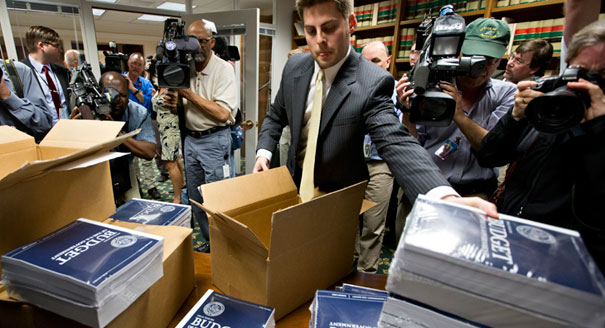
President Obama released his fiscal 2017 budget proposal on Tuesday. Here are the top 6 things you need to know:

  1. $500 billion deficit: The budget proposes $4.1 trillion in outlays and $3.6 trillion in receipts.
  2. A clarion call for progressivism: “President Barack Obama’s final budget proposal is a clarion call for Democratic progressivism – a $4 trillion spending blueprint that would pour billions into clean energy, education and Medicaid, and pay for it by raising taxes on big banks and the wealthy,” writes POLITICO’s Benton Ives.
  3. Rosy picture on the economy and debt: “The White House projects that, were the policies in the president’s budget adopted, the economy would grow modestly over the next ten years with the deficit holding steady and debt ticking up slightly,” says Benton Ives of POLITICO.
  4. Swiftly slammed by the GOP: “Republicans said before the document even arrived they would break the long precedent of hearing from the President’s budget chief as they draft their own fiscal blueprint.”
  5. What’s trade got to do with it? “The Trans-Pacific Partnership would cost the U.S. roughly $28 billion in lost tariff revenue over the next 10 years, assuming it takes effect next year, according to Obama’s proposed 2017 budget,” according to the National Small Business Association.
  6. Watching over Wall Street: Bloomberg reports: “President Barack Obama will ask Congress to double funding for the U.S. Securities and Exchange Commission and the Commodity Futures Trading Commission over the next five years.”

News You Can Use

STOP SWIPING FOR SANDERS
Tinder has started blocking Sanders supporters from using the dating app to campaign for Bernie Sanders. Tinder blocked a 23-year-old woman from the app after she swiped right on every single profile and sent “Do you feel the bern? Please text WORK to 82623 for me. Thanks!” to all of her matches. She isn’t the only one – a new Facebook group titled “Bernie Sanders’ Dank Tinder Convos” has “become a kind of support group for people who use the dating app to canvass singles in their area.”

NYET ENOUGH PROTECTION
Business Insider reports: “With current force deployments, Russia could steamroll NATO forces in the Baltic states. In the most optimistic scenario for NATO, Moscow would be able to conquer all the way to Estonia’s capital Tallinn in the course of 60 hours, according to a new report from the think tank RAND Corp.” While the Kremlin has pushed to modernize Russia’s military, one of NATO’s key disadvantages is its process for decision making – all 28 members have to reach consensus on every issue before taking action.

“LABOR UNIONS ARE SUPER PACS THAT DEMOCRATS LIKE”
Howard Dean defended Hillary Clinton’s ties to Wall Street on MSNBC last week: “Why does Hillary Clinton have to put up with a double standard? I don’t hear anybody asking Bernie Sanders for his transcripts for some speech he made with a labor union. Frankly, for Bernie to say he doesn’t have a super PAC, labor unions are super PACs. Now, they’re super PACs that Democrats like, so we don’t go after labor unions, but this is a double standard.”

CYBER COLONIAL PROBLEMS
Venture capitalist and Facebook board member Mark Andreessen may have gone too far when he took to twitter to call out the Indian government for banning Facebook’s free internet services, proclaiming, “Anti-colonialism has been economically catastrophic for the Indian people for decades. Why stop now?” The ensuing uproar led to his inevitable apology, but the damage is done. “Part of the backlash against Internet.org, the Free Basics predecessor, was that it imposed a particularly narrow type of Internet access, with an American tech company, Facebook, picking the services (and therefore the winners),” reports Re/Code.

PORTUGUESE REJECTION
Last week, Portugal’s Socialist government suffered international embarrassment when the European Commission rejected the nation’s anti-austerity budget for “serious non-compliance” with EU fiscal rules. The situation could lead to the first ever veto of a Eurozone nation’s adopted budget by the European government in Brussels. Many observers suspect Portugal is being targeted in order to send a message to Italy, which faces similar issues on a much larger scale.

CAN’T BUY ME VOTES
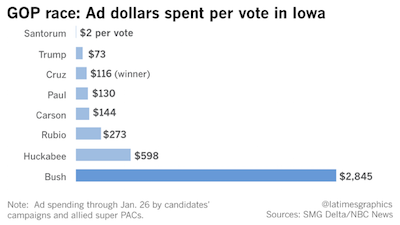
As the Los Angeles Times reports: “Money may yet prevail in this year’s presidential election, but the failure so far of big donors to propel candidates to the top of the heap has shown the limitations of even huge stockpiles of cash and put some critics of lax campaign finance laws on the defensive.” Jeb Bush, the candidate who collected the most super PAC money, finished with less than 3% of the vote in Iowa. Super PACs may have more sway in the general election, however. “Even Trump would be hard-pressed to write a $1-billion check if he becomes the GOP nominee.”

2 Feb 11 b

NOTARIZING MODERNIZED
“Why has no one fixed the antiquated notary system? The simple answer is that the law and the technology needed to converge,” writes Notarize’s Adam Pase. Indeed, while there are technological solutions for many outdated systems, too many startups fail to consider the laws and regulations surrounding those systems until it’s too late. Notarize’s story is an example of finding ways to disrupt the laws along with the systems.

CHINA TROUBLE
January 2016 marked the lowest level for China’s foreign-exchange reserves since 2012, prompting some to question how Beijing can continue to rely on rainy-day funds to prop up the yuan without initiating a large-scale capital fight. Bloomberg estimates $1 trillion in capital outflows for 2015, more than seven times the amount of cash that left the nation in 2014. Some Asia economists predict February will yield a much smaller decline, but international investors remain concerned.

LET’S DO IT NOR-WAY
Yngve Slyngstad, Norwegian CEO of the world’s largest sovereign wealth fund, has called for U.S. companies to begin separating the roles of CEO and Chairman. Slyngstad claimed, “While the battle to split the roles in many U.S. companies could take a generation, it was ‘not in a sustainable position’.” The Norwegian oil fund has repeatedly pushed for improved corporate behavior in American companies, using its corporate positions to vote against the election of CEO-Chairmen within JP Morgan, Goldman Sachs, General Electric, ExxonMobil and others.

THERE CAN BE ONLY ONE…OR TWO
Say hello to a new Brexit “supergroup” uniting different strands of Euroskepticism. The Sunday Express reports: “The new umbrella group, which will be unveiled this week, will give campaigners for a U.K. exit a unified voice for the first time. After a week of bitter infighting between the rival campaigns, the groups will put their differences aside to pursue the ‘once in a lifetime opportunity’ that the referendum brings.” The move comes after a poll last week showed that those favoring a British exit from the EU outnumbered the “Bremain” camp by nine percentage points. Two main pro-Brexit groups still remain: Leave.EU, which will anchor the new “supergroup,” and rival Vote Leave.

Mark Your Calendars

February 20 – Nevada Democratic Caucus & South Carolina Republican Primary
February 23 – Nevada Republican Caucus
February 27 – South Carolina Democratic Primary

Subscribe here to get TL;DR in you inbox each week.

Eagles vs. Drones

Here’s What You Need to Know

With the Senate Energy Bill up for a cloture vote as soon as today, here are four things you need to know:

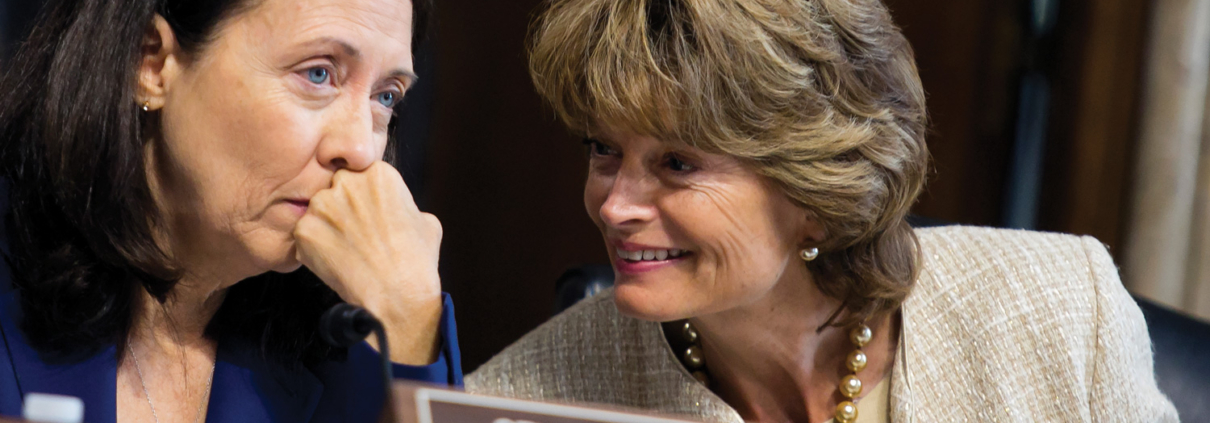
  1. This is a rare case of passing a bill many Republicans and Democrats can support. The bill is co-sponsored by Senator Lisa Murkowski (R-AK) and Senator Maria Cantwell (D-WA) who are taking measures, such as limiting the scope of the bill, to achieve bipartisan consensus and a smooth process. So far, it has maintained the support of both Senate Majority Leader Mitch McConnell (R-KY) and Senate Minority Leader Harry Reid (D-NV).
  2. During the amendment process, Republicans have been taking aim at regulations. Environment and Public Works Committee Chairman James Inhofe (R-OK) has already introduced 16 amendments aimed at diminishing the Obama administration climate rules.
  3. Democrats are using the amendment process to shame Republicans. As Politico noted, “Senators of a greener turn of mind see a chance to get more work done on climate change. ‘It’s important that we try to put some real meat onto the energy bill and also use it as an opportunity to also remind people that basically every senator’s home state university is saying that climate change is real,’ [said] Rhode Island Democrat Sheldon Whitehouse …”
  4. Of course, Senators never let a crisis go to waste. Senate Democrats have proposed an amendment to the bill that would provide $400 million of emergency relief to the city of Flint, Michigan, which remains in a state of crisis over lead-contaminated water. The two California Democratic Senators planned to introduce an amendment that would direct the Energy Secretary to create a task force to recommend how to solve the ongoing natural gas leak near Los Angeles and prevent future incidents.

News You Can Use

SMOKING THE TRADE DEALS
Why are anti-tobacco groups supporting the Trans-Pacific Partnership? Language in the agreement blocks tobacco companies from suing when foreign governments restrict labels on cigarette packages. While this has won over Democrats in Congress, it has cost Republican votes, especially for those in tobacco-producing states like Kentucky, North Carolina, and Virginia. Meanwhile, after U.S. negotiators warned their EU counterparts that granting China “market economy” status could jeopardize the TTIP deal, an EU commission paper leaked illustrating internal concerns over potential European job losses from the move.

PAY ME TO BORROW
Last week, in a surprise move, the Bank of Japan imposed a 0.1% fee on selected current account deposits, effectively introducing negative interest rates to encourage banks to make more loans and help stimulate the Japanese economy, which USA Today notes, “is forecast to grow just 1.1% in 2015 and 1.7% in 2016.”

$29 TRILLION HANGOVER
Observers of the credit market remain concerned about the potential for a coming global recession sparked by the unprecedented $29 trillion bond binge that has left corporate leverage at a 12-year high. Bonnie Baha, a money manager at DoubleLine Capital in Los Angeles, claims “We’ve never been in a cycle quite like this… It’s setting up for an unhappy turn.” With one third of companies globally failing to garner high enough return on investments to cover their cost of funding, the problem doesn’t seem likely to disappear anytime soon.

EAGLES VS. DRONES
The eagle is known in America as a patriotic symbol of freedom. But in the Netherlands, eagles are becoming known for the ability to take out rogue drones. The Dutch police have partnered with raptor training company Guard From Above to train eagles to take down drones. While the training has proven successful so far, the departments says it is still looking into methods for preventing injury to the eagles.

MEET THE SUPER PAC SAND-MAN
The New York Times reports, “More super PAC money has been spent so far in express support of Mr. Sanders than for either of his Democratic rivals …” This is a bit ironic for a candidate who has prioritized overturning Citizens United and has criticized money in politics as “corrupt and undermining American democracy.” As a spokesman for his Democratic rival, Clinton, put it, “This is one of the prime examples of Senator Sanders saying one thing and doing another.”

UBER FOR WELFARE?
Just as Uber interrupted the taxi industry, the gig economy can change how we think about social safety nets like welfare. As Cesar Conda and Derek Khanna write for The Atlantic, “The current safety net is outdated, designed for an era when work was a 9-to-5 ritual that required interviews and a résumé. The modern economy is much more complex, and the gig economy, in particular, has dramatically reduced the barriers to finding work.” Work requirements for welfare, a measure supported by 83 percent of Americans, make even more sense today with the plethora of new and part-time job opportunities the gig economy has created. Politicians should no longer attack the gig economy as a labor dilemma and instead recognize the new opportunities it offers.

REGISTERED LETTER TO THE EDITOR
On Tuesday, a state board in New York charged with cleaning up political corruption instead focused on newspapers and public relations firms, voting to require consultants who contact news media editorial boards to register as if they were lobbyists and disclose their activities. This new measure allows a government body to oversee the editorial process of our Constitutionally-guaranteed free press. As Andrew Celli, whose law firm wrote a letter opposing the change on behalf of four PR companies, said “Newspaper editorials are part of the firmament of public discussion. The idea that that is going to be overseen by an administrative body in Albany is deeply concerning.”

EQUAL PAY BLITZ
Last week, a coalition of progressive women’s groups launched a national blitz on the issue of equal pay, advancing legislation on the subject in nearly half of the country’s state legislatures on the same day. An organizer with one of the groups said they intended “to make a coordinated effort around this to try to nationalize the issue.” Many question the necessity of the measures, citing preexisting equal pay protection laws and the lack of study on the economic impact of such laws that will be sure to result in burdensome regulations for businesses, but the reality is this is simply the latest front in a broad progressive push for more regulations on businesses intended to reduce income inequality.

FLYERS’ BILL OF RIGHTS
Several travelers’ rights groups have begun a push for government regulators to secure air travel passengers’ “right to space” by mandating things like minimum seat width and pitch. But as Cato Institute’s Doug Bandow notes, if you “make every airplane a premium-economy plane and fares will rise to premium-economy levels.” As interest groups continue to push for these measures, the debate will go on over which is more important: rights to comfort or low-cost air travel. After all, if you can’t afford the ticket, does it really matter how much room you would have had on the plane?

Mark Your Calendars

February 9 – New Hampshire Primary
February 20 – Nevada Democratic Caucus & South Carolina Republican Primary
February 23 – Nevada Republican Caucus
February 27 – South Carolina Democratic Primary

Subscribe here to get TL;DR in you inbox each week.

FEC Filings, Big Data, And Supreme Snafus

Here’s What You Need to Know

With the annual FEC year-end reports due this coming Sunday for all federally registered political organizations, our own Managing Director, Lloyd Miller, has outlined the top four things to watch in the Presidential campaigns’ reports:

  1. Campaign Spending: How a campaign is spending their money will show what level of operational efficiency a campaign is working at. Campaign expenditures should be focused on things that generate votes, volunteers, or more dollars.
  2. Airtime Reserved – And Paid For? If a campaign has paid for the airtime that its claimed its reserved, it shows a level of financial security. If they haven’t, there’s still at least one very large outstanding bill somewhere in HQ.
  3. Debt: How much debt a campaign carries will help show how well they are budgeting and spending their money. Looking at the debt also helps show what money the campaign really has to spend down the road.
  4. Burn Rate: Burn rate measures how quickly a campaign is spending the funds it is raising (usually talked about as a percentage of money spent vs. how much they’ve raised). This will show whether or not a campaign is spending money faster than it can raise it.

As the 2016 Presidential election goes on, the Delve team will be producing a series of posts just like this one to help point out what the campaigns and their strategies can teach us about effective research and communications techniques. You can see them all as they’re posted on our Medium publication, Delve In.

News You Can Use

IT MIGHT BE A JUNGLE OUT THERE
Daily Kos raises the alarm in Arizona, where a former Democratic state Attorney General and a top advisor to former Republican Gov. Jan Brewer have joined forces with a Texas billionaire to promote a ballot initiative instituting a California-style “top-two” jungle primary system. However, Daily Kos notes, “Arizona voters resoundingly rejected a similar measure by a two-to-one margin in 2012, and the state Republican Party has already expressed its sharp opposition to this effort.”

BIG GOV VS. BIG DATA
Tech firms who rely on access to online data are feeling the heat at home and abroad. The Hill reports, “Advocates are pressing the Federal Communications Commission to quickly propose strong Internet privacy rules,” which could impact companies like Comcast, Verizon and AT&T. Meanwhile, big data firms’ ability to operate in the EU is in jeopardy due to a Congressional logjam over a new safe harbor agreement. This issue is bleeding into politics, with Jim Gilliam, CEO of NationBuilder, a nonpartisan online political organizing platform warning, “The uncertainty in the EU right now is definitely hurting us with signing new customers.”

TTIP’S ONE PERCENTERS
Researchers published a study of public sentiment surrounding the Transatlantic Trade and Investment Partnership by looking at tweets related to the deal over a one-month period. The result was grim for the trade deal Obama hopes to conclude this year. Favorable tweets regarding the deal made up just 1% of all tweets discussing the topic, leaving the other 99% squaring in opposition. Social media has proven its ability to mobilize grassroots support and opposition, so deal supporters will need to step up with Twitter game.

SAY IT AIN’T SO, CBO
The Wall Street Journal breaks down the key info from the Congressional Budget Office’s most recent release, and it doesn’t look good: “The share of the U.S. economy going to interest payments on the debt will more than double in 10 years…The public debt is growing faster than our economy…Debt is on an unsustainable path even before it reaches 100% of GDP…Recent legislation has made things worse, not better.” Tax and budget expert Ryan Ellis argues in Forbes that spending, not taxes, is the culprit.

INCORRECT THE RECORD
Earlier this month, the Clinton Super PAC Correct the Record attempted to offer “off the record” story pitches to the Burlington Free Press, but CTR press secretary Daniel Wessel clearly forgot to set the ground rules before he emailed The Free Press an article on Connecticut Gov. Dannel Malloy “hit Bernie on guns today” while offering to share more info on this and other negative Sanders stories.

WATCHDOG ON A LEASH
As The Daily Caller reports: “If Anne Weismann was still chief counsel at the progressive watchdog group Citizens for Responsibility and Ethics in Washington (CREW), she says that without a doubt she would have hit back at the State Department for improperly denying her December 2012 Freedom of Information Act (FOIA) request for information on Hillary Clinton’s emails accounts.” Instead David Brock, a Clinton supporter who runs the pro-Clinton super PAC Correct the Record, and now runs the show at CREW as well, responded to the improper denial with “deafening silence.”

SUPER PAC FREE PASS
As The Center for Public Integrity reports, “thanks to a quirk in federal law,” super PACs have “the power to  withhold their January donors’ names until well after the first-in-the-nation Iowa caucuses and New Hampshire primaries are conducted next month” by switching to monthly filing. CPI notes this move could keep secret “the potentially massive amounts of money the donors are contributing in order to affect the outcome of those crucial contests” in Iowa and New Hampshire.

SANDERS’ SCOTUS SNAFU
Last week, Sen. Bernie Sanders’ presidential campaign tweeted: “Any Supreme Court nominee of mine will make overturning Citizens United one of their first decisions.” While it is likely that the makeup of the Court will be shaped by the next presidential election, Sanders seriously misunderstands how the Court works. Justices are not allowed to set their own schedule and cases cannot be heard unless two parties have genuine conflict and take their case to the Court. At least, as TPM assures its generally left-leaning readers, “there’s nearly a year between now and the presidential election, so Sanders has plenty of time to educate himself about how the Supreme Court functions if he becomes the Democratic nominee.”

DON RUMSFELD, MOBILE GAMER
At 83, former Defense Sec. Donald Rumsfeld has unveiled a mobile game app that will introduce “Churchill Solitaire” to new generations of players. In a Medium post, the former Secretary warned it “is not a game for everyone. It takes patience and perseverance, cunning and concentration, and strategy and sacrifice.” Just like Brickbreaker!

Mark Your Calendars

Thursday, January 28 – Fox News GOP Debate
Sunday, January 31 – FEC Year-End Reports
Monday, February 1 – Iowa Caucuses
Tuesday, February 9 – New Hampshire Primary

Subscribe here to get TL;DR in you inbox each week.

Caucusing, Oppo Do’s and Don’ts, Polling Gone Bad

Here’s What You Need to Know

With the Iowa Caucuses just eleven days away, top GOP election attorney Ben Ginsberg provides a detailed look at how the process will play out. “More than any of the other primary seasons I’ve seen,” Ginsburg writes in Politico Magazine, “This is the year to expect the unexpected.”

Why is 2016 so different than previous years?

  • In 2008 after McCain secured the nomination “too early,” GOP leaders adjusted the primary schedules, encouraging states to push their primaries later and later and penalizing them if they didn’t.
  • In 2012 “Romney’s anti-establishment challengers petered out relatively quickly, while the two candidates currently leading the polls this year—Donald Trump and Ted Cruz—are themselves anti-establishment candidates, and are continuing to gain momentum just as the voting season begins.”

Ginsberg breaks down the upcoming primaries:

February’s Favored Four
4 states; 133 delegates chosen, 5.4 percent of the total
“Winning three of four is the only scenario that could produce a March nominee, and right now, Trump and Cruz are the only candidates who look to have a chance to do that.”

March 1: Demolition Derby Day
12 states; 624 delegates chosen, 31 percent of the total cumulatively
“These contests will no doubt winnow the field. The question is whether more than two candidates will survive the primaries’ first Demolition Derby.”

March 5-12: Everyone Gets a Trophy
11 states; 356 delegates chosen, 45 percent of the total cumulatively
This stretch of the nominating process isn’t likely to change much.”

March 15: Primary Groundhog Day
5 states; 357 delegates chosen, 60 percent of the total cumulatively
“Not enough delegates are chosen between March 16 and April 19 to alter the dynamics of a race. So either a presumptive nominee emerges from the voting on March 15, or the long, cold primary season is destined to continue for at least five more weeks.”

News You Can Use

AGENDA SETTER
The Washington Post looks at how Speaker Paul Ryan is uniting the Republican caucus with policy ideas. From taxes to health care to welfare, Ryan is laying out a conservative reform agenda that all wings of the party can support and promote in 2016.

CONNECT-I-TAX
With business giant GE moving its headquarters from the suburbs of Connecticut to Boston, Massachusetts, it’s clearer than ever that state-level policy matters. As The Wall Street Journal reports, “GE first publicly threatened its move in June, blaming a Connecticut budget deal that raised corporate taxes and what company officials described as an inhospitable business climate.” Several states attempted to woo GE, but ultimately, Massachusetts won. Why Connecticut Gov. Dannel Malloy is trying to nab the “tax” moniker from the state (formerly?) known as Tax-achusetts is unclear.

“OPPO RESEARCH? NO, IT’S YOUR RECORD.”
During the Republican Presidential Debate last week, Rubio slammed Cruz for flip-flopping on several votes saying, “That’s not consistent conservatism. That’s political calculation.” In response, Cruz said: “I appreciate you dumping your oppo research folder on the debate stage.” To which Rubio responds: “No, it’s your record.” That’s how it’s done, folks. A candidate who knows the facts about his opponent’s record is ready to win a debate, and the election.

DEM DEBATE DEBACLE
Whoops! At the Democratic Debate in Charleston Saturday night, Clinton criticized Sanders for voting in favor of the The Commodity Futures Modernization Act in 2000 that took steps to deregulate Wall Street. But, as The Washington Post reports, “Not only did President Bill Clinton sign that bill into law, but key officials in his administration were also credited with helping to craft it.” Candidates need to know their own record and vulnerabilities before they go on the attack.

A DIFFERENT APPROACH TO A CONTRAST AD
The contrast ad (less euphemistically known as an attack ad) usually strikes a negative tone. But the latest ad from Nissan takes a different, riskier approach. The new spot pays homage to Nissan’s pickup truck competitors – Chevrolet, Ford, and Dodge – before introducing the new Nissan Titan XD truck. As AdWeek writes, “The approach seems counterintuitive, but the strategy allows Nissan to take the high road, respectfully acknowledging its antecedents while laying claim to the future.” As Nissan shows, respecting your competitors while differentiating yourself can often be a better strategy than directly attacking them.

OUR BRAND IS CRISIS
Teddy Goff, the digital powerhouse of Obama’s 2008 and 2012 efforts, is at the helm of Hillary’s 2016 digital strategy. And he’s doing something new and different. Hillaryland has built a content production team, comprised of dozens of campaign staffers, rivaling those of BuzzFeed or Vox, in an attempt to engage voters with original content. The strategy includes articles published on a campaign run blog, interactive quizzes, animated GIFs, and videos. But as USA Today writes, “Ultimately, though, digital experts say social media success depends on something only the candidate can deliver: authenticity.” It remains to be seen whether Clinton’s attempt to supersede the media filter will translate into votes or fall victim to the more unvarnished social media strategies of candidates like Donald Trump.

BROKEN POLLING OR CROOKED POLLSTERS?
An official inquiry confirmed pollsters in the 2015 UK elections actively designed their polls to vary less than expected, thus forming an inaccurate statistical consensus. By under representing Conservative voters in their samples, pollsters claimed the “surprise” Tory victory was due to “Lazy Labour” voters or unlikely Conservative voters. In reality, The Telegraph explains, “It was all rubbish. The polls were wrong because the pollsters had – inaccurately – manipulated their own samples.” The inquiry has declined to publish details of manipulation by specific firms, but the conclusions unquestionably damage the already battered industry.

IT’S NOT DELIVERY, IT’S GOVERNMENT REGULATION
Government is encroaching on more and more areas of our lives, including how, what and where we eat. Indeed, a newly-released FDA report claims the pizza boxes you know and love may be killing you. Still, one disruptive area of food commerce has yet to draw significant scrutiny: on-demand food delivery services, like UberEATS. The Manhattan Institute’s Jared Meyer suggests this rapidly growing industry’s success is thanks to “slow-to-catch-up regulators have yet to devise a way to stymie its growth,” as they have with street vendors and food trucks.

KING FOR A YEAR
The Foundation for Economic Education reports some inconvenient truths for those concerned with income inequality: “Your odds of ‘making it to the top’ might be better than you think, although it’s tough to stay on top once you get there. According to research from Cornell University … Over 11 percent of Americans will be counted among the top 1 percent of income-earners … for at least one year,” but “the rate of turnover in these groups is extremely high … Some 94 percent of Americans who reach ‘top 1 percent’ income status will enjoy it for only a single year. Approximately 99 percent will lose their ‘top 1 percent’ status within a decade.”

Mark Your Calendars

Sunday, January 31 – FEC Year-End Reports
February 1 – Iowa Caucuses
February 9 – New Hampshire Primary

Subscribe here to get TL;DR in you inbox each week.

TL;DR January 15, 2016

Here’s What You Need to Know

In his eighth and final State of the Union Address on Tuesday night, President Obama “offered a prescription, saying it’s about the process, not the people who are elected. Obama pitched the removal of legislatures from redistricting; a reduction of the influence of money in politics; and laws that make it easier to vote.”

Yet these proposals would address symptoms of the real problem, not the cause. The political rancor Obama discussed exists in large part due to the government encroaching on more and more areas of our lives; and Obama has pushed that expansion hard.

Flashback to his 2012 State of the Union Address, which Forbes described as “a speech about power — about increasing the scale and scope of government and the power of those who govern over the American people.”

As long as government seeks to exert such a high level of control over a growing number of industries and individual choices, it will be impossible to stop the flow of money and revolving door between government and business.

Instead of bemoaning money in politics (we spend more money getting people to buy snack foods and sodas than on choosing a candidate), we ought to be asking what the appropriate role and level of government ought to be. Until then, we shouldn’t be surprised that companies exercise their Constitutional right to petition government and protect their ability to engage in commerce.

News You Can Use

BREXIT BREAKDOWN
With a referendum likely to be held this summer, two-thirds of Conservative MPs support Britain’s exit from the European Union while Prime Minster David Cameron wants the country to stay. The referendum itself has consequences, raising doubts as to the viability of the union of England, Scotland, Wales, and Northern Ireland and questioning the wider project of the European Union. Cameron insists he will stay on as prime minister regardless of the result, but he will likely face a challenge to his premiership either way.

HILLARY MEETS THE BERN’S ARCHIVES
Opposition research FTW. On Wednesday, Bernie Sanders responded to the Clinton campaign’s attacks on his health care policy by tweeting a throwback photo with the handwritten caption: “To Bernie Sanders with thanks for your commitment to real health care access for all Americans and best wishes – Hillary Rodham Clinton, 1993.”

MILLENNIALS UP FOR GRABS
As USA Today reports, “A USA TODAY/Rock the Vote Millennial Poll finds an emerging generation that is more pragmatic than ideological and not yet firmly aligned with either political party.” Trump is ahead with Millennials Republicans and Sanders is winning with Millennial Democrats, especially Millennial women. Like the generations that came before them, the economy is their top issue; but, they are especially concerned with college affordability and student debt. “What is less certain, the national survey shows, is whether they’ll bother to vote in 2016, even in an election where they identify an agenda they call crucial.”

JUST LEAVE IT
As Fast Company predicts, 2016 will go down as the year of the parent and the year of paid family leave. Yet, “when it comes to benefits, Americans tend to bristle at federal solutions.” This coupled with Congressional gridlock means federally mandated paid leave is unlikely to be a thing any time soon. But, “for the first time, cities have begun to pick up the slack left by intransigent national legislators” and governors, state legislators, and mayors are taking paid parental leave policy into their own hands. Perhaps 2016 will also be the year of local policymaking.

FROM PARIS WITH LAWSUITS
“Countries backsliding on their pledges made at the Paris climate summit could soon get dragged into court by their own citizens … Environmentalists see litigation as their enforcement mechanism of choice if governments fall short of the agreement’s goals to curb global warming. Other than public shaming, it’s the only way to hold nations accountable,” legal experts tell Sara Stefanini at Politico.

MO’ RULES, MO’ PROBLEMS
A referee in Saturday’s Bengals-Steelers game took it upon himself to obliterate a team’s entire season, evidence that the number of new rules enacted by the NFL has led to “growth of hubris among the people tasked with enforcement.” Some might say NFL refs are starting to look like the government regulators who have more rules and power than ever before. Just like the referee, we can only expect an increase in power-plays among government regulators as “the legislature delegates more and more of its rulemaking to federal agencies and their all-too-human experts.”

WHAT THE FRACK?
Senior oil and gas analyst Fadel Gheit predicts that half of U.S shale oil producers could go bankrupt before the crude market reaches equilibrium. With oil prices down, U.S. drillers, many of whom rely on the more expensive fracking process, are spending more than they are making from their operations. Gheit describes the situation as unsustainable and posits that it will eventually force prices higher.

MESSAGE? SHE CARES.
The Hill reports “Democratic presidential candidate Hillary Clinton has divulged what she would do if she won the $1.5 billion Powerball jackpot: She’d spend it on her campaign.”

FOIA FACELIFT
Fifty years after the passage of the Freedom of Information Act, both Republicans and Democrats in Congress support a bill that would streamline the process of requesting and receiving public information, including the creation of an online portal for requests. Faster FOIAs not only means better, more open and accountable Government. It also means faster intelligence gathering, leading to faster insights for public affairs strategies.

IT’S NOT YOU, IT’S ME
In the Middle East and in Syria, Obama failed to ask the question: what happens if we don’t act? “Had he known that not acting would produce a vacuum in which a humanitarian catastrophe, a terrible refugee crisis, a deepening proxy war and the rise of ISIL in Iraq and Syria would occur, his responses might have been different…that vacuum was filled by others: Iran, Hezbollah and Iran’s other Shia militia proxies; Saudi Arabia, Turkey and Qatar; Russia; and ISIL.” And now, we are dealing with the consequences in the shape of the Iran-Saudi Arabia conflict. Continuing to treat the U.S.-Iran relationship as a top priority, the Obama Administration is abandoning decades old Middle Eastern alliances and standing by their new friend Iran, placing blame on the Saudis.

Mark Your Calendars

Sunday, January 17 – NBC News Democratic Primary Debate
Sunday, January 31 – FEC Year-End Reports

Subscribe here to get TL;DR in you inbox each week.

TL;DR January 8, 2016

Want to witness a little bit of TL;DR live? Join us for the Hamilton Foundation’s “The Politics of Fighting Radical Islam in 2016,” featuring a keynote address by former House Speaker Newt Gingrich and a panel discussion among Delve CEO Jeff Berkowitz, Tara Setmayer, Tofer Harrison, and Christian Whiton. Cannon House Office Building, Room 122, Wednesday, January 13th, 1:30pm to 3:30pm. Register here.

Here’s What You Need to Know

The conflict between Sunni Saudi Arabia and Shiite-dominated Iran, which have been fighting proxy wars against each other in recent years, is intensifying:

  • Over the weekend, Saudi Arabia executed a popular Shiite cleric who was known for speaking out against the royal Saudi family and calling for better conditions for the minority Shiites in the country.
  • In response, protesters in Iran, the dominant Shiite power of the Middle East, set fire to Saudi Arabia’s embassy in Iran, and Iran’s Supreme Leader promised “divine revenge” on Saudi Arabia.
  • Saudi Arabia rebutted by cutting off diplomatic ties with Iran, giving all Iranian diplomats 48 hours to leave the country.

The U.S. response has been fraught with mixed signals and mistrust:

  • The Obama Administration is cautious of criticizing Saudi Arabia’s dismal record of human rights, but it “sees the Iran deal as the one stabilizing factor in a region that is increasingly spinning out of control, and is therefore giving the U.S.-Iranian relationship top priority.”
  • Some think that’s the wrong move. Former Obama Middle East advisor Dennis Ross said, “We should be holding the Iranians to account, and make clear that we’re prepared to respond to things they do in the region.”

News You Can Use

TWEET AT YOUR OWN RISK
Politwoops, a site tracking politicians’ deleted tweets, is officially back in business. Twitter effectively shut down the site in June claiming that preserving deleted tweets was in violation of their developer agreement. Twitter founder and recently named CEO Jack Dorsey has reversed the earlier decision, declaring Twitter “stands for speaking truth to power.”

READY, FIRE, AIM
Jeb Bush got tripped up this week on claims about his record. His oft-repeated campaign claim of winning “NRA Statesman of the Year award,” which came with “a rifle from Moses” turns out to be false. As his communications director was forced to admit, “[Bush] was mistaken and conflated multiple events unintentionally.” It is just the latest reminder that a thorough vulnerability study is crucial for even the most experience candidates.

THE 90s CALLED, THEY WANT THEIR SCANDALS BACK
Last Monday, Donald Trump reminded the world of former President Clinton’s history of “woman abuse” tweeting: “If Hillary thinks she can unleash her husband, with his terrible record of women abuse, while playing the women’s card on me, she’s wrong!” While the media “feigned confusion” at the mention of Clinton’s slew of scandals that plagued the media of the 1990s, some say Trump’s tweet was smart in labeling Bill a liability to Hillary’s campaign. Either way, it’s a good reminder that past scandals can always come back to haunt candidates in future campaigns.

“PROSTITUTES OVER PATRIOTS” – THE TOP POLITICAL ADS OF 2015
In crowded and competitive political fields, original and punchy ads have been changing narratives and garnering results. Politico’s top political ads of 2015 “drove the conversation,” and the facts in these spots are just as important as the creativity.

A GOOD ‘DEED’ GONE WRONG
The San Diego Union Tribune reports that a mentally ill man took title of San Diego’s baseball stadium, Petco Park, “away from the city and the Padres two years ago by walking into the San Diego County Recorder’s Office and submitting a properly filled-out deed transfer. Seriously.” Of course, as oppo guys, we already knew powerful things can come from County Recorder Offices.

PENTAGON PAPERS
Politico reports, “The Democratic Party, eager to dig up damaging material on the GOP before this year’s elections, is flooding the Pentagon with public records requests on a host of White House hopefuls and vulnerable Republican senators.” But as Government records specialist Steve Aftergood notes, FOIA early if you want results before Election Day because “the turnaround time can be quite long — not just weeks or months but even years.”

YOUR 60-SECOND GUIDE TO THE COUNCIL OF THE EU
If you’re not an EU insider, you might find this guide to the EU’s ministerial councils, from the upcoming Dutch EU presidency, a great explainer to how this part of the EU system fits together.

MY BIG FAT GREEK ALTERNATE REALITY
Politico reports that former Greek finance minister Yanis Varoufakis re-wrote an interview he had done with Marc Peeperkorn of de Volkskrant and posted this new version on his blog. “In this new version Varoufakis has deleted around 10 comments from the interview transcript and softened (or “added context” in the Varoufakis spin) other views.” You can read what Varoufakis wished he said originally, here.

KING OBAMA, YEAR 8
Food, energy, education, retirement and guns: all things the Obama administration plans to increase regulations on this year.

Mark Your Calendars

Thursday, January 14 – Fox Business Republican Primary Debate
Sunday, January 17 – NBC News Democratic Primary Debate
Sunday, January 31 – FEC Year-End Reports

Click here to get TL;DR in your inbox every week.

TL;DR December 24, 2015

Happy Holidays!

The Delve team wishes a merry Christmas to those who celebrate and a happy new year’s to all. Like many of you, TL;DR will be taking a rest next week. See you in 2016 with plenty of news and insights to share.

12.24 gif

Here’s What You Need to Know

Being a world leader is tough. While MacLean’s in Canada didn’t cover up Prime Minister Justin Trudeau’s ability to insult three countries in just three words, The New York Times was happy to clean up after President Obama’s disconnect from Americans’ understandable anxiety over terrorism.

  • Last week, prominent Baltic politicians hit back at new liberal Canadian Prime Minister Justin Trudeau, who told Canadian magazine McLean’s in a video interview that the Baltics are “not a thing” when he was asked which of the northern European countries was his favorite. No wonder some people said he was just not ready.
  • A story published Thursday night by The New York Times included a surprising comment by President Obama, but by early Friday morning, the comment had been removed from the story without any editor’s note or other explanation.

News You Can Use

ALWAYS FOLLOW THE MONEY
The New York Times exposes the real source of seemingly grassroots opposition to Puerto Rico declaring bankruptcy: “To block proposals that would put their investments at risk, a coalition of hedge funds and financial firms has hired dozens of lobbyists, forged alliances with Tea Party activists and recruited so-called AstroTurf groups on the island to make their case.”

BEHOLD, THE POWER OF FOIA
The Wall Street Journal reports, “The Energy & Environment Legal Institute has obtained government emails that show the EPA secretly worked with environmental lobbyists to craft its Clean Power Plan … The emails show this secret alliance designed a standard that would be impossible or economically ruinous for existing coal plants to meet—in order to force their closure. … The emails [were] obtained through Freedom of Information Act requests …”

THE MIC IS ALWAYS ON
On the campaign trail, Ted Cruz has pledged to put fighting gay marriage “front and center” in his campaign, but an audio recording leaked to Politico speaking with donors in Manhattan, he downplayed his opposition to marriage freedom, saying it would not be a “top-three priority.”

OMNIBUSTED
Peter Roff for U.S. News & World Report argues the House Freedom Caucus’ “foolish approach … gives the leadership nowhere to go but to the Democrats in order to find the votes they need to pass things the president will sign.” Which may be why Americans for Tax Reform’s Ryan Ellis says The Omnibus Isn’t Good Enough: Blame the Tea Party and the Freedom Caucus.“

SOCIALLY UNDESIRABLE?
A Morning Consult analysis of polling finds Donald Trump performs better in online polling than in live interview polls over the phone. Why? Most likely due to social desirability bias – people are hesitant to tell a live human they support Trump because it might be viewed as socially unacceptable. In other words, they don’t want to be called losers.

WILL THEY VOTE?
Trump can still win if his supporters turn out. Much like Obama in 2008, Trump’s path to victory is getting his supporters, many of whom do not typically vote in GOP primaries, to vote.

“UBERIZING” HEALTHCARE
Inc. magazine’s Tess Townsend predicts the heavily regulated healthcare industry will be Uberized in 2016. As more and more regulated industries with entrenched incumbents and regulators invested in the status quo are challenged by Uber-esque disruptors, expect more policy clashes.

THE MIDDLE CLASS IS GETTING…RICHER?
The American Enterprise Institute points to a Pew Research Center report claiming “The Middle Class is Losing Ground,” to note, “The share of middle class households is getting smaller for a good reason — it’s because they’ve moved up to higher income groups.” Two-thirds of those who moved out of the middle class moved into higher income categories.

Mark Your Calendars

Thursday, January 14 – Fox Business Republican Primary Debate
Sunday, January 17 – NBC News Democratic Primary Debate
Sunday, January 31 – FEC Year-End Reports

Click here to get TL;DR in your inbox every week.

TL;DR December 17, 2015

Welcome to TL;DR

Welcome to Delve’s weekly newsletter. We hope that with our help, you won’t have to say, “Too long; didn’t read,” ever again. Each week, we will endeavor to bring you under-the-radar news and insights to keep you in the know. If you don’t find it useful, we welcome your feedback and understand if you avail yourself of the unsubscribe link at the end of the email.

Here’s What You Need to Know

About the Taxibus:

  • Congressional leaders reached agreement on a nearly $2 trillion year-end tax and spending deal, but are still working on putting the pieces together to ensure strong Republican votes.
  • This new deal builds on the late October agreement that busted the spending caps set by the 2011 Budget Control Act, an issue for many conservatives.
  • Politico Influence has a good breakdown of winners and losers.
  • The House is scheduled to vote on an omnibus and tax extenders package separately, and merge them into a mega “Taxibus” before a Senate vote.

About the COP21 Paris Agreement:

  • Representatives from 195 countries came together in Paris last week and adopted by consensus a legally binding agreement to fight climate change.
  • The goal of this agreement is to keep temperature rises below 2 degrees Celsius by creating plans to abandon fossil fuels in favor of greener energy sources.
  • The way to do this? Reduce CO2 emissions by 6,000 Gt by 2030.
  • The problem with the agreement? It only cuts CO2 emissions by 56 Gt by 2030. Meaning 99% of the problem remains unresolved. And, this reduction of 56 Gt will end up costing $1-2 trillion every year after 2030.

News You Can Use

ABOUT THOSE PRIMARY POLLS
Trump gets 25 times more media mentions than rest of the GOP field combined. It’s all thanks to Trumptation and nobody comes out looking good.

#THANKSOBAMA
Law Professor Jonathan Turley argues Obama’s unchecked executive authority set the stage for Trump to tower over the presidential field.

HILLARY’S MUSCLE
Politico reports, “Calls and visits from senior members of Clinton’s team, who have zeroed in on local party efforts to build political muscle, have left state officials in a ‘holding pattern’ as they wait for guidance from Brooklyn on everything from finance to strategy to hiring …”

BERN’D BY GOOGLE
A recent study of Google search data suggests the search engine’s algorithm produces more favorable results for Sen. Bernie Sanders than any other presidential candidate.

KERRY’D BY GOOGLE
“I usually Google a country,” Secretary of State John Kerry tells the New Yorker’s David Remnick. “I want to know where I am.”

FAILING VETTING 101
According to ABC News, “Fearing a civil liberties backlash and ‘bad public relations’ … Homeland Security Secretary Jeh Johnson refused in early 2014 to end the secret U.S. policy that prohibited immigration officials from reviewing the social media messages of all foreign citizens applying for U.S. visas …” Maybe they should just let political campaigns handle it?

BANKING’S “UBER” MOMENT
Are apps and algorithms replacing bankers? Here’s 100,000 reasons they might be.

FAILURE TO INNOVATE?
The EU struck a deal on new data protection laws that require all companies doing business in Europe to comply with “the right to be forgotten” and a new online “age of consent” of 16, among other provisions. While the deal gives consumers “more control over how their data is used and retained,” companies may be scared to innovate for fear of getting hit with expensive fines.

VIVE LE TRANSPARENCY
A new database from Transparency International reveals French MPs earn €20 million from side jobs.

THEY’RE JUST LIKE US
The EU might need to find its own Tom Coburn. A Politico report lists nine crazy things on which the EU spends its funds.

Mark Your Calendars

Friday 12/18 – Regional and State Employment and Unemployment
Saturday 12/19 – ABC News Democratic Primary Debate
Sunday 12/20 – Party Committee Monthly FEC Reports
Tuesday 12/22 – GDP 3rd Quarter

Click here to get TL;DR in your inbox every week.

Pin It on Pinterest