Silicon Valley Imperiled, Activists’ Hidden Organizing Tool, And The Obama-Trump Vocabulary​

Here’s What You Need To Know

Wall Street has long been unpopular with the public, making the financial industry a punching bag for politicians on both sides of the aisle and a frequent target for increased regulation and bureaucratic scrutiny. In contrast, Silicon Valley’s traditional reputation as young, innovative, and benevolent has made it a tougher target for critics. We may, however, be reaching an inflection point that will change that perception and endanger the industry’s plans for the future.

The positive view of Silicon Valley has been predicated on an implied social contract, in which, similar to TV and radio before it, “we get free access to an enormous amount of information, in exchange for which we know we’re going to get bombarded with some ads.”

As this model has shifted to collecting the personal information about the habits and preferences of customers, it has led to increased public discussion in recent months about this industry’s flaws and questioning of whether these companies can be trusted.  Simply selling products to the general population was one thing; recent developments, however, have made this bargain seem much more ominous.

Behind this increased skepticism is also the awareness that the economic divide between Silicon Valley and the rest of the country continues to grow. While some in tech have accumulated a record net worth,  the average American’s income has stagnated. The industry celebrates the age of entrepreneurship and start-ups, but business births have declined overall.

Many leaders in the tech industry have responded to this concern by proposing a universal basic income (UBI) to support workers who lose their jobs through automation. Yet, this idea, as well as the industry’s general support for immigration policies that increase competition and drive down wages in the labor pool, only reinforces the view of Silicon Valley as out-of-touch elitists throwing the crumbs of their success to the rest of the country.

With the public developing greater fear and suspicion of both the culture and technology coming out of Silicon Valley, the tech industry is increasingly vulnerable to activist pressure and government intervention on a range of issues. These are just a few of the developing challenges to the tech industry:

  • Anti-Trust Challenges: While much of the focus on anti-trust tech challenges in Europe, there is a quietly emerging backlash to tech mergers and acquisitions in the United States. A growing chorus of academics and think tanks have begun questioning whether tech companies like Amazon, in particular, but also Apple, Microsoft, and others, have become too big, while new advocacy groups  have launched to focus on this issue. Even President Trump recently attacked Amazon as a “monopoly.” These factors are adding fuel to the fire for activists, who are looking to exert pressure on politicians and regulators to more forcefully take on these companies.
  • Too Big To Trust: Following the election, tech firms like Google and Facebook have increasingly come under fire for how they treat fake news and offensive speech on their platforms, with some demanding they do more to remove this content, and others attacking their attempts to do so as censorship. The concerns reflect fears that these companies can use their market power and control over the free flow of information to promote or disrupt political agendas. Many argue the subconscious biases of the engineers who design computers ensures certain views are favored over others. Regardless of how these companies approach the issue, they are likely to face a backlash and perhaps calls for state intervention from at least one side of the political spectrum.
  • Gender And Racial Bias: A paradox of the tech industry is that although many of these firms preach diversity, they continue to be largely made up of white males. This dynamic leaves Silicon Valley vulnerable to pressure from activists and the possibility of government intervention to crack down on perceived bias against minorities. The decision of the Labor Department earlier this year to sue Google to obtain its employee compensation data for the purposes of investigating any possible gender gap is just one example of how government may assert itself. In addition, stories from this year documenting dozens of allegations of sexual harassment against tech VCs shows the industry has yet to grapple with the extent of this issue, and could push it further away from the tech-savvy “woke” demographic whose support and goodwill the industry needs.
  • Economic Disruption: Earlier this year, Microsoft founder Bill Gates proposed taxing robots to slow the speed of automation, replace tax revenue losses from diminished employment, provide assistance to displaced workers, and fund jobs in sectors where human skills are required. This idea was driven by the fear of artificial intelligence (AI) displacing workers in both a wide range of industries, from truck driving to financial advising. As this technology continues to develop, it is likely to lead to even more calls for government to contain the impact of AI or halt its progress altogether.

With these and other emerging challenges, we may be approaching an inflection point that could fundamentally change the relationship between the tech industry, the government, and the public. If the industry fails to preempt or adjust to this new political and policy environment, Silicon Valley may become the new punching bag.

News You Can Use

WHERE DID MANUFACTURING WORKERS REALLY GO?

Politicians from both parties routinely pledge to bring back lost manufacturing jobs, which have declined by nearly 30 percent over the past 17 years. Yet, according to an analysisfrom the St. Louis Federal Reserve Bank, manufacturing workers are choosing to leave this sector as often as they are being laid off.

This trend raises questions with important policy implications about whether workers are finding better opportunities in other sectors or dropping out of the workforce for other reasons. While policymakers often use topline economic data to validate their political ideologies, a far deeper dive into the data is needed to understand the source of these economic trends and how policy should be designed to respond to them.

TWITTER’S HIDDEN ORGANIZING TOOL

A Twitter feature introduced in 2015 that lets groups of people privately message each other appears to have revolutionized the way activists coordinate and amplify their messaging. During the campaign, many Trump supporters began using the tool to pick up new followers, share content to retweet, and coach each other on social media strategies.

However, because of its hidden nature, many experts failed to understand what was causing the surge in activity in support of Trump and largely attributed it to bots. As more activists attempt to replicate the success of this strategy, sophisticated monitoring strategies will be necessary to understand and reveal the coordination occurring away from public view.

ITALY’S TAX REFORM MOMENTUM

Italy has one of the largest and most deeply entrenched welfare states in Europe, but too many people remain impoverished. Those who aren’t feel overtaxed,  in part because they actually are. A new proposal from Italian think tank called Istutito Bruno Leoni (IBL) has been making waves in the Italian media by offering a straightforward way to would tackle both of these issues at once by limiting the government’s spending to 25 percent of GDP (it’s currently 43.5 percent of GDP), and preventing the government from taking more than 25 percent of individuals’ income each year.

By presenting the reform in this broad framework that emphasizes increased economic freedom for all Italians, it allows the public to understand the common-sense reasoning behind the plan, and avoids getting the debate bogged down in details. As Republicans look to pass their own version of tax reform, the success of “Twenty-five for all” in capturing Italy’s attention offers a lesson in the importance of focusing the public on the big picture purpose of reform efforts.

WHEN FACTS COME LAST

The New York Times recently sounded the alarm with a page one story claiming federal scientists feared the Trump Administration would prevent a forthcoming report on climate change from becoming public. The problem with the Times’ narrative was that a draft version of the report had been available for public comment since January. Although The New York Times later issued a correction, the story had already traveled far and wide.

The egregious mistake is just another in a series of instances this year where the paper, as well as many other mainstream outlets, have pushed sensationalist headlines before doing the necessary due diligence on their own reporting. In today’s fast-moving news cycle where increasingly unchecked bias can easily lead to bad journalism, having the facts on hand is critical for organizations to prevent falsehoods from becoming accepted truths.

THE OBAMA-TRUMP VOCABULARY

Many would assume that Presidents Trump and Obama are polar opposites in their rhetorical approach when speaking to Americans. However, an analysis from researchers at the University of Minnesota looking into hundreds of presidential speeches found that by some measures, the two leaders’ language choices have more in common with each other than all of their post-World War Two predecessors.

Obama and Trump both use first-person pronouns, as well as uncompromising language like “must” and “need,” far more than prior presidents. This change may be indicative of a long-term trend of the public looking for more assertive and confident rhetoric from the president. However, it may also reflect that in this more narcissistic culture, our politicians have become more focused on virtue signaling than concrete policy achievements.


The Facts on the RAISE Act, What’s Killing Retail, and the 100% Renewable Fraud​

Here’s What You Need To Know

Last week, President Trump endorsed the RAISE Act, legislation sponsored by Senators David Perdue (R-Ga.) and Tom Cotton (R-Ark.) that would be the most significant reform of the U.S. immigration system since the 1965 Immigration and Nationality Act. There’s a lot of exaggerations from both supporters and critics of the bill circulating in the news and in social media, so here are the facts on the RAISE Act:

  • Limitations On Family-Based Sponsored Immigration: Under current law, U.S. citizens can sponsor their spouses, children, siblings, and parents to come into the country, and lawful permanent residents (LPR) can sponsor their spouses, minor children, and adult unmarried children. As a result, family-based immigrants are the largest category of legal immigrants. The RAISE Act would limit both citizens and LPRs to family-based immigration sponsorship of only spouses and minor children.
  • Limitations On Refugee Admittances: The President currently maintains the authority to adjust refugee levels at their discretion. Under this structure, refugee admittances have varied from 50,000 in 2012 to 85,000 in 2016 under President Obama. It went back down to 50,000 this year as a result of an executive order Trump signed in January. The RAISE Act would limit this presidential discretion by making the 50,000-cap permanent.
  • Elimination Of The Diversity Lottery: One way individuals gain legal status is through a so-called “Diversity Lottery” that grants 50,000 green cards each year to immigrants from countries that comprise a low percentage of total admittances. The RAISE Act would abolish this program.
  • Elimination Of Per-Country Caps: Under current law, no country can get more than 7 percent of green cards in any capped category of legal immigration. The RAISE Act would remove this limit so that applicants compete as individuals rather than by nationality.
  • Institution Of A Merit-Based Points System:  Under the RAISE Act, applicants for U.S. green cards would be assigned based on a quantitative system, with points based on age, education level, English ability, whether they have a job offer, the salary of any job offer, any major achievements, and potential investments. If they met a minimum level of points, applicants would be eligible to apply for a visa. This change would make the U.S. immigration system more like other countries with similar points systems, such as Canada, Australia, and New Zealand.

The net effect of all these changes would be to cut legal immigration in half within a decade and prioritize higher-skilled immigrants over lower-skilled immigrants. The bill appears to have little chance of passing in its current form as a result of strong opposition from Democrats and skepticism from many Republicans.

However, it is possible that the bill could be an opening bid in negotiations for a bipartisan compromise down the road. With these facts in hand, the question remains if reducing such legal immigration will be good for the country and economic growth.

News You Can Use

ACTIVISTS PAY FOR CREDIBILITY

The environmental lobby is paying outside consultants to pass off attacks advancing their agenda as unbiased. A new report written by “a well-regarded electronics engineer and consultant,” accuses the hardware tech industry of diluting green standards by stacking boards that determine whether or not a tech product should be labeled “green” with their cronies, and recommends replacing these board members with non-profit leaders and academics.The report was commissioned by the Repair Association, which represents exactly the types of people they suggest placing on these boards. This dynamic shows the importance of monitoring these type of tactics to respond to misleading attacks before they gain traction and reveal the true motives of the groups promoting them.

WHAT’S KILLING RETAIL?

Amazon is often blamed for declining sales and employment in the retail industry. But, a new analysis from Denver-based investor Vitaliy Katsenelson shows that although the company has contributed to this trend, Amazon only accounts for 1.5 percent of total U.S. retail sales. So, who or what else is to blame for retail’s decline? Among several factors, Katsenelson points to increased spending on new technology like smart phones and rising health care costs diverting consumer income away from the retail industry. In addition, he contends Millennials are less willing to spend money on fashion than previous generations. Other potential factors for this change are increased spending on travel and restaurants, and a natural market adjustment from the excessive growth of retail in the 1990s. It’s easy for disruptive enterprises to be scapegoated for painful structural changes in the marketplace, but it is important to analyze the data before concluding their innovations are really to blame.

STRENGTH TRUMPS RHETORIC IN THE MID-EAST

Many pundits and political analysts expected that President Obama’s outreach efforts to the Muslim world would help improve relations with the Middle East; some of those same analysts predicted President Trump’s proposed Muslim ban would strain our relations with these countries. Yet according to Lebanese Prime Minister Saad Hariri, Arab leaders largely prefer President Trump over his predecessor, arguing Obama’s inaction in Syria, concessions to Iran, and early withdrawal from Iraq empowered Russia and Iran to reassert their influence in the region. Hariri also suggested these failures contributed to the rise of ISIS. In contrast, President Trump has outlined a clearer and more decisive approach by speaking in unambiguous terms about terror and taking a tougher line on Iran. This effort shows that clear policies and consistent direction, even amidst unhelpful rhetoric and tweeting, are preferable in diplomacy over inconsistent actions and seeming appeasement.

“HARMONIZING” EURO-TAXES

While Congress prepares to debate proposals to make America more competitive in the global economy, France and Germany are working together to “harmonize” the tax structures of all European nations, which for some countries would mean raising their taxes. Both countries are planning on presenting specific proposals that would move the EU towards a common tax structure, all in the name of cracking down on American corporations like Google that flock to low tax havens in Europe and gain an advantage over European counterparts in higher tax countries. This change would likely involve France and Germany gradually lowering their relatively high corporate rates (around 33 percent) in exchange for other countries like Hungary (at 9 percent) and Ireland (13 percent) gradually increasing their relatively low corporate rates. If this plan moves forward, it not only has implications for America’s potential competitive advantage over Europe; anti-EU populists in low-tax nations could use it to build the case for their own Brexit, arguing the alliance is taking too much sovereignty away from their countries.

THE 100% RENEWABLE FRAUD

Dozens of mayors throughout the country, including from Los Angeles and Portland, have committed to generate 100% of their electricity from renewable sources by 2035. However, Charles McConnell – a former Assistant Secretary of Energy under the Obama Administration – notes “there’s no method to designate electrons on the grid as originating from one source or another” because power generated by oil or wind travel along the same pathway. This means cities are paying to generate any extra renewable energy sold back to grid (on the backs of local taxpayers, of course), claiming it cancels out whatever fossil fuel-generated electricity they use. This fudging of the numbers is another example of how digging beneath flashy headlines can often reveal things are often not what they appear to be.

OPEC’s Diminished Cartel, the Constitutionality of Twitter Blocking, and the Declining Business Birth Rate

Here’s What You Need To Know

After hitting all-time production highs in 2016, this January, the 14-nation Organization of the Petroleum Exporting Countries (OPEC) – as well as several non-OPEC oil producers – agreed to cut oil output by 1.8 million barrels per day. Although oil prices rose slightly above $50 following the agreement, in May they fell into the mid $40s and have stayed in this range since then. Only three years ago, prices were as high as $90 a barrel.

This past Monday, the cartel met in Russia to address the failure of this agreement. Yet, despite more tough talk, including pledges to cap production from Saudi Arabia and Nigeria, oil prices budged only modestly.

Only a few decades ago, OPEC’s oil embargo brought the U.S. economy to a standstill. Now the organization’s ability to influence the energy market has greatly diminished, and here are the main reasons why:

  • It’s The Fracking: Fracking allows the recovery of gas and oil from shale rock through the injection of water, sand, and chemicals. In recent years, the combination of this technology with horizontal drilling and other technological developments has made it possible to reach previously inaccessible fuel. These advancements have resulted in surging U.S. petroleum production. U.S. production increases in 2016 alone were estimated to cost OPEC countries $76 billion. Other non-OPEC countries, such as Canada, China, and Argentina, have also increased production from fracking, although not to nearly the same extent as the U.S. As the output of these countries rises, OPEC’s share of the overall market decreases, naturally hampering its ability to manipulate prices.
  • It’s The Exemptions: In the deal earlier this year, OPEC exempted Libya and Nigeria from any cuts in production because of the economic challenges both countries currently face from internal conflicts. However, production in both countries has surged recently. In May, Libya’s output increased 210,000 barrels a day from the previous month to 760,000, while Nigeria’s increased from 100,000 to 1.7 million. OPEC made slight progress on this front during the Russia summit earlier this week by securing a pledge from Nigeria to eventually cap its production. However, this concession will only go into effect once Nigeria can sustain an output of 1.8 million barrels a day, which likely will not occur for some time.
  • It’s The Cheating: Cartel agreements to limit output are much easier to secure in principle than enforce in practice. According to J.P. Morgan Chase & Co., Iraq and the United Arab Emirates are not complying with their pledges. In addition, Ecuador recently announced they would not abide by OPEC’s decision because of budget challenges. Following the Russia summit, OPEC released a statement demanding “all participating producing countries must promptly reach full conformity.” But it appears unlikely this type of shaming will have a major effect.

Although OPEC can have some impact on moving prices – at least in the short-term – the cartel has clear limitations. OPEC sends mixed messages about its production policies, has no way to enforce member countries to follow their rules, and its share of the petroleum market continues to decline. This will not only have global economic impacts in the months to come; watch for potentially significant political impacts within and among each of the member nations in the Middle East.

News You Can Use

HOW AI CAN MAKE FAKE NEWS LOOK REAL

The proliferation of fake news through social media and other platforms has been a growing concern in recent years, and a recent University of Washington experiment shows how advancements in artificial intelligence (AI) could exacerbate it. Researchers used algorithms to manipulate the mouth movements of President Obama in several different videos, syncing those mouth movements with various audio pieces.While being able to alter a person’s lip movements to match an audio track is nothing new, this development trains itself to match any potential variety of sounds based off existing videos of that person. This technology could be used by fake news disseminators to make videos of an individual saying something out of context or, through an impersonator, to say something they may have never said at all. As the sophistication of these hoaxes increases, even mainstream media outlets may have difficulty distinguishing real from fake, and may have to adjust their processes to avoid amplifying false content.

CAN DEMS’ DEFICIENCIES BE FIXED WITH DIGITAL?

Following the 2016 election, Hillary Clinton argued the Democratic National Committee’s “mediocre to poor” data and digital operations was partially to blame for her loss. To make up for this deficit, former top aides to President Obama and Hillary Clinton recently founded a startup incubator called Higher Ground Labs, raising money to invest in new digital tools to help Democratic campaigns.The organization has already raked in $2.5 million, and will announce the first ten campaign tech startups it will invest in by August. Yet this strategy of emphasizing digital tools could convince Democratic leaders that enhanced technological capabilities can make up for the lack of a compelling national message or other structure deficiencies they have when it comes to driving voters to the polls.

THE CONSTITUTIONALITY OF THE TWITTER BLOCK

The Knight First Amendment Institute recently filed a lawsuit against President Trump in a Manhattan federal court, claiming top government officials blocking other users on Twitter could be a violation of the first amendment. The group argues that when the President and other high ranking members of his Administration block members of the public from seeing and interacting with their Twitter accounts, this blocks citizens from participating in an open public forum, and therefore infringes on their right to free speech and expression.The plaintiffs compare these social media accounts to town halls and open school board meetings that individuals cannot legally be excluded from because they hold dissenting viewpoints. If the suit is successful, the precedent could raise further questions about when the social media presence of a public official is private and when it can be subject to public records requests.

THE DECLINING BUSINESS BIRTH RATE

A new study from the Economic Innovation Group suggests the falling rate of business births may at least partially explain many of our current economic woes like decliningworkforce participation and stagnant wages. Their analysis shows the number of U.S. companies going out of business was greater than the number of businesses being created for the first time on record during the Great Recession.Even in the recovery period from 2010 to 2014, the firm birth rate, or the rate at which new businesses enter the marketplace, was nearly five times lower than the recovery in the mid-1980s. The conclusion is similar to a different study we noted in March, which found that the firm birth rate has been declining every year since 2008. The findings once again underscore the importance of implementing a policy framework that encourages investment and entrepreneurship.

NYC’S PET-SITTING CRIME SPREE

While demand for pet sitters is growing nationally, New York City is still enforcing a largely unknown rule banning anyone from taking money to care for an animal outside a licensed kennel. At least two apartment residents were fined $1,000 for the “offense” last year, and the City has warned the creators of an app connecting pet owners with pet-sitters that they are breaking the law.The Health Department argues the regulation is necessary so that they can inspect the facilities to ensure they are sanitary and the animals are being treated well. But the rule likely jeopardizes the health and safety of pets by making it more difficult for owners to find care. The ban is another example of how bureaucracies can become mindless when legislators fail to update antiquated rules.

The Venezuelan Referendum, Academic Influence, And Trump’s Fake News Personas ​

Here’s What You Need To Know

Last month, Venezuelan President Nicolas Maduro ordered a July 30th vote to elect a constituent assembly to oversee the drafting of a new constitution. However, as reported by Reuters, the country’s main opposition parties have criticized the idea of a constituent assembly “as a sham designed to keep … Maduro in power.” In fact, these opposition parties held an unofficial national referendum last Sunday where more than seven million people turned out – representing about 37% of Venezuela’s total electorate – although the government condemned the vote as illegal.

With less than two weeks to go before Maduro’s constituent assembly election, here’s a summary of what has happened so far, how Venezuela got here, and what to watch for in the coming days.

  • What Was In The Opposition’s Unofficial Referendum? The referendum asked three “Yes” or “No” questions related to Maduro’s July 30th vote: (1) whether to reject the proposed constitutional assembly, (2) whether to request the military uphold the current constitution, and (3) whether to call for new presidential elections before Maduro’s term ends in 2019. Over 98 percent of the people who participated chose “Yes” on all three questions. Although the outcome is skewed because government supporters did not participate, the significant turnout and overwhelming result handed  the opposition parties a symbolic victory.
  • What Led To This Political And Social Crisis? Since he took power in 2013, Nicolas Maduro has continued Hugo Chavez’s policies of moving the country towards a dictatorship. Maduro’s government has muzzled the freedom of the press, effectively dissolved the elected legislature, and allowed police to kill protestors. Many Venezuelans fear Maduro will use the constitutional assembly to consolidate his powers, and saw the unofficial referendum as a last-ditch effort to delegitimize Maduro’s moves and save what they have left of their democracy.
  • Why A Crisis Now? The catalyst that has added fuel to this fire has been the economic devastation brought about by the exposure of the government’s failed socialist policies to the collapse of oil prices. Venezuela’s significant oil reserves had been sustaining its economy when prices were high. While Venezuela was the wealthiest country in South America just 16 years ago, it is now among the poorest. Inflation hit 800 percent and GDP shrunk 19 percent last year. As a result, most Venezuelans now lack sufficient access to everyday necessities like food, medicine, and even toilet paper.
  • What Happens Next? Despite the opposition’s referendum, Maduro has pledged to proceed with the July 30th vote. However, the opposition parties have organized a 24-hour nationwide strike, trying to pressure Maduro to abandon his plans. Meanwhile, the Trump Administration has threatened to impose new sanctions against Maduro’s government if he holds the vote, penalties that could accelerate the country’s economic collapse. Given these tensions and the violent attacks by the government, it is possible this conflict could accelerate the conflict into civil war or result in an even more aggressive crackdown by Maduro. Regardless of the result, Maduro’s determination to proceed with his push for more dictatorial power is devastating and dangerous for the Venezuelan people.

News You Can Use

ACADEMIA AS INFLUENCE TOOL

There have long been relationships between corporations and think tanks, with the former providing financing for the latter for potentially favorable studies on policies they support. But as outlined in a recent Wall Street Journal investigative story, Google has taken this type of “academic influence campaign” to new heights, financing hundreds of research projects from several university researchers that have defended the company’s practices.

As a company that has had its market practices under scrutiny from regulators, both here and abroad, Google’s lobbying team created “wish lists of academic papers that included working titles, abstracts and budgets,” and then searched for authors to complete them. The program shows how in a time when corporations are increasingly using nontraditional methods to advance their interests, being able to identify the true motivation behind an organization or project is even more important to help policymakers and other influencers sort truth from fiction.

HOW SANCTIONS AGAINST RUSSIA COULD HELP RUSSIA

Last month, the U.S. Senate overwhelmingly passed a bill expanding sanctions against Russia for its alleged interference in the 2016 election. However, according to Wolfgang Ischinger, former German ambassador to the U.S., some parts of this legislation could actually strengthen Russia. The bill extends sanctions to energy ventures in any country where Russian firms are at all involved, potentially jeopardizing projects that could ultimately serve as an alternative to Russian energy.

For example, the sanctions would stall the two-thirds of Kazakhstan’s oil exports that are shipped through the Caspian Pipeline Consortium because a Russian firm has a 31% stake in the pipeline. The bill shows how legislation designed to make strong statements can often have large and unforeseen consequences.

LOCAL COMMUNITIES GRAPPLE WITH COST OF OPIOID CRISIS

The national opioid crisis has hit nearly every part of this country, both in urban and rural areas. As this tragedy deepens, local communities are struggling to pay for programs that are necessary to respond. Two examples are the growing cost of the administering the drug Narcan, which can reverse the effects of opioid overdoses, and cleaning up the increased number of used needles polluting public areas like parks, baseball diamonds, trails, and beaches.

Many local officials are even considering harsh measures to keep costs down, such as making overdose survivors pay for Narcan or cutting the drug off from individuals who have overdosed on opioids more than once. Whether or not political leaders, local and national, can shift their attention from opioid addiction management to prevention will determine if these policies can be avoided and if a health crisis will become a fiscal crisis across the country.

TRUMP’S FAKE NEWS PERSONAS

A new analysis from Snopes reveals how “false allegations and misleading claims” are shaping public perception of President Trump. According to the report, false narratives driven by the media leveled against the President largely draw from and feed into critical personas of him as either an international embarrassment, a tyrant, a bully baby, or a buffoon.

Since so many of Trump’s critics see him as fitting into one of these categories, these fake stories quickly gain widespread traction and further reinforce the original view, even when the reports are misleading or turn out to be untrue. Many of these reports have even gained prominence in mainstream outlets, such as Politico and Buzzfeed. This vicious cycle reveals how – in an age of segregated media bubbles – confirmation bias can fuel falsehoods and further disconnect media coverage from the truth.

IMPACT OF E-COMMERCE ON E-MPLOYMENT

Conventional wisdom dictates that the move from retail towards e-commerce is making it more difficult for lower skilled workers to find jobs. But, a new report from economist Michael Mandel contradicts this view, arguing the net impact of e-commerce has created 321,000 jobs and raise wages 30 percent in the retail industry. He claims other economists have failed to calculate the true impact of e-commerce by excluding jobs in places like fulfillment centers and distribution warehouses.

However, it is impossible to know whether Mandel is correct because it is unclear how many general warehousing jobs are directly or indirectly connected to e-commerce. Regardless, as e-commerce increasingly comes under scrutiny for its impact on blue-collar employment, the industry will likely use his and similar findings to deflect criticism.

McConnell’s Plan B, Politicizing Philanthropy, and Volvo’s Electric Marketing​

Here’s What You Need To Know

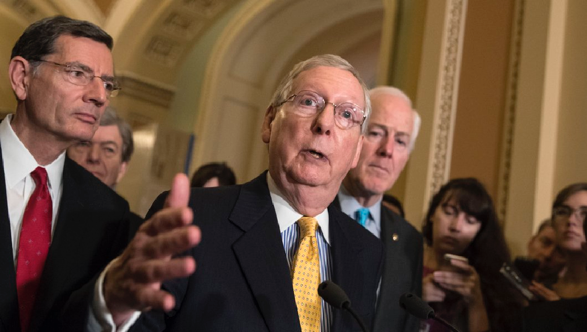
Last week, Senate Majority Leader Mitch McConnell announced that if Republicans are unable to pass to their version of Obamacare repeal – the Better Care Reconciliation Act (BCRA) – “then some kind of action” to stabilize “the private health insurance market must occur.” McConnell’s remarks underscore a larger truth that has often been lost in the larger health care debate: with skyrocketing premiums, 86 insurers leaving the exchanges from last year, and 45 counties that are expected to have no insurer to choose from, Republicans are not in a political position to simply move past the issue.

If passage of the BCRA fails, here are the options McConnell and Senate Republicans have to fix Obamacare and keep it from collapsing:

  • Providing Certainty On Cost-Sharing Subsidies: House Republicans and the Trump Administration have repeatedly delayed a lawsuit regarding whether or not the President has the authority to allocate subsidies to insurers to help coverlow-income enrollees’ deductibles. The uncertainty over this program has made it more difficult for insurers to plan for the next year. McConnell could pass legislation settling this dispute by making specific allocations of these cost-sharing subsidies. This move should have support from Democrats, including Senate Minority Leader Chuck Schumer.
  • Re-Establishing The Reinsurance Program: Obamacare created reinsurance programs that paid out funds to insurers who attracted the sickest customers, therefore mitigating the risk for insurers and incentivizing them to join the market. Yet these programs have now expired. The BCRA currently allocates $50 billion over four years for reinsurance and McConnell could opt to pass a more limited bill funding this program.
  • Suspend Or Eliminate The Health Insurer Fee: Obamacare imposes a nearly $14 billion tax on health insurers, which drives up premiums. The tax was suspended for 2017, but it is set to return next year. This could be passed as separate legislation or could be included in a larger spending or tax package.
  • Out-Of-State Health Insurance: An idea that has been floated by Sen. Lamar Alexander (R-Tenn.) would allow Americans in counties without a health insurer to purchase insurance in any other state-approved exchange. The proposal would further the Republicans’ long-standing goal of allowing the purchase of health insurance across state lines, while helping to address an issue that is hurting Western and rural America in particular. However, with so many narrow networkswithin exchange-offered plans, such insurance may offer little actual coverage and care.

The Senate is expected to vote on a revised version of BCRA next week, and its failure is far from a forgone conclusion. However, McConnell’s comments do make clear that he is slowly moving the goal posts in the hopes that Republicans can come out of this health care debate without too much political damage done.

News You Can Use

NEWSPAPERS VS. DIGITAL: ANTI-TRUST EDITION

The print news industry has long been struggling to stay alive in today’s digital-centric marketplace. While still trying to integrate high tech into their operations, newspapers are now using a new tactic in their fight for survival: lobbying Congress to exempt them from anti-trust laws so they can band together to take on Google and Facebook.

The News Media Alliance (NMA), a trade association that represents over 2,000 papers in the U.S., argues that the duopolistic dominance of Google and Facebook in the online advertising space has placed the social media giants at an unfair advantage in negotiations with individual media outlets. This legislative push is the first major effort from media industry leaders to limit the market influence of large digital companies. However, it may raise questions about the implications of this industry seeking favors from the very people they are tasked with holding it accountable.

POLITICIZING PHILANTHROPY

The Ford Foundation recently announced it was committing $1 billion over ten years to “mission-related investing,” a growing trend in philanthropy that prioritizes investments into projects and companies with a broad social impact instead of seeking the largest possible financial return.

This approach enables foundations with sizable endowments to use their status as shareholders to pressure corporations, mutual funds, hedge funds, and other vehicles utilized by institutional investors to focus on promoting the foundation’s pet causes or social agenda, rather than generating shareholder value. Ultimately, investing should be about creating value and economic growth, but “mission-related investing” risks undermining the best interests of other shareholders and the company in the service of large foundations’ view of what’s best for the common good.

LUNCH ON THE IRS?

On their 2009 and 2010 tax returns, the National Hockey League’s Boston Bruins fully deducted the cost of providing meals to their players and coaches during trips to other cities for away games. The IRS decided the Bruins could only deduct 50% of the meal costs because they were provided away from the premises of the business, so the Bruins took the IRS to court. Last week, a U.S. Tax Court ruled against the IRS, siding with the hockey team and potentially opening the door for employers to fully deduct some meals provided to employees at business meetings away from company headquarters.

The IRS determined the meals could be fully deductible because they were provided in a space that was leased by the team as a place to operate their business, and took place during the workday. However, it remains unclear if this ruling will apply to meetings at restaurants and other types of corporate meetings where these conditions may not be the same. The implications of the decision are even more uncertain because the IRS has not updated its regulations on meal deductions since 1978, even though Congress has changed the law several times. The case shows yet again how the hyper-complicated and arbitrary nature of the tax code can make planning difficult for businesses, and fail to account for legitimate costs of doing business.

VOLVO’S ELECTRIC MARKETING GAME

Volvo’s announcement that all of its cars will be hybrids or gas-electric hybrids by 2019 was championed by major media outlets as signaling the “death knell of the internal combustion engine.” While the media hype surrounding the new approach allows Volvo to bolster its image as cutting-edge among their affluent customer base, the reality is that the auto manufacturer, which is owned by a Chinese electric car manufacturer, will continue to employ the internal combustion engine, while adding a plugin-hybrid option in each vehicle as a complement.

While higher-end brands like Volvo can make these changes with only relatively small increases in price, many mainstream automakers are unable to do so without rendering their products unaffordable. This dynamic demonstrates how the electric car market remains more of a status symbol for the wealthy than a realistic alternative to the internal combustion engine.

THE NANNY STATE ATTACK ON SCREEN TIME

A new ballot initiative in Colorado proposes to criminalize the sale of all handheld wireless technology – including smartphones – to individuals aged 13 and younger. Proponents argue the measure is necessary to limit child inactivity. However, the proposal may actually have the opposite effect, with opponents pointing out that such devices can promote child independence by providing them a way to contact their parents and call for help when away from home.

In addition, banning smartphones, tablets, and other devices would prevent children from using them for academic purposes, such as research and connecting with tutors. Even worse, the proposal would turn parents, who seek to realize these benefits, into criminals overnight. This measure is another example of how attempts to legislate solutions to perceived societal ills can create more problems than it solves.

Generation Z-OP, North Korea Options, and the Rise of the Alt-Left

Here’s What You Need To Know

Earlier this week, North Korea successfully fired an intercontinental ballistic missile (ICBM) into Japan’s exclusive economic zone. The test puts Alaska in range of a North Korean missile, giving the rogue state the capability to reach U.S. soil for the first time. Although it remains unclear whether North Korea is able to pair the ICBM with a nuclear warhead at this time, the development greatly increases the urgency of this decades-old crisis.

President Trump has pledged a “severe” response to the test, but what options are on the table?

  • Double Down On Isolation: Since taking office, President Trump has tried to pressure China, North Korea’s only significant trading partner and aid donor, to cut off ties with the rogue state. However, as the President himself has admitted, this strategy has largely failed. Even if China were to agree to employ greater pressure, it’s unclear that this step would change North Korea’s behavior. The North Korean regime has shown they can endure despite the mass suffering of their people. In the 1990’s, the regime survived a period of famine that cost as many as three million lives.
  • A Military Strike: Trump could pre-emptively strike the North Korean weapons program and/or leadership targets. However, military action could result in a North Korean response, likely targeting South Korea and Japan, and putting millions of lives at risk. In 1994, the Clinton Administration considered targeting North Korea’s nuclear reactor, but backed off over concerns of this outcome. Today, North Korea’s possession of nuclear weapons means military action may be even more dangerous than in 1994.
  • Direct Diplomacy: Like the past three Administrations, Trump could opt to re-engage in direct negotiations with the North Korean regime. Clinton, Bush, and Obama all offered North Korea some form of economic aid and diplomatic recognition, and Trump could put forward a similar arrangement. However, given the nation’s track record and weapons advancement since the last negotiations, the North Koreans may not accept this type of deal, and even if they did, they could continue weapons development anyways.
  • De-Escalate Tensions: Another area for potential compromise could be for the U.S. to freeze large-scale military exercises with South Korea in exchange for a North Korean moratorium on nuclear and missile tests. On Tuesday, Russia and China offered a joint statement endorsing a deal along these lines. Although North Korea might be more inclined to accept this arrangement, this move would show the world that the U.S. can be blackmailed into limiting its military support for its allies.

The North Korean threat is amplified at this moment by the missile launch. However, this current crisis is likely to follow a familiar playbook. Both the U.S. and North Korea have far more to gain from a diplomatic resolution than a military clash. After decades of kicking the can down the road, Trump’s best option may be to do so once again. Sadly, that leaves the North Korean people enslaved to a vicious dictator who does not care about their well-being.

News You Can Use

REFORMING THE BUREAUCRACY

In a recent memorandum from the Office of Management and Budget, the Trump Administration pledged to “make government lean, accountable, and more efficient.” A report from the Government Accountability Office (GAO) demonstrates why reforming the federal government workface might be the right focus to achieve this feat. The GAO found that only 0.4 percent of federal government permanent employees were classified as unacceptable or minimally successful, while the rest were deemed fully successful, exceeds fully successful, or outstanding.

Although many employees may be deserving of their rating, it appears unlikely that only a tiny minority of workers were underperforming. Despite this lack of accountability, government workers are paid 17 percent more in combined wages and benefits than their private sector counterparts according to the Congressional Budget Office. These facts suggest if the Administration seeks to make government more efficient, then identifying more honest and accurate ways to evaluate and report the performance of government workers may be a good place start.

GENERATION Z-OP

Conventional wisdom dictates younger Americans are increasingly liberal, and therefore the country will ultimately shift leftward. However, according to new research, Generation Z (born from 1996 to the present) tends to hold moderate to conservative views on fiscal and security issues. They also attend church at twice the rate of the preceding three generations and have greater trust in their parents, two frequent indicators of a propensity to vote Republican.

These voters value security and safety over other priorities, possibly as a result of coming of age during the immediate aftermath of 9/11, the 2008 financial crisis, and the following years of tepid economic growth. Generation Z’s more center-right leanings may already be impacting national politics. In 2016, the Democratic Party’s share of the youth vote decreased by 5 points from 2012. These factors mean today’s youth could become key Republican voters, if the GOP is able to develop an inclusive, long-term strategy to make a home for them.

THE RISE OF THE ALT-LEFT

The impact of right-wing media outlets, such as talk radio, Fox News, and Breitbart, has been a focus of great discussion for years. However, McKay Coppins of The Atlanticdescribes how the Left has developed its own alternative media landscape.  Liberal pages on Twitter and Facebook, blogs, and podcasts have grown in their popularity, creating their own media universe.

Much like their right-wing counterparts, these sources avoid the scrutiny faced by more mainstream outlets and often promote fake or misleading news items. According to an analysis by BuzzFeed, 20 percent of the stories posted by three of the most popular liberal Facebook pages were partly or mostly false. Just as was witnessed by the GOP, this altered media landscape can significantly diminish the influence the Democratic establishment holds over their party and allow for nontraditional candidates gain greater traction.

TRUMP RETURNS TO TRADITION ON MID-EAST POLICY

President Trump’s approach to the presidency may be viewed by some as unorthodox, but Steven Cook, senior fellow for Middle East and Africa studies at the Council on Foreign Relations, argues the President’s Middle East policy actually falls more in line with U.S. tradition than the last two presidents. Before September 11th, the focus of the U.S. in the Middle East was fostering stability, protecting Israel, and ensuring the free flow of energy. Both Presidents George W. Bush and Barack Obama departed from this policy by placing the promotion of democracy at the forefront of U.S. efforts.

By aligning the U.S. closer with Sunni and authoritarian states – such as Egypt and Saudi Arabia – and taking a harder line on Iran, Trump has moved the U.S. back to prioritizing its core interests. Trump echoed this outlook when, in his Saudi Arabia speech, he told over 50 Arab and Muslim countries he would not “lecture” them on “how to live, what to do, who to be, or how to worship.” Now having articulated this change, Trump faces the challenges of altering the paradigms that have been in place for the past sixteen years while avoiding being sucked into the region by unforeseen events.

THE SHORTSIGHTEDNESS OF FUNDRAISING SCARE TACTICS

During the recent Congressional special election in Georgia, failed Democratic candidate Jon Ossoff raised over $20 million in the last three months of the campaign. Some of his record fundraising haul is thanks to the hyperbolic, hysterical emails drafted by the Democratic fundraising firm Mothership Strategies. These emails included subject lines, such as “all hope is lost,” and “TRAGIC END.”

These type of scare tactics are nothing new and have been used by Republicans as well. However, although this “churn-and-burn approach” can be effective in generating donations in the short-term, it runs the risk of exhausting donors for future races. Voters who are oversaturated with hysterical emails are likely to eventually tune them out.

Trumping Disclosures, Failed Fight for $15, and GOP’s Structural Edge

Here’s What You Need To Know

Lost among the clamor for President Trump’s tax returns is the release of an annual public document filed by President Trump, along with all other Administration appointees: the Executive Branch Personnel Public Financial Disclosure Report. Members of Congress, and candidates for Federal offices file very similar forms as well. You can see President Trump’s disclosure report, on which he reported assets of at least $1.4 billion, an income of at least $596.3 million, and liabilities of at least $315 million, here.

At Delve, we regularly review such forms in the course of preparing vulnerability studies and opposition research reports for our clients. So to help keep loyal TL;DR readers one step ahead of the pack, we’ve put together this primer on navigating these financial disclosure reports.

  • What’s On The Form, And What Isn’t? Personnel financial disclosures detail all of a person’s assets, liabilities, and sources of income, along with those of their spouse and dependent children. These forms also list all honorary positions, gifts, and sponsored travel. However, as discussed in greater detail below, these disclosures only provide a range of income and net worth, rather than exact figures. Despite these shortcomings, personnel financial disclosures offer valuable insights into a public official’s finances.
  • Range Of Net Worth: On a personnel financial disclosure form, by subtracting the person’s minimum liabilities from their maximum assets, you can obtain a rough estimate of their maximum net worth. Likewise, by subtracting the person’s maximum liabilities from their minimum assets, you can obtain their minimum net worth. However, this approach cannot provide the full picture because it only measures a potential range of net worth. So, for most candidates, the filing can give a good picture of where their net worth is broadly, but it also presents significant limitations for a person like Trump whose assets and liabilities could far exceed the top bracket of $50 million. In addition, certain assets and liabilities, like personal residences and mortgages on them, along with amount of spousal income, are excluded from reporting requirements.
  • Controversial Investments, Debts, And Sources Of Income: Since the form details the individual’s investments, debts, and sources of income, an analysis may reveal whether that person is financially linked to any controversial activity or has conflicts of interest that will make it difficult for them to serve in a public role in an ethical manner. This information is also notable if they are invested in anything that contradicts their policy positions or campaign message. For example, a candidate running on an environmentalist platform that is invested in oil companies may be vulnerable to charges of hypocrisy.
  • Questionable Gifts, Sponsored Travel, And Honorary Positions: Filers are also compelled to list any positions in organizations they hold, as well as any gifts or sponsored travel they have received. This information can reveal if they are associated with or are receiving support from any controversial groups. In addition, if the individual has received gifts or sponsored travel, they may be receiving personal favors from sources with questionable motives.
  • Timing Is Key: Just looking at what the assets and liabilities are does not tell the full story. Another critical detail is when they were bought and sold. For example, if a member of Congress on a committee covering financial entities sold bank stocks right before a company’s stock crashed, it raises the possibility they had insider knowledge from their position. In addition, changes in net worth and income year-to-year also can be important to look at. If a government official became significantly wealthier after taking office it brings up more questions about how they made this money.

New You Can Use

THE REAL MINIMUM WAGE IS $0
For several years, left-wing groups and progressive Democratic candidates have been pushing to increase the minimum wage to $15 across the country. Seattle was one of the few cities to relent and adopt this policy at the municipal level. A new study by University of Washington economists, commissioned by the City of Seattle, shows the costs of this policy for low wage workers have been three times higher than its benefits.

Many employers responded to the minimum wage increase by laying off workers, reducing their hours, and forgoing new hiring. The UW economists estimate these changes have cost the average low income worker $125 a month. The findings once again demonstrate how policies that are meant to help the poor through government mandates can often have the opposite effect – and could seriously undercut a major talking point for progressive Democratic candidates.

THE GOP’S STRUCTURAL EDGE
A new analysis from The Associated Press demonstrates one reason why Democrats face an uphill battle to take back the House in 2018. Using a statistical method to quantify partisan advantage in the design of Congressional and state legislative districts, the AP study found Republicans have the advantage in four times as many state House or Assembly districts as the Democrats. In addition, Republicans have the advantage in three times as many U.S. House districts in the two dozen most populated states as the Democrats. As a result, the AP estimates that Republicans won as many as 22 additional U.S. House seats in 2016 than would have been expected given their average vote share nationally.

This outcome is the direct result of the Republican efforts to build strong legislative majorities and control of Governors’ offices in order to control Congressional redistricting efforts in a majority of states. Democrats have learned from their 2010 failures, though, and are already gearing up to secure a more favorable redistricting process after the 2020 census, led by President Obama and Eric Holder. The results of 2018 gubernatorial and state legislative races will be critical as to who controls the 2020 redistricting process across the country.

DEMS DENY SPEAKING PRIVILEGES 
During a recent hearing before the Senate Committee on Homeland Security and Governmental Affairs, aimed at discussing the ideology of political Islam, or Islamism, a number of alleged leaders in the global women’s rights movement effectively shut out the testimony of two women who should really be their allies. Ayaan Hirsi Ali and Asra Q. Nomani are both scholars who were born into Muslim families and now devote time to urging their faith to reform. Specifically, they call for modern Muslims to condemn abuses against women – such as honor killings, child marriages, polygamy, sex slavery, and female genital mutilation – performed in the name of Islam.

Despite these efforts seeming to be entirely in sync with the women’s rights positions of Democratic Sens. Kamala Harris, Heidi Heitkamp, Maggie Hassan, and Claire McCaskill, none of them asked either Ali or Nomani a single question during the hearing. Instead, the Senators chose to object to Ali and Nomani’s testimony and claimed it distorted the true nature of Islam. This is just the latest incident of Democratic politicians choosing to ignore issues they claim to care deeply about simply because the facts of the situation do not fit into their political ideology.

REPUBLICAN HEALTHCARE REFORM THAT WORKED
During his tenure, President Obama repeatedly tried to credit Obamacare for the slowdown in the growth of health care spending. However, this trend actually began in 2003, long before the passage of Obamacare. Plus. this decline has largely taken place in Medicare and employer-based coverage, the two areas least impacted by Obamacare. The phenomenon is more likely attributed to reforms passed by President Bush, including the Medicare Part D drug program and making Health Savings Accounts tax deductible for patients in employer-based plans.

Medicare Part D, which allows beneficiaries to select from competing plans offered by private insurance companies, reportedly has accounted for over 60 percent of the slowdown in Medicare benefit payments since 2011. The drug benefit and other Medicare reforms, such as “Welcome to Medicare” check ups, that were signed into law by President Bush placed an emphasis on addressing health issues earlier to avoid more expensive treatment later. So as Republicans once again seek to tackle healthcare reform, it is worth noting that the last time the GOP took on the subject successfully, they focused on ways to deliver better treatments at lower costs for patients and insurance providers.

THE EMERGING AGE OF TECH CONGLOMERATES
Corporations that are made up of several seemingly unrelated businesses, or conglomerates, have often been thought of as relics of the past. However, Amazon’s recent $13.4 billion purchase of Whole Foods highlights how major tech companies have become the conglomerates of the 21st century. Other large tech corporations, like Google – which owns Android, YouTube, Waze, and Nest Labs – or Facebook – which owns Instagram, WhatsApp and Oculus VR – have also arguably become conglomerates.

As these companies continue to grow, they are likely to attract even greater scrutiny from regulators as governments seek to limit their market influence. This dynamic has already begun to take shape in Europe, where regulators have repeatedly challenged allegedly anti-competitive business practices by GoogleAppleAmazon, and others. Even in the U.S., some policy thinkers have begun calling for companies like Amazon to be broken up. It seems only a matter of time before U.S. regulators begin to target them as the new robber-barons. Even the Trump Administration, despite all of its deregulatory zeal, has begun tightening restrictions on H1-B visas and other favored policies of the tech elite.

Ajit Pai’s World, Winning Afghanistan, and the Next Cool City

Here’s What You Need To Know

This week is “Tech Week” at The White House, with Administration officials conducting meetings with a broad group of tech leaders and investors to discuss the effect regulations have on emerging technologies, the challenge of crafting immigration policy for high-skilled workers, and other tech-related policy issues. In the spirit of “Tech Week,” we here at Delve have taken a look at some of the key efforts of the Trump Administration in this area of policy.

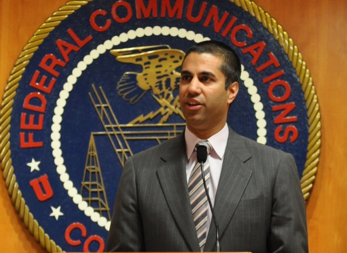
Evaluating Trump’s approach to tech policy requires understanding the personnel he has appointed to work on those issues. One of the most significant leaders in setting Trump’s tech agenda is Federal Communications Commission Chairman Ajit Pai.

First appointed to one of the Republican FCC seats in May 2012, Pai spent most of the past couple years fighting President Obama’s FCC Chairman, Tom Wheeler, on several issues, only to get outvoted and ignored in partisan fashion. Pai is now promising a more fair and inclusive process to all sides because he believes, “The commission is much stronger when it speaks with a unified voice.”

More importantly, now that he is the Chairman, Pai has a checklist of policy initiatives he is working through:

  • Pai has already accomplished several things, including expanded investment in rural broadband infrastructure through approval of $170 million in federal grants and limiting the scope of the FCC’s authority on prison phone calls and other issues.
  • There are also important items on tap for Pai, including the creation of the Office of Economics and Data (OED) by the end of 2017 to help institutionalize an economics-based approach to the FCC’s decision making.
  • But on some of the biggest issues, Pai’s approach remains unknown, including how he will replace net neutrality regulations and deregulate broadband development.

Pai has argued the FCC, “should do everything it can to ensure that its rules reflect the realities of the current marketplace.” If he is successful in translating his philosophy into real policy, the tech world will take on a completely different look. As part of Delve’s ongoing analysis of the Trump Administration through The Administration Project (TAP), we prepared a brief note for our TAP subscribers that goes in depth on Chairman Pai’s agenda and how it will shape the tech industry. As a loyal TL;DR reader, we’re offering you access to the full note for free here.

News You Can Use

BIG DATA, BIG PROBLEMS

Big data was once heralded as the key to solving any number of major issues facing our society. But, a Wall Street analyst turned progressive activist, Cathy O’Neil, has argued in her new book – Weapons of Math Destruction: How Big Data Increases Inequality and Threatens Democracy – that efforts to eliminate bias through data have become biased themselves. For years, big data was seen by policymakers as a way to eliminate bias from government and private sector initiatives, but now data has begun to create its own biases.

Data on trivial activities  – like what websites a person frequents or where they shop – are being used to make significant determinations like how likely a person is to repay a loan or their potential for criminal behavior. O’Neil concludes we must inject “human values on these systems.” But, this presents its own new conflict: who gets to decide what those values are and how to impose them on these algorithms meant to produce unbiased policies and programs.

WHAT DOES WINNING LOOK LIKE IN AFGHANISTAN?

With President Trump delegating his authority to determine troop levels to Defense Secretary James Mattis, it is worth considering how Trump can best achieve success there. Former Deputy U.S. Treasury Attaché to Saudi Arabia Morgan Ortagus, and former National Security Council senior advisor Samantha Vinograd, recently published an op-ed arguing Trump should ask four questions to determine to the best path forward in Afghanistan:

  1. Whether the U.S. intelligence community still believes there is a significant and direct national security threat to the U.S. or its allies emanating from Afghanistan;
  2. What Trump’s national security team sees as the clearly defined U.S. goals in Afghanistan for the next four years;
  3. How the military can best recalibrate resources to achieve these goals;
  4. How his foreign policy team can get Pakistan more constructively involved in achieving these goals.

Ortagus and Vinograd say these questions must be answered to define success in Afghanistan and to clearly define how and why our troops must deploy in order to support continued operations in the nation.

PROFITS FROM THE SHARING ECONOMY

With a recent Pew study estimating that nearly a quarter of all Americans earn money through sharing economy platforms like Airbnb, Uber, TaskRabbit, and others, it is worth considering how much money people actually earn from the gig economy. Based on the earnings from these platforms listed on tens of thousands of loan applications, the Priceonomics blog found that 85 percent of these gig-economy workers earn less than $500 a month – with Airbnb hosts earning the most by far.

These figures could easily be trotted out by those who argue this new way of engaging workers requires regulation or reform in order to ensure these workers are not dramatically underpaid. Left unclear, however, is how many of these workers are using these “jobs” to make a little extra money versus trying to forage a full-time living.

THE EMPTY BENCH

Democrats are already gearing up to face off against President Trump in 2020, but the Democratic bench for presidential candidates appears to be exclusively populated with old political operators unlikely to inspire excitement among the party or the country, and fresh-faced newcomers with personal brands and messages that are entirely untested when it comes to reaching beyond their core supporters.

Outside of former Vice President Joe Biden, Sen. Elizabeth Warren (D-MA), and Sen. Bernie Sanders (I-VT), there are nineteen other Democratic names being floated as potential candidates – and a recent POLITICO/Morning Consult poll found at least half of the electorate has never heard of any of them. The bench is so empty that a failed U.S. Senate candidate, Jason Kander, is getting noticed as a 2020 contender in early primary states. With roughly 18 months to go until 2020 presidential campaigning begins in earnest, this position does not bode well for those desiring a Democratic comeback.

THE NEXT PORTLANDIA

Boutique hoteliers are trying to manufacture “cool” in up-and-coming mid-size cities with less-than-hip reputations, many of which also have struggling local commercial economies. The targets of these hotel operators are in various stages of cultural bloom, with cities like Detroit, Pittsburgh, and Savannah further along than cities like Asbury Park, Milwaukee, or El Paso. All of these cities are competing to become what many of the hotel owners refer to as “the next Portland.”

If they bet on the right cities, there can be big money for businesses in these smaller markets, and the trajectory appears somewhat standard: an art community establishes itself, which brings with it pieces to showcase, followed by craft breweries, distilleries, bars, and “foodie” restaurants, which then garner national attention. It remains to be seen whether this model for building hip travel destinations can create long-term growth, but boutique hotel operators and local communities are betting it can create fast-growing small-scale economies in the short-term.

ANOTHER FORUM SHOP CLOSED

Drug-maker Bristol-Myers Squibb (BMS) scored a victory in a lawsuit with the State of California over California residents who claim they were harmed by the BMS drug, Plavix. In a major ruling scaling back where drug companies can be sued, the U.S. Supreme Court issued an 8-1 ruling this week declaring that out-of-state residents could not join California’s lawsuit.

Justice Samuel Alito, writing for the Court, argued that, “The mere fact that other plaintiffs were prescribed, obtained, and ingested Plavix in California – and allegedly sustained the same injuries as did non-residents – does not allow the State to assert specific jurisdiction over the nonresidents’ claims.” This is the second ruling in the past month in which the Supreme Court has issued a ruling scaling back plaintiffs’ ability to “forum shop” – the term for plaintiffs bringing lawsuits to courts more likely to hand down favorable verdicts – making this a particularly devastating summer for trial lawyers and plaintiffs’ attorneys.

Summer Job Struggles, New Activist Investors, and Obama’s Peace Plan​

Here’s What You Need To Know

With the unemployment rate for 16- to 19-year-olds down to 14.3 percent from a high of 27 percent in 2009, and 41 percent of employers reportedly planning to hire temporary workers for the summer, teens looking for summer jobs have some of the best chances of landing one since the early 2000s.

Yet a recent Bureau of Labor Statistics analysis found that only 43 percent of 16- to 19-year-olds were either working or looking for a job. This figure is ten points lower than in 2006, and almost 30 points down from nearly 70 percent in 1989. With projections showing the teen labor force participation dropping below 27 percent by 2024, there are many theories about why the teens aren’t working like they once did.

  • Blame The Boomers: Some argue teens are suffering from the trickle-down effects of older Americans now working past 65 at the highest rates in more than 50 years. While most older Americans putting off retirement are not holding the entry-level jobs teens would otherwise be taking for the summer, they do hold the jobs that more junior employees would hope to be promoted to. So, by remaining in the workforce, older workers may be limiting the advancement of younger employees all the way down to teenage temporary workers.
  • Blame The Immigrants: Another argument is that teens are competing for fewer and fewer of these types of temporary, low-skill jobs against immigrant labor. A 2012 study found that less educated immigrants actually impact employment for native-born teenagers far more than their native-born parents.
  • Blame The Markets: Northeastern University labor economist Alicia Modestino also points out that the typical teen jobs are drying up – or in other words, “think Blockbuster.” Between the dramatic decline in the retail economy – where many teens were hired as temporary summer workers – and the automation of unskilled labor jobs, the markets are cutting down on the industries where temporary, unskilled work is a viable business strategy.
  • Blame The Overscheduling: Finally, there is the argument that teens and their parents are simply prioritizing different things. It is probably true that some teens are simply lazier and spending their summers simply not working, but the biggest shift in priorities seems to be coming from college-bound teens and their parents focusing on volunteer opportunities and extracurricular activities geared toward building attractive resumes for university admissions offices. In July of last year, more than two in five 16- to -19-year-olds were enrolled in summer school – not for failing classes, but rather to earn college credits or build out their academic profile.

Whichever theory or combination of theories is true, many have expressed concern over the non-monetary benefits teens may be missing by not pursuing or being able to get a summer job. They argue these work experiences offer teens perspective on the world outside of the rigid structure of school and home, teach the importance of managing money before there are necessarily serious consequences, and prepare teens for dealing with bosses and co-workers of all ages.

There may not be direct economic consequences of this trend at the moment, but building a generation of workers for whom their first real work experience comes at the age of 22 or older may very well present problems in the coming decade.

News You Can Use

GROWTH OF CONSCIENCE ACTIVISTS

Activist investors have used their pressure tactics on corporate executives and boards almost exclusively in the pursuit of profits. Yet, a new crop of these investors is now using these same tactics for another purpose: forcing companies to consider social good. Firms like Arjuna Capital are showing up at shareholders’ meetings to pressure tech firms to improve their gender pay equity gap and demand oil companies adopt more environmentally friendly policies.

This concept of social conscience investing isn’t necessarily new, but the level of activism is. Corporate executives, who previously only worried about activist investors going after bloated C-suite salaries and inefficient business practices, must now make sure they are not vulnerable to socially conscious corporate raiders who could derail a business strategy with ideological agendas.

LIFTING THE VEIL ON OBAMA’S PEACE NEGOTIATIONS 

The Israeli newspaper Haaretz recently released two documents outlining the Obama Administration’s work on the 2014 Israeli-Palestinian peace talks and how they fell apart. Two key revelations came out in these documents. First, Israeli Prime Minister Benjamin Netanyahu was essentially willing to accept the 1967 borders as a basis for negotiations. Despite this willingness, Obama Administration negotiators refused to accept the draft due to Netanyahu’s demand that the phrase “territorial contiguity” not be used in the document.

Second, U.S. negotiators were willing to go a long way to appease Palestinian Authority President Mahmoud Abbas. After a draft had been carefully negotiated with the Israeli government, Abbas expressed, “anger and disappointment” with the wording over the issue of Jerusalem. In response, U.S. diplomats quickly crafted an updated version of the document that tilted a number of issues toward the Palestinians and was not reviewed by any Israeli representatives. As ill-fated as the Obama Administration’s attempts were to negotiate peace, these documents offer the Trump Administration an excellent model of how not to approach Middle East diplomacy. 

MIGRATION OFFERS NO GUARANTEES

Historically, when Americans have needed a new job, they have picked up and migrated to where jobs are more prevalent (usually large, urban centers). But, Princeton University economic historian Harold James suggests those workers in the rust belt communities of Michigan, Wisconsin, and elsewhere may not be able to rely on this traditional path to the middle class.

James explains how, unlike previous generations who could secure employment after migrating to cities with the skills they already had, today’s unemployed do not possess the skills to secure the jobs they would be migrating to. The study suggest policymakers will have to adopt new approaches to addressing unemployment and lack of upward mobility within these communities.

$1 BILLION CONTEXT ON QATAR

After several key Middle Eastern nations cut ties with Qatar last week, revelations of a $1 billion hostage deal negotiated between the gulf state’s government and a group of terrorists provides some context into the motivations behind the seismic diplomatic move. The government in Doha allegedly gave the money to members of the Iranian security services and an al-Qaeda affiliate fighting in Syria in order to secure safe return of 26 members of a Qatari falconry party who had been kidnapped in southern Iraq.

The other gulf states – including Saudi Arabia, Egypt, Bahrain, and the United Arab Emirates – had cited the Qatari’s funding of regional extremism and terrorism as a chief reason for their decision to cut diplomatic ties; this hostage deal seems to legitimize some of that concern. How all of the parties react to this hostage deal will play into how the U.S. will reconcile the legitimate grievances of these Middle Eastern nations and the critical role U.S. military installations in Qatar play in the region.

BRING DAYTON TO SYRIA?

Anton Mardasov, head of the Department of Middle Eastern Conflicts at the Moscow-based Institute for Innovative Development, recently published an op-ed proposing the idea of bringing to Syria the tactics used during the 1990s to negotiate peace in Bosnia. As Russia and the United States hold back-channel talks to establish de-escalation zones in Syria, Mardasov suggests that a feasible settlement could be reached along the lines of the famous Dayton Agreement – which secured peace in Bosnia and Herzegovina in 1995.

This type of agreement would allow Syria to preserve its army while integrating the government and the opposition military formations into a new armed forces and establishing separate administrative states. Mardasov also explains this potential solution would also allow for Russia and the U.S. to tolerate each other’s military presence in Syria, since it would be an oversight function for the newly formed united military. One of the largest challenges this potential framework would present is getting each side to trust the other, yet Mardasov suggests that Russia could be willing to compromise. The biggest elephant in the room is how a potential settlement deals with Syrian President Bashar al-Assad.

Financial Choices, UAE’s Mission to Mars, and Trial Lawyers Lose​

Here’s What You Need To Know

While most of the attention on Capitol Hill this week will be focused on former FBI Director James Comey’s testimony before the Senate Intelligence Committee, the House is set to vote on sweeping Wall Street reform legislation – the Financial CHOICE Act. The bill, sponsored by House Financial Services Committee Chairman Jeb Hensarling (R-TX), is the first legislative step in Republican efforts to radically scale back the Dodd-Frank Wall Street Reform and Consumer Protection Act.

So what does the bill do? It has two key components:

  • Regulatory Restructuring: The bill creates a new, two-tiered regulatory framework that better protects small community banks from burdensome regulation intended to target larger banks and financial institutions. While the higher tier would keep most of Dodd-Frank rules in place, the lower tier exempts banks from Dodd-Frank regulations if they hold the financial “equivalent of 10% of their assets in capital,” allowing banks to choose the level of regulation they face.
  • CFPB Reorganization: The measure also fundamentally restructures the Consumer Financial Protection Bureau, which was created by Dodd-Frank. The bill renames it the Consumer Law Enforcement Agency, and makes it answerable to the President and accountable to Congress through the appropriations process. The bill also drastically curtails the level of regulatory discretion the agency has, reducing its authority to only enforcing pre-existing consumer protection laws. Effectively, the bill makes the CFPB much more of a tradition executive enforcement agency.

What’s Going To Happen Next? While the bill is likely to pass the full House of Representatives, it is also likely to be a vote along party lines and some havesuggested its chances of passing the Senate are slim-to-none. However, the Senate Banking Committee is already working on legislation to focus on regulatory relief for community banks and – with the Courts ruling the CFPB’s framework unconstitutional – it is likely Congress will need to restructure the agency soon either way.

Even with these prospects, Chairman Hensarling has argued the measure will create real momentum toward meaningful banking reform aimed at correcting unintended consequences of Dodd-Frank. It is also worth noting that the White House has vocally supported the bill and could enact some of its key provisions through executive action if legislation is not forthcoming.

News You Can Use

ARABS IN SPACE
Last week, Sheikh Mohammed bin Rashid al Maktoum, Vice President and Prime Minister of the United Arab Emirates, announced the country’s intent to have a fully functioning city of 600,000 people on Mars in one hundred years. This announcement marks the latest effort undertaken by a country that has been able to outpace many of its neighbors in ambition and investment, thanks largely in part to their plentiful oil resources and stable rule by their monarchy. The Mars project is only part of a much larger effort within the UAE to build out a robust science and technology sector. While at first glance the project may appear absurd, it may prove to be a savvy strategy to place the country among the top tier of nations when it comes to scientific advancement – both in image and in reality.

THE NOT-SO-GOLDEN AGE OF ENTREPRENEURSHIP
Despite the prominence of startups and entrepreneurship in today’s popular culture, a new study from the Economic Innovation Group (EIG) found that America is actually creating fewer new businesses than in previous eras. This lack of new business growth is a large contributor to lack of new job growth. So what can help put the American economy back on track? EIG argues more industries need to be opened up to more competition and entrepreneurial disruption by rolling back onerous occupational licensing requirements that prevent people from entering professions as straight forward as selling flowers or becoming a cosmetologist, and refocusing tax incentives to encourage investment in struggling areas. New business creation is a vital part of growing the American economy, but it cannot happen without the right policies in place.

WINNERS AND LOSERS IN THE ROBO-ECONOMY
The rise of robots and automation in countless industries has spurred a growing conversation about whether the trend is positive or negative. But the reality seems to be less binary than some might want to see it. In the developed world, some like venture capitalist Marc Andreessen argue automation will create greater efficiency and respond to the real problem developed labor markets are facing: a lack of people to fill jobs. Others, like MIT economist Daron Acemoglu, claim in the developing world, where cheap labor has long been seen as a way to build middle classes, automation could spell doom to their fast-growing manufacturing economies. Not all economies are equal, and industries, governments, and society will have to thoughtfully consider the impacts pf automation innovations in different parts of the world.

THE FORUM SHOP IS CLOSED
In an 8-1 decision last week, the U.S. Supreme Court ruled against out-of-state plaintiffs seeking to sue their employer, railroad company BNSF, for damages after they were allegedly exposed to carcinogens. The Court held the plaintiffs could not file suit in Montana when the company wasn’t incorporated there, the plaintiffs didn’t live there, and the injuries didn’t occur there. This ruling means trial attorneys will face more difficulty pursuing a legal strategy called “forum shopping,” in which plaintiffs’ attorneys seek out state courts known for friendlier juries and heftier verdicts for cases with only the most tenuous connection to that court’s jurisdiction. Writing for the majority, Justice Ruth Bader Ginsberg noted the Fourteenth Amendment’s Due Process Clause does not permit a state to call in an out-of-state corporation before its courts to adjudicate a matter that occurred elsewhere. The decision is a major blow to trial lawyers, who have used this strategy extensively.

FEAR AND LOATHING IN SILICON VALLEY
As new technologies are developed, so too does the fear surrounding them. As The Wall Street Journal’s Holman Jenkins Jr. points out, it often falls to CEOs to guide society’s adjustment to life altering technologies. Most recently, the public called on Facebook CEO Mark Zuckerberg to create algorithms to prevent Facebook users from live-streaming violent crimes. Jenkins says self-driving cars are next in the list of industries having to deal with the public’s fear factor. Despite the benefits that self-driving cars can bring to the elderly, disabled, children, and other riders for whom this would be the optimal form of transportation, “whole academic and media careers are being built on the threat it poses.” These innovations are by in large good things, but the innovators who shepherd them into existence don’t always see how consumers will view them at first. Thinking about how these radically new concepts are presented to consumers ahead of time will help CEOs preempt the fears the public might have before those fears cause a backlash against the company.

Canada’s New Conservative, Super PAC Schemes, and New Asian Energy

Here’s What You Need To Know

Last week the Conservative Party of Canada picked 38 year-old Saskatchewan MP Andrew Scheer as their new leader, who will challenge current Prime Minister Justin Trudeau in the next national election set to occur before October 21st, 2019. The surprise outcome answers some questions about the future of the Conservatives, but leaves others open to be determined over the years leading up to the national election.

  • Surprise Victory For The Status Quo: Scheer’s victory represented a major upset after fellow Conservative leader Maxime Bernier appeared poised for victory. Bernier’s ascendance to leadership was meant to signify a major shift in the Conservative Party toward more libertarian, free-market focused policies, and away from the establishment wing of the party. However, Scheer’s narrow victory is being seen as a turn inward and a vote for continuity within the party.
  • Drawbacks of the New Voting System: One of the reasons for the surprise election outcome is the new system of voting the Conservative Party implemented this year. The new process allowed for mail-in ballots and included a complex system of ranking voters’ preference for each candidate. Some in the party are already demanding the system be reviewed and are suggesting it will not be used again in the future. The surprise victory of a lesser known candidate who is able to secure enough second-choice votes is precisely the drawback to these types of tiered voting systems.
  • The Candidate Nobody Knew: Despite the fact that Scheer has served in government for the past 13 years, he has kept a decidedly low profile. During his campaign for leadership he offered little in the way of detailed policy proposals, beyond those positions almost universally agreed upon by Canadian Conservatives. Scheer has not served in any senior or cabinet level posts and spent the better part of the past six years as speaker of the House of Commons, a nonpartisan position that does not allow the holder to vote on or introduce any legislation. Scheer’s limited profile may offer the Conservatives a chance to define their candidate to the nation, but Liberals are already seeking to paint Scheer as a radical right-wing social conservative – so Scheer should define himself lest he be defined by the opposition.
  • The Battle To Come: Scheer faces two key challenges in his path to defeating Liberal Prime Minister Justin Trudeau in 2019. First, he must succeed in unifying his own party. Given Scheer’s narrow victory there is residual discord, but the Conservative Party will need to band together behind Scheer as their stand-bearer if they have any hope of success against Trudeau. Second, Scheer will need to help craft a strategy that challenges Trudeau on more than his style. Canadian Conservatives have long resented Trudeau’s status as an international political celebrity, and Scheer has already begun poking fun at Trudeau’s cult of personality. Though Scheer is seen as more personable than former Prime Minister Harper, he will need more than critiques of Trudeau’s panache in order to win – just ask American Republicans who tried and failed to use Barack Obama’s celebrity status against him in 2008 and 2012.

News You Can Use

TRUMP-BOT

As pundits and political prognosticators continually fail at accurately predicting President Trump’s next moves, from foreign policy to domestic politics, Robert Burton, author and former chief of neurology at the University of California San Francisco, has written an op-ed explaining the President’s actions from a strictly analytical perspective. If one reviews Trump’s decisions through the lens of a neural network machine – like Google’s “Deep Mind” or IBM’s “Big Blue” – the President’s actions make much more sense.

If you remove all other factors from decision-making and simply focus on “winning,” the way a machine does, you simply test various strategies and enhance the successful ones while eliminating the failed ones. Using this strategy during the election, it made sense to campaign on major policies like a massive southern border wall or forcing companies to stop outsourcing manufacturing jobs, even though once in office it was likely to prove incredibly difficult to enact such policies. A normal politician would be too wary of getting caught flip-flopping or breaking “pledges.” But, President Trump has displayed an almost machine-like willingness to simply recalculate whenever a strategy isn’t successful. By Burton’s analysis, the President is single-minded in his overall goals, but capable of iterating his strategy as he goes rather than dwell on strategic miscalculations or failures.

SUPER PAC SCHEME    

Thousands of grassroots conservatives gave a super PAC hundreds of thousands of dollars to support Milwaukee County Sheriff David Clarke’s candidacy for the U.S. Senate, despite the fact that Clarke never met with political operatives or donors, never formed an exploratory committee, and repeatedly said he was not planning on running for any office other than Sheriff.

The PAC, which has absolutely no affiliation with Sheriff Clarke, appealed to donors through direct mail ad campaigns in an alleged effort to “draft Sheriff David Clarke for Senate.” The PAC’s organizers claim it is meant to show support and help convince Sheriff Clarke to run for Senate. Yet they have already begun renting out its email lists to other organizations. This PAC is not unique and “draft” PACs for individuals who have made clear that they have no plans to run for office are a common method for convincing grassroots donors to hand over money to shady political operatives and consultants.

NEW ENERGY IN ASIA

This month, teams from both China and Japan have successfully extracted methane hydrate – an energy-dense substance found within water molecules – from the seafloor. Methane hydrate is a fossil fuel that burns similar to natural gas. But, because of the difficulty surrounding the chemical’s extraction, massive, untapped deposits of methane hydrate still exist throughout the world.

While full commercialization of extraction technology is not likely to occur before 2023, this development could radically alter Asia’s energy sector, which to date relies heavily on coal due to the region’s lack of natural gas reserves. This change could also impact diplomacy in the region, as U.S. and Russian natural gas exports have been seen as key factors in dominating the geopolitical stage, especially in southeast Asia.

THE [INSERT STATE HERE] CLEAN POWER PLAN

Despite the fact that President Trump has pledged to halt the implementation of the Obama Administration’s 2015 Clean Power Plan regulations, several state governments are seeking to enact or already have their own versions of the plan. Virginia Gov. Terry McAuliffe recently signed an executive order mandating that the state’s Department of Environmental Quality (DEQ) begin crafting regulations to reduce carbon emissions from power plants.

California is currently considering strengthening its statewide cap-and-trade program. And Connecticut, Delaware, Maine, Massachusetts, New Hampshire, New York, Rhode Island, and Vermont – all members of a multi-state carbon cap compact – are looking at carbon pricing and more stringent renewable energy standard policies. While the Clean Power Plan may be dead in Washington, the fights for and against such measures are moving to the state level as Governors and legislatures begin building an interconnected network of emissions-reduction plans. Look out for corporations and advocacy groups sending money and people to a state capitol near you.

THE CEO PAY MACHINE

Adjusting for inflation, CEO pay has risen 10-fold since 1980. The average Fortune 500 CEO today makes over $20 million a year, roughly 300 times what the average employee makes. Steven Clifford, former CEO of King Broadcasting Co., argues that the CEO compensation “market” is not a market at all, but rather a “CEO Pay Machine” that is determined by boards and compensation consultants. Rather than using data to quantify and analyze CEO pay, companies base CEO compensation on the pay of other CEOs, pay levels that are often achieved by surpassing easy bonus targets.

Such pay incentives are shown to have negative effects on business; they narrow the CEO’s vision, limit creativity and innovation, and focus exclusively on short-term results. To disrupt this “CEO Pay Machine,” Clifford, a former CEO himself, proposes a luxury tax, something he argues the Trump and Clinton voter can agree on. “For every dollar over $6 million that a company pays any executive, it should pay a dollar in a luxury or penalty tax.” Without disrupting this system, Clifford argues, “we are on our way to plutocracy.”

The Trump Doctrine, Mayors Fight the Future, and New Student Debtors

Here’s What You Need To Know

Last week, President Trump gave his first major foreign address in Saudi Arabia in front of leaders from 55 Muslim-majority countries. While the speech received plenty of coverage, much of the reporting missed the most important element – President Trump laid out the foundation of a new foreign policy doctrine that could reshape diplomacy in the Trump era.

  • “Principled Realism”: The overarching philosophy behind the Trump Doctrine is this idea of “principled realism,” which the President explained as pursuing American foreign policy goals through partnerships favoring stability over radical disruption, focusing on real-world outcomes not inflexible ideology, and prioritizing partnerships over perfection. The policy is a further fleshed out version of Trump’s campaign promise of an “America first foreign policy,” not disengaging from global diplomacy, but placing U.S. economic and security interests above all else.
  • Prioritizing Security: The Trump Doctrine places an emphasis on U.S. national security and seeks to achieve this goal through a combination of partnership efforts. First, President Trump has acted on his belief in working with, sometimes, imperfect partners. The Trump Administration has sought to form even closer ties with countries like Saudi Arabia, Egypt, and the Philippines. All of these nations have questionable track records on human rights issues, but play an important role in maintaining global stability. Second, the President is demanding more of America’s long-time allies, when it comes to the issue of global security. While speaking to NATO leaders yesterday, the President bluntly reiterated his calls for member nations to pay their fair share to support the international security pact.
  • Trade As An Economic Issue: In the post-Cold War era, American presidents of both parties have sought to use international trade as a force for policy objectives ranging from human rights to promoting democracy to environmentalism. The Trump Doctrine takes a much more straight-forward approach to international trade, viewing it purely as a tool for economic growth. Through their efforts to renegotiate NAFTA, withdraw from TPP, and potentially review the South Korean trade deal, the Trump Administration has made clear their trade policies will be informed primarily by how they impact the U.S. economy.
  • Why It Could Work: As influential academic Walter Russell Mead recently noted in The Wall Street Journal, “American voters have never shared the establishment’s enthusiasm for a foreign policy aimed at transforming the post-Cold War world.” There is, Mead argues, a “disconnect between the establishment’s ambitious global agenda and the limited engagement that voters appear to support.” Trump’s approach to the world, often hinted at during the campaign and telegraphed in his Inaugural Address, is a response to this disconnect, much like his economic policies are shaped by the disconnect on priorities between many in Washington and the “forgotten man” in the heartland.

President Bush’s approach, whether you believe it was right or wrong, exhausted the American people’s willingness to spend blood and treasure abroad. President Obama swung the pendulum too far in the other direction, declaring he would “lead from behind” and seek ways to leave Iraq and Afghanistan even if our mission was not completed. Trump’s approach may find a more careful balance – engaging in the world only when he can clearly articulate America’s immediate interests in doing so. Only time will tell if he gets the balance right.

News You Can Use

ACTING AGAINST THE ACTIVISTS

Resolute Forest Products’ vice president, Seth Kursman, recently published an op-ed calling on more businesses to fight back against attacks from certain activist groups the way his company did when they were targeted by Greenpeace. Kursman argues major companies with legitimately good records need to stand up to activists who actually brag about how quickly major corporations capitulate to their demands.

The natural instinct of most companies has been to take the abuse from these activist groups, regardless of how absurd or illegitimate their claims are. But Kursman points out that this only encourages these groups to continue using these tactics to bully good corporate citizens. Kursman’s company successfully sued Greenpeace for making false claims and targeting them, and he is now encouraging other falsely targeted companies to do the same.

MAYORS AGAINST THE FUTURE

New York City’s deputy mayor for housing and economic development, Alicia Glen, has gathered leaders from 22 cities around the world to discuss how they can assert their regulatory authority over the major tech firms of the so-called “gig economy” – like Airbnb and Uber. Glen’s idea is for these cities to band together and create collective set of policies that would force companies into regulatory submission, cutting off their ability to simply refocus on a municipality with a more attractive regulatory set-up.

The themes of Glen’s meetings will include fair compensation, health and safety standards, environmental sustainability, equal opportunity, and data security. It is an open question whether these cities can agree on policies and use their numbers as leverage, but an international regulatory cartel could present a major challenge to tech companies’ growth.

WHY DO YOU “VOLUNTOUR”?

It turns out that “voluntourism” – a growing form of tourism in which travelers participate in voluntary work, typically for charity – actually does more harm than good. First, a growing number of “voluntourists” often have the wrong motives: they travel overseas to look good to others rather than help those in need. Those who do want to help sometimes have a condescending savior complex that implies the locals are helpless. Second, the growing industry of “voluntourism” has led to a rise in organizations designed to make money from poverty and who often market their business using stereotypes.

Third, research is beginning to indicate that short-term “voluntourists” often leave vulnerable children feeling abandoned when what they need stable, long-term relationships. Finally, “voluntourists” often take on jobs overseas for which they do not have the skills. If you wouldn’t trust a “voluntourist” to build a school in your own country, why do we encourage them to do it in someone else’s? This trend is just the latest example of a societal shift toward virtue signaling— seemingly selfless acts that are really only done to signal an ideological view point to others, rather than a genuine desire to be virtuous and help those in need.

STUDENT DEBT: IT’S NOT JUST FOR MILLENNIALS

There is a macroeconomic tsunami of student debt carrying over to the parents of Millennials and it is still unclear what impact this new debt crisis may have on the overall economy. The most up to date New York Fed data suggests that from 2005 to 2015, student loan debt held by Americans aged 60-64 increased from $4.85 billion to $38.35 billion. For those aged 55-59, it increased from $13.9 billion to $65.47 billion. Statistics also show Baby Boomers are having just as much trouble as Millennials paying off this debt, with many of these loans already in default.

While no one has crunched the numbers to accurately assess its impact on the U.S. economy, these rising levels of student debt will undoubtedly have ripple effects, ranging from 60% of Boomers in this position admitting they are putting off buying a new home or those in their 50s and 60s working later into life. Both of these consequences further exacerbate the economic plight of younger generations, but also prove that the issue of crippling student debt is not a single generation problem. That is why more and more political leaders will offer solutions to the student debt crisis. It is no longer just pandering to the youth vote, but rather a broad issue impacting many working families.

FINANCE FINDS ITS PLACE IN THE SUN BELT

Finance and insurance jobs in the United States have now rebounded to pre-financial crisis levels, but many of the sector’s new jobs are not in lower Manhattan or Connecticut. These jobs are mostly in Arizona and Texas. New technology driving the rise of online banking allows financial firms to consider locations outside traditional commerce hubs that have a substantially lower cost of living. While New York remains home to a substantial portion of the finance and insurance industry, more and more of those Wall Street “fat cats” will be far removed from island of Manhattan. 

Pin It on Pinterest