McConnell’s Plan B, Politicizing Philanthropy, and Volvo’s Electric Marketing​

Here’s What You Need To Know

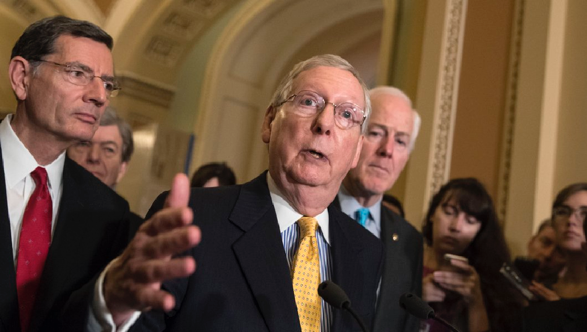
Last week, Senate Majority Leader Mitch McConnell announced that if Republicans are unable to pass to their version of Obamacare repeal – the Better Care Reconciliation Act (BCRA) – “then some kind of action” to stabilize “the private health insurance market must occur.” McConnell’s remarks underscore a larger truth that has often been lost in the larger health care debate: with skyrocketing premiums, 86 insurers leaving the exchanges from last year, and 45 counties that are expected to have no insurer to choose from, Republicans are not in a political position to simply move past the issue.

If passage of the BCRA fails, here are the options McConnell and Senate Republicans have to fix Obamacare and keep it from collapsing:

  • Providing Certainty On Cost-Sharing Subsidies: House Republicans and the Trump Administration have repeatedly delayed a lawsuit regarding whether or not the President has the authority to allocate subsidies to insurers to help coverlow-income enrollees’ deductibles. The uncertainty over this program has made it more difficult for insurers to plan for the next year. McConnell could pass legislation settling this dispute by making specific allocations of these cost-sharing subsidies. This move should have support from Democrats, including Senate Minority Leader Chuck Schumer.
  • Re-Establishing The Reinsurance Program: Obamacare created reinsurance programs that paid out funds to insurers who attracted the sickest customers, therefore mitigating the risk for insurers and incentivizing them to join the market. Yet these programs have now expired. The BCRA currently allocates $50 billion over four years for reinsurance and McConnell could opt to pass a more limited bill funding this program.
  • Suspend Or Eliminate The Health Insurer Fee: Obamacare imposes a nearly $14 billion tax on health insurers, which drives up premiums. The tax was suspended for 2017, but it is set to return next year. This could be passed as separate legislation or could be included in a larger spending or tax package.
  • Out-Of-State Health Insurance: An idea that has been floated by Sen. Lamar Alexander (R-Tenn.) would allow Americans in counties without a health insurer to purchase insurance in any other state-approved exchange. The proposal would further the Republicans’ long-standing goal of allowing the purchase of health insurance across state lines, while helping to address an issue that is hurting Western and rural America in particular. However, with so many narrow networkswithin exchange-offered plans, such insurance may offer little actual coverage and care.

The Senate is expected to vote on a revised version of BCRA next week, and its failure is far from a forgone conclusion. However, McConnell’s comments do make clear that he is slowly moving the goal posts in the hopes that Republicans can come out of this health care debate without too much political damage done.

News You Can Use

NEWSPAPERS VS. DIGITAL: ANTI-TRUST EDITION

The print news industry has long been struggling to stay alive in today’s digital-centric marketplace. While still trying to integrate high tech into their operations, newspapers are now using a new tactic in their fight for survival: lobbying Congress to exempt them from anti-trust laws so they can band together to take on Google and Facebook.

The News Media Alliance (NMA), a trade association that represents over 2,000 papers in the U.S., argues that the duopolistic dominance of Google and Facebook in the online advertising space has placed the social media giants at an unfair advantage in negotiations with individual media outlets. This legislative push is the first major effort from media industry leaders to limit the market influence of large digital companies. However, it may raise questions about the implications of this industry seeking favors from the very people they are tasked with holding it accountable.

POLITICIZING PHILANTHROPY

The Ford Foundation recently announced it was committing $1 billion over ten years to “mission-related investing,” a growing trend in philanthropy that prioritizes investments into projects and companies with a broad social impact instead of seeking the largest possible financial return.

This approach enables foundations with sizable endowments to use their status as shareholders to pressure corporations, mutual funds, hedge funds, and other vehicles utilized by institutional investors to focus on promoting the foundation’s pet causes or social agenda, rather than generating shareholder value. Ultimately, investing should be about creating value and economic growth, but “mission-related investing” risks undermining the best interests of other shareholders and the company in the service of large foundations’ view of what’s best for the common good.

LUNCH ON THE IRS?

On their 2009 and 2010 tax returns, the National Hockey League’s Boston Bruins fully deducted the cost of providing meals to their players and coaches during trips to other cities for away games. The IRS decided the Bruins could only deduct 50% of the meal costs because they were provided away from the premises of the business, so the Bruins took the IRS to court. Last week, a U.S. Tax Court ruled against the IRS, siding with the hockey team and potentially opening the door for employers to fully deduct some meals provided to employees at business meetings away from company headquarters.

The IRS determined the meals could be fully deductible because they were provided in a space that was leased by the team as a place to operate their business, and took place during the workday. However, it remains unclear if this ruling will apply to meetings at restaurants and other types of corporate meetings where these conditions may not be the same. The implications of the decision are even more uncertain because the IRS has not updated its regulations on meal deductions since 1978, even though Congress has changed the law several times. The case shows yet again how the hyper-complicated and arbitrary nature of the tax code can make planning difficult for businesses, and fail to account for legitimate costs of doing business.

VOLVO’S ELECTRIC MARKETING GAME

Volvo’s announcement that all of its cars will be hybrids or gas-electric hybrids by 2019 was championed by major media outlets as signaling the “death knell of the internal combustion engine.” While the media hype surrounding the new approach allows Volvo to bolster its image as cutting-edge among their affluent customer base, the reality is that the auto manufacturer, which is owned by a Chinese electric car manufacturer, will continue to employ the internal combustion engine, while adding a plugin-hybrid option in each vehicle as a complement.

While higher-end brands like Volvo can make these changes with only relatively small increases in price, many mainstream automakers are unable to do so without rendering their products unaffordable. This dynamic demonstrates how the electric car market remains more of a status symbol for the wealthy than a realistic alternative to the internal combustion engine.

THE NANNY STATE ATTACK ON SCREEN TIME

A new ballot initiative in Colorado proposes to criminalize the sale of all handheld wireless technology – including smartphones – to individuals aged 13 and younger. Proponents argue the measure is necessary to limit child inactivity. However, the proposal may actually have the opposite effect, with opponents pointing out that such devices can promote child independence by providing them a way to contact their parents and call for help when away from home.

In addition, banning smartphones, tablets, and other devices would prevent children from using them for academic purposes, such as research and connecting with tutors. Even worse, the proposal would turn parents, who seek to realize these benefits, into criminals overnight. This measure is another example of how attempts to legislate solutions to perceived societal ills can create more problems than it solves.

Generation Z-OP, North Korea Options, and the Rise of the Alt-Left

Here’s What You Need To Know

Earlier this week, North Korea successfully fired an intercontinental ballistic missile (ICBM) into Japan’s exclusive economic zone. The test puts Alaska in range of a North Korean missile, giving the rogue state the capability to reach U.S. soil for the first time. Although it remains unclear whether North Korea is able to pair the ICBM with a nuclear warhead at this time, the development greatly increases the urgency of this decades-old crisis.

President Trump has pledged a “severe” response to the test, but what options are on the table?

  • Double Down On Isolation: Since taking office, President Trump has tried to pressure China, North Korea’s only significant trading partner and aid donor, to cut off ties with the rogue state. However, as the President himself has admitted, this strategy has largely failed. Even if China were to agree to employ greater pressure, it’s unclear that this step would change North Korea’s behavior. The North Korean regime has shown they can endure despite the mass suffering of their people. In the 1990’s, the regime survived a period of famine that cost as many as three million lives.
  • A Military Strike: Trump could pre-emptively strike the North Korean weapons program and/or leadership targets. However, military action could result in a North Korean response, likely targeting South Korea and Japan, and putting millions of lives at risk. In 1994, the Clinton Administration considered targeting North Korea’s nuclear reactor, but backed off over concerns of this outcome. Today, North Korea’s possession of nuclear weapons means military action may be even more dangerous than in 1994.
  • Direct Diplomacy: Like the past three Administrations, Trump could opt to re-engage in direct negotiations with the North Korean regime. Clinton, Bush, and Obama all offered North Korea some form of economic aid and diplomatic recognition, and Trump could put forward a similar arrangement. However, given the nation’s track record and weapons advancement since the last negotiations, the North Koreans may not accept this type of deal, and even if they did, they could continue weapons development anyways.
  • De-Escalate Tensions: Another area for potential compromise could be for the U.S. to freeze large-scale military exercises with South Korea in exchange for a North Korean moratorium on nuclear and missile tests. On Tuesday, Russia and China offered a joint statement endorsing a deal along these lines. Although North Korea might be more inclined to accept this arrangement, this move would show the world that the U.S. can be blackmailed into limiting its military support for its allies.

The North Korean threat is amplified at this moment by the missile launch. However, this current crisis is likely to follow a familiar playbook. Both the U.S. and North Korea have far more to gain from a diplomatic resolution than a military clash. After decades of kicking the can down the road, Trump’s best option may be to do so once again. Sadly, that leaves the North Korean people enslaved to a vicious dictator who does not care about their well-being.

News You Can Use

REFORMING THE BUREAUCRACY

In a recent memorandum from the Office of Management and Budget, the Trump Administration pledged to “make government lean, accountable, and more efficient.” A report from the Government Accountability Office (GAO) demonstrates why reforming the federal government workface might be the right focus to achieve this feat. The GAO found that only 0.4 percent of federal government permanent employees were classified as unacceptable or minimally successful, while the rest were deemed fully successful, exceeds fully successful, or outstanding.

Although many employees may be deserving of their rating, it appears unlikely that only a tiny minority of workers were underperforming. Despite this lack of accountability, government workers are paid 17 percent more in combined wages and benefits than their private sector counterparts according to the Congressional Budget Office. These facts suggest if the Administration seeks to make government more efficient, then identifying more honest and accurate ways to evaluate and report the performance of government workers may be a good place start.

GENERATION Z-OP

Conventional wisdom dictates younger Americans are increasingly liberal, and therefore the country will ultimately shift leftward. However, according to new research, Generation Z (born from 1996 to the present) tends to hold moderate to conservative views on fiscal and security issues. They also attend church at twice the rate of the preceding three generations and have greater trust in their parents, two frequent indicators of a propensity to vote Republican.

These voters value security and safety over other priorities, possibly as a result of coming of age during the immediate aftermath of 9/11, the 2008 financial crisis, and the following years of tepid economic growth. Generation Z’s more center-right leanings may already be impacting national politics. In 2016, the Democratic Party’s share of the youth vote decreased by 5 points from 2012. These factors mean today’s youth could become key Republican voters, if the GOP is able to develop an inclusive, long-term strategy to make a home for them.

THE RISE OF THE ALT-LEFT

The impact of right-wing media outlets, such as talk radio, Fox News, and Breitbart, has been a focus of great discussion for years. However, McKay Coppins of The Atlanticdescribes how the Left has developed its own alternative media landscape.  Liberal pages on Twitter and Facebook, blogs, and podcasts have grown in their popularity, creating their own media universe.

Much like their right-wing counterparts, these sources avoid the scrutiny faced by more mainstream outlets and often promote fake or misleading news items. According to an analysis by BuzzFeed, 20 percent of the stories posted by three of the most popular liberal Facebook pages were partly or mostly false. Just as was witnessed by the GOP, this altered media landscape can significantly diminish the influence the Democratic establishment holds over their party and allow for nontraditional candidates gain greater traction.

TRUMP RETURNS TO TRADITION ON MID-EAST POLICY

President Trump’s approach to the presidency may be viewed by some as unorthodox, but Steven Cook, senior fellow for Middle East and Africa studies at the Council on Foreign Relations, argues the President’s Middle East policy actually falls more in line with U.S. tradition than the last two presidents. Before September 11th, the focus of the U.S. in the Middle East was fostering stability, protecting Israel, and ensuring the free flow of energy. Both Presidents George W. Bush and Barack Obama departed from this policy by placing the promotion of democracy at the forefront of U.S. efforts.

By aligning the U.S. closer with Sunni and authoritarian states – such as Egypt and Saudi Arabia – and taking a harder line on Iran, Trump has moved the U.S. back to prioritizing its core interests. Trump echoed this outlook when, in his Saudi Arabia speech, he told over 50 Arab and Muslim countries he would not “lecture” them on “how to live, what to do, who to be, or how to worship.” Now having articulated this change, Trump faces the challenges of altering the paradigms that have been in place for the past sixteen years while avoiding being sucked into the region by unforeseen events.

THE SHORTSIGHTEDNESS OF FUNDRAISING SCARE TACTICS

During the recent Congressional special election in Georgia, failed Democratic candidate Jon Ossoff raised over $20 million in the last three months of the campaign. Some of his record fundraising haul is thanks to the hyperbolic, hysterical emails drafted by the Democratic fundraising firm Mothership Strategies. These emails included subject lines, such as “all hope is lost,” and “TRAGIC END.”

These type of scare tactics are nothing new and have been used by Republicans as well. However, although this “churn-and-burn approach” can be effective in generating donations in the short-term, it runs the risk of exhausting donors for future races. Voters who are oversaturated with hysterical emails are likely to eventually tune them out.

Trumping Disclosures, Failed Fight for $15, and GOP’s Structural Edge

Here’s What You Need To Know

Lost among the clamor for President Trump’s tax returns is the release of an annual public document filed by President Trump, along with all other Administration appointees: the Executive Branch Personnel Public Financial Disclosure Report. Members of Congress, and candidates for Federal offices file very similar forms as well. You can see President Trump’s disclosure report, on which he reported assets of at least $1.4 billion, an income of at least $596.3 million, and liabilities of at least $315 million, here.

At Delve, we regularly review such forms in the course of preparing vulnerability studies and opposition research reports for our clients. So to help keep loyal TL;DR readers one step ahead of the pack, we’ve put together this primer on navigating these financial disclosure reports.

  • What’s On The Form, And What Isn’t? Personnel financial disclosures detail all of a person’s assets, liabilities, and sources of income, along with those of their spouse and dependent children. These forms also list all honorary positions, gifts, and sponsored travel. However, as discussed in greater detail below, these disclosures only provide a range of income and net worth, rather than exact figures. Despite these shortcomings, personnel financial disclosures offer valuable insights into a public official’s finances.
  • Range Of Net Worth: On a personnel financial disclosure form, by subtracting the person’s minimum liabilities from their maximum assets, you can obtain a rough estimate of their maximum net worth. Likewise, by subtracting the person’s maximum liabilities from their minimum assets, you can obtain their minimum net worth. However, this approach cannot provide the full picture because it only measures a potential range of net worth. So, for most candidates, the filing can give a good picture of where their net worth is broadly, but it also presents significant limitations for a person like Trump whose assets and liabilities could far exceed the top bracket of $50 million. In addition, certain assets and liabilities, like personal residences and mortgages on them, along with amount of spousal income, are excluded from reporting requirements.
  • Controversial Investments, Debts, And Sources Of Income: Since the form details the individual’s investments, debts, and sources of income, an analysis may reveal whether that person is financially linked to any controversial activity or has conflicts of interest that will make it difficult for them to serve in a public role in an ethical manner. This information is also notable if they are invested in anything that contradicts their policy positions or campaign message. For example, a candidate running on an environmentalist platform that is invested in oil companies may be vulnerable to charges of hypocrisy.
  • Questionable Gifts, Sponsored Travel, And Honorary Positions: Filers are also compelled to list any positions in organizations they hold, as well as any gifts or sponsored travel they have received. This information can reveal if they are associated with or are receiving support from any controversial groups. In addition, if the individual has received gifts or sponsored travel, they may be receiving personal favors from sources with questionable motives.
  • Timing Is Key: Just looking at what the assets and liabilities are does not tell the full story. Another critical detail is when they were bought and sold. For example, if a member of Congress on a committee covering financial entities sold bank stocks right before a company’s stock crashed, it raises the possibility they had insider knowledge from their position. In addition, changes in net worth and income year-to-year also can be important to look at. If a government official became significantly wealthier after taking office it brings up more questions about how they made this money.

New You Can Use

THE REAL MINIMUM WAGE IS $0
For several years, left-wing groups and progressive Democratic candidates have been pushing to increase the minimum wage to $15 across the country. Seattle was one of the few cities to relent and adopt this policy at the municipal level. A new study by University of Washington economists, commissioned by the City of Seattle, shows the costs of this policy for low wage workers have been three times higher than its benefits.

Many employers responded to the minimum wage increase by laying off workers, reducing their hours, and forgoing new hiring. The UW economists estimate these changes have cost the average low income worker $125 a month. The findings once again demonstrate how policies that are meant to help the poor through government mandates can often have the opposite effect – and could seriously undercut a major talking point for progressive Democratic candidates.

THE GOP’S STRUCTURAL EDGE
A new analysis from The Associated Press demonstrates one reason why Democrats face an uphill battle to take back the House in 2018. Using a statistical method to quantify partisan advantage in the design of Congressional and state legislative districts, the AP study found Republicans have the advantage in four times as many state House or Assembly districts as the Democrats. In addition, Republicans have the advantage in three times as many U.S. House districts in the two dozen most populated states as the Democrats. As a result, the AP estimates that Republicans won as many as 22 additional U.S. House seats in 2016 than would have been expected given their average vote share nationally.

This outcome is the direct result of the Republican efforts to build strong legislative majorities and control of Governors’ offices in order to control Congressional redistricting efforts in a majority of states. Democrats have learned from their 2010 failures, though, and are already gearing up to secure a more favorable redistricting process after the 2020 census, led by President Obama and Eric Holder. The results of 2018 gubernatorial and state legislative races will be critical as to who controls the 2020 redistricting process across the country.

DEMS DENY SPEAKING PRIVILEGES 
During a recent hearing before the Senate Committee on Homeland Security and Governmental Affairs, aimed at discussing the ideology of political Islam, or Islamism, a number of alleged leaders in the global women’s rights movement effectively shut out the testimony of two women who should really be their allies. Ayaan Hirsi Ali and Asra Q. Nomani are both scholars who were born into Muslim families and now devote time to urging their faith to reform. Specifically, they call for modern Muslims to condemn abuses against women – such as honor killings, child marriages, polygamy, sex slavery, and female genital mutilation – performed in the name of Islam.

Despite these efforts seeming to be entirely in sync with the women’s rights positions of Democratic Sens. Kamala Harris, Heidi Heitkamp, Maggie Hassan, and Claire McCaskill, none of them asked either Ali or Nomani a single question during the hearing. Instead, the Senators chose to object to Ali and Nomani’s testimony and claimed it distorted the true nature of Islam. This is just the latest incident of Democratic politicians choosing to ignore issues they claim to care deeply about simply because the facts of the situation do not fit into their political ideology.

REPUBLICAN HEALTHCARE REFORM THAT WORKED
During his tenure, President Obama repeatedly tried to credit Obamacare for the slowdown in the growth of health care spending. However, this trend actually began in 2003, long before the passage of Obamacare. Plus. this decline has largely taken place in Medicare and employer-based coverage, the two areas least impacted by Obamacare. The phenomenon is more likely attributed to reforms passed by President Bush, including the Medicare Part D drug program and making Health Savings Accounts tax deductible for patients in employer-based plans.

Medicare Part D, which allows beneficiaries to select from competing plans offered by private insurance companies, reportedly has accounted for over 60 percent of the slowdown in Medicare benefit payments since 2011. The drug benefit and other Medicare reforms, such as “Welcome to Medicare” check ups, that were signed into law by President Bush placed an emphasis on addressing health issues earlier to avoid more expensive treatment later. So as Republicans once again seek to tackle healthcare reform, it is worth noting that the last time the GOP took on the subject successfully, they focused on ways to deliver better treatments at lower costs for patients and insurance providers.

THE EMERGING AGE OF TECH CONGLOMERATES
Corporations that are made up of several seemingly unrelated businesses, or conglomerates, have often been thought of as relics of the past. However, Amazon’s recent $13.4 billion purchase of Whole Foods highlights how major tech companies have become the conglomerates of the 21st century. Other large tech corporations, like Google – which owns Android, YouTube, Waze, and Nest Labs – or Facebook – which owns Instagram, WhatsApp and Oculus VR – have also arguably become conglomerates.

As these companies continue to grow, they are likely to attract even greater scrutiny from regulators as governments seek to limit their market influence. This dynamic has already begun to take shape in Europe, where regulators have repeatedly challenged allegedly anti-competitive business practices by GoogleAppleAmazon, and others. Even in the U.S., some policy thinkers have begun calling for companies like Amazon to be broken up. It seems only a matter of time before U.S. regulators begin to target them as the new robber-barons. Even the Trump Administration, despite all of its deregulatory zeal, has begun tightening restrictions on H1-B visas and other favored policies of the tech elite.

Ajit Pai’s World, Winning Afghanistan, and the Next Cool City

Here’s What You Need To Know

This week is “Tech Week” at The White House, with Administration officials conducting meetings with a broad group of tech leaders and investors to discuss the effect regulations have on emerging technologies, the challenge of crafting immigration policy for high-skilled workers, and other tech-related policy issues. In the spirit of “Tech Week,” we here at Delve have taken a look at some of the key efforts of the Trump Administration in this area of policy.

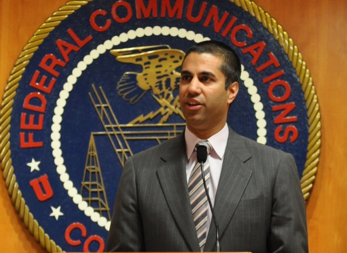
Evaluating Trump’s approach to tech policy requires understanding the personnel he has appointed to work on those issues. One of the most significant leaders in setting Trump’s tech agenda is Federal Communications Commission Chairman Ajit Pai.

First appointed to one of the Republican FCC seats in May 2012, Pai spent most of the past couple years fighting President Obama’s FCC Chairman, Tom Wheeler, on several issues, only to get outvoted and ignored in partisan fashion. Pai is now promising a more fair and inclusive process to all sides because he believes, “The commission is much stronger when it speaks with a unified voice.”

More importantly, now that he is the Chairman, Pai has a checklist of policy initiatives he is working through:

  • Pai has already accomplished several things, including expanded investment in rural broadband infrastructure through approval of $170 million in federal grants and limiting the scope of the FCC’s authority on prison phone calls and other issues.
  • There are also important items on tap for Pai, including the creation of the Office of Economics and Data (OED) by the end of 2017 to help institutionalize an economics-based approach to the FCC’s decision making.
  • But on some of the biggest issues, Pai’s approach remains unknown, including how he will replace net neutrality regulations and deregulate broadband development.

Pai has argued the FCC, “should do everything it can to ensure that its rules reflect the realities of the current marketplace.” If he is successful in translating his philosophy into real policy, the tech world will take on a completely different look. As part of Delve’s ongoing analysis of the Trump Administration through The Administration Project (TAP), we prepared a brief note for our TAP subscribers that goes in depth on Chairman Pai’s agenda and how it will shape the tech industry. As a loyal TL;DR reader, we’re offering you access to the full note for free here.

News You Can Use

BIG DATA, BIG PROBLEMS

Big data was once heralded as the key to solving any number of major issues facing our society. But, a Wall Street analyst turned progressive activist, Cathy O’Neil, has argued in her new book – Weapons of Math Destruction: How Big Data Increases Inequality and Threatens Democracy – that efforts to eliminate bias through data have become biased themselves. For years, big data was seen by policymakers as a way to eliminate bias from government and private sector initiatives, but now data has begun to create its own biases.

Data on trivial activities  – like what websites a person frequents or where they shop – are being used to make significant determinations like how likely a person is to repay a loan or their potential for criminal behavior. O’Neil concludes we must inject “human values on these systems.” But, this presents its own new conflict: who gets to decide what those values are and how to impose them on these algorithms meant to produce unbiased policies and programs.

WHAT DOES WINNING LOOK LIKE IN AFGHANISTAN?

With President Trump delegating his authority to determine troop levels to Defense Secretary James Mattis, it is worth considering how Trump can best achieve success there. Former Deputy U.S. Treasury Attaché to Saudi Arabia Morgan Ortagus, and former National Security Council senior advisor Samantha Vinograd, recently published an op-ed arguing Trump should ask four questions to determine to the best path forward in Afghanistan:

  1. Whether the U.S. intelligence community still believes there is a significant and direct national security threat to the U.S. or its allies emanating from Afghanistan;
  2. What Trump’s national security team sees as the clearly defined U.S. goals in Afghanistan for the next four years;
  3. How the military can best recalibrate resources to achieve these goals;
  4. How his foreign policy team can get Pakistan more constructively involved in achieving these goals.

Ortagus and Vinograd say these questions must be answered to define success in Afghanistan and to clearly define how and why our troops must deploy in order to support continued operations in the nation.

PROFITS FROM THE SHARING ECONOMY

With a recent Pew study estimating that nearly a quarter of all Americans earn money through sharing economy platforms like Airbnb, Uber, TaskRabbit, and others, it is worth considering how much money people actually earn from the gig economy. Based on the earnings from these platforms listed on tens of thousands of loan applications, the Priceonomics blog found that 85 percent of these gig-economy workers earn less than $500 a month – with Airbnb hosts earning the most by far.

These figures could easily be trotted out by those who argue this new way of engaging workers requires regulation or reform in order to ensure these workers are not dramatically underpaid. Left unclear, however, is how many of these workers are using these “jobs” to make a little extra money versus trying to forage a full-time living.

THE EMPTY BENCH

Democrats are already gearing up to face off against President Trump in 2020, but the Democratic bench for presidential candidates appears to be exclusively populated with old political operators unlikely to inspire excitement among the party or the country, and fresh-faced newcomers with personal brands and messages that are entirely untested when it comes to reaching beyond their core supporters.

Outside of former Vice President Joe Biden, Sen. Elizabeth Warren (D-MA), and Sen. Bernie Sanders (I-VT), there are nineteen other Democratic names being floated as potential candidates – and a recent POLITICO/Morning Consult poll found at least half of the electorate has never heard of any of them. The bench is so empty that a failed U.S. Senate candidate, Jason Kander, is getting noticed as a 2020 contender in early primary states. With roughly 18 months to go until 2020 presidential campaigning begins in earnest, this position does not bode well for those desiring a Democratic comeback.

THE NEXT PORTLANDIA

Boutique hoteliers are trying to manufacture “cool” in up-and-coming mid-size cities with less-than-hip reputations, many of which also have struggling local commercial economies. The targets of these hotel operators are in various stages of cultural bloom, with cities like Detroit, Pittsburgh, and Savannah further along than cities like Asbury Park, Milwaukee, or El Paso. All of these cities are competing to become what many of the hotel owners refer to as “the next Portland.”

If they bet on the right cities, there can be big money for businesses in these smaller markets, and the trajectory appears somewhat standard: an art community establishes itself, which brings with it pieces to showcase, followed by craft breweries, distilleries, bars, and “foodie” restaurants, which then garner national attention. It remains to be seen whether this model for building hip travel destinations can create long-term growth, but boutique hotel operators and local communities are betting it can create fast-growing small-scale economies in the short-term.

ANOTHER FORUM SHOP CLOSED

Drug-maker Bristol-Myers Squibb (BMS) scored a victory in a lawsuit with the State of California over California residents who claim they were harmed by the BMS drug, Plavix. In a major ruling scaling back where drug companies can be sued, the U.S. Supreme Court issued an 8-1 ruling this week declaring that out-of-state residents could not join California’s lawsuit.

Justice Samuel Alito, writing for the Court, argued that, “The mere fact that other plaintiffs were prescribed, obtained, and ingested Plavix in California – and allegedly sustained the same injuries as did non-residents – does not allow the State to assert specific jurisdiction over the nonresidents’ claims.” This is the second ruling in the past month in which the Supreme Court has issued a ruling scaling back plaintiffs’ ability to “forum shop” – the term for plaintiffs bringing lawsuits to courts more likely to hand down favorable verdicts – making this a particularly devastating summer for trial lawyers and plaintiffs’ attorneys.

Summer Job Struggles, New Activist Investors, and Obama’s Peace Plan​

Here’s What You Need To Know

With the unemployment rate for 16- to 19-year-olds down to 14.3 percent from a high of 27 percent in 2009, and 41 percent of employers reportedly planning to hire temporary workers for the summer, teens looking for summer jobs have some of the best chances of landing one since the early 2000s.

Yet a recent Bureau of Labor Statistics analysis found that only 43 percent of 16- to 19-year-olds were either working or looking for a job. This figure is ten points lower than in 2006, and almost 30 points down from nearly 70 percent in 1989. With projections showing the teen labor force participation dropping below 27 percent by 2024, there are many theories about why the teens aren’t working like they once did.

  • Blame The Boomers: Some argue teens are suffering from the trickle-down effects of older Americans now working past 65 at the highest rates in more than 50 years. While most older Americans putting off retirement are not holding the entry-level jobs teens would otherwise be taking for the summer, they do hold the jobs that more junior employees would hope to be promoted to. So, by remaining in the workforce, older workers may be limiting the advancement of younger employees all the way down to teenage temporary workers.
  • Blame The Immigrants: Another argument is that teens are competing for fewer and fewer of these types of temporary, low-skill jobs against immigrant labor. A 2012 study found that less educated immigrants actually impact employment for native-born teenagers far more than their native-born parents.
  • Blame The Markets: Northeastern University labor economist Alicia Modestino also points out that the typical teen jobs are drying up – or in other words, “think Blockbuster.” Between the dramatic decline in the retail economy – where many teens were hired as temporary summer workers – and the automation of unskilled labor jobs, the markets are cutting down on the industries where temporary, unskilled work is a viable business strategy.
  • Blame The Overscheduling: Finally, there is the argument that teens and their parents are simply prioritizing different things. It is probably true that some teens are simply lazier and spending their summers simply not working, but the biggest shift in priorities seems to be coming from college-bound teens and their parents focusing on volunteer opportunities and extracurricular activities geared toward building attractive resumes for university admissions offices. In July of last year, more than two in five 16- to -19-year-olds were enrolled in summer school – not for failing classes, but rather to earn college credits or build out their academic profile.

Whichever theory or combination of theories is true, many have expressed concern over the non-monetary benefits teens may be missing by not pursuing or being able to get a summer job. They argue these work experiences offer teens perspective on the world outside of the rigid structure of school and home, teach the importance of managing money before there are necessarily serious consequences, and prepare teens for dealing with bosses and co-workers of all ages.

There may not be direct economic consequences of this trend at the moment, but building a generation of workers for whom their first real work experience comes at the age of 22 or older may very well present problems in the coming decade.

News You Can Use

GROWTH OF CONSCIENCE ACTIVISTS

Activist investors have used their pressure tactics on corporate executives and boards almost exclusively in the pursuit of profits. Yet, a new crop of these investors is now using these same tactics for another purpose: forcing companies to consider social good. Firms like Arjuna Capital are showing up at shareholders’ meetings to pressure tech firms to improve their gender pay equity gap and demand oil companies adopt more environmentally friendly policies.

This concept of social conscience investing isn’t necessarily new, but the level of activism is. Corporate executives, who previously only worried about activist investors going after bloated C-suite salaries and inefficient business practices, must now make sure they are not vulnerable to socially conscious corporate raiders who could derail a business strategy with ideological agendas.

LIFTING THE VEIL ON OBAMA’S PEACE NEGOTIATIONS 

The Israeli newspaper Haaretz recently released two documents outlining the Obama Administration’s work on the 2014 Israeli-Palestinian peace talks and how they fell apart. Two key revelations came out in these documents. First, Israeli Prime Minister Benjamin Netanyahu was essentially willing to accept the 1967 borders as a basis for negotiations. Despite this willingness, Obama Administration negotiators refused to accept the draft due to Netanyahu’s demand that the phrase “territorial contiguity” not be used in the document.

Second, U.S. negotiators were willing to go a long way to appease Palestinian Authority President Mahmoud Abbas. After a draft had been carefully negotiated with the Israeli government, Abbas expressed, “anger and disappointment” with the wording over the issue of Jerusalem. In response, U.S. diplomats quickly crafted an updated version of the document that tilted a number of issues toward the Palestinians and was not reviewed by any Israeli representatives. As ill-fated as the Obama Administration’s attempts were to negotiate peace, these documents offer the Trump Administration an excellent model of how not to approach Middle East diplomacy. 

MIGRATION OFFERS NO GUARANTEES

Historically, when Americans have needed a new job, they have picked up and migrated to where jobs are more prevalent (usually large, urban centers). But, Princeton University economic historian Harold James suggests those workers in the rust belt communities of Michigan, Wisconsin, and elsewhere may not be able to rely on this traditional path to the middle class.

James explains how, unlike previous generations who could secure employment after migrating to cities with the skills they already had, today’s unemployed do not possess the skills to secure the jobs they would be migrating to. The study suggest policymakers will have to adopt new approaches to addressing unemployment and lack of upward mobility within these communities.

$1 BILLION CONTEXT ON QATAR

After several key Middle Eastern nations cut ties with Qatar last week, revelations of a $1 billion hostage deal negotiated between the gulf state’s government and a group of terrorists provides some context into the motivations behind the seismic diplomatic move. The government in Doha allegedly gave the money to members of the Iranian security services and an al-Qaeda affiliate fighting in Syria in order to secure safe return of 26 members of a Qatari falconry party who had been kidnapped in southern Iraq.

The other gulf states – including Saudi Arabia, Egypt, Bahrain, and the United Arab Emirates – had cited the Qatari’s funding of regional extremism and terrorism as a chief reason for their decision to cut diplomatic ties; this hostage deal seems to legitimize some of that concern. How all of the parties react to this hostage deal will play into how the U.S. will reconcile the legitimate grievances of these Middle Eastern nations and the critical role U.S. military installations in Qatar play in the region.

BRING DAYTON TO SYRIA?

Anton Mardasov, head of the Department of Middle Eastern Conflicts at the Moscow-based Institute for Innovative Development, recently published an op-ed proposing the idea of bringing to Syria the tactics used during the 1990s to negotiate peace in Bosnia. As Russia and the United States hold back-channel talks to establish de-escalation zones in Syria, Mardasov suggests that a feasible settlement could be reached along the lines of the famous Dayton Agreement – which secured peace in Bosnia and Herzegovina in 1995.

This type of agreement would allow Syria to preserve its army while integrating the government and the opposition military formations into a new armed forces and establishing separate administrative states. Mardasov also explains this potential solution would also allow for Russia and the U.S. to tolerate each other’s military presence in Syria, since it would be an oversight function for the newly formed united military. One of the largest challenges this potential framework would present is getting each side to trust the other, yet Mardasov suggests that Russia could be willing to compromise. The biggest elephant in the room is how a potential settlement deals with Syrian President Bashar al-Assad.

Financial Choices, UAE’s Mission to Mars, and Trial Lawyers Lose​

Here’s What You Need To Know

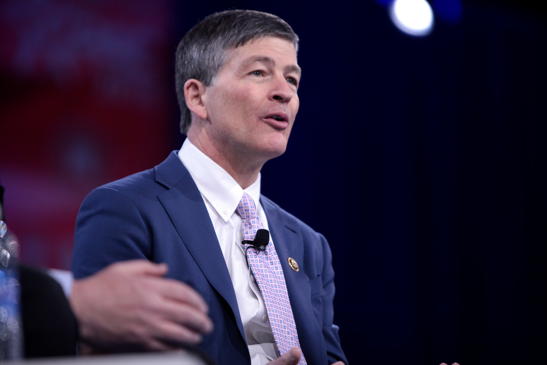
While most of the attention on Capitol Hill this week will be focused on former FBI Director James Comey’s testimony before the Senate Intelligence Committee, the House is set to vote on sweeping Wall Street reform legislation – the Financial CHOICE Act. The bill, sponsored by House Financial Services Committee Chairman Jeb Hensarling (R-TX), is the first legislative step in Republican efforts to radically scale back the Dodd-Frank Wall Street Reform and Consumer Protection Act.

So what does the bill do? It has two key components:

  • Regulatory Restructuring: The bill creates a new, two-tiered regulatory framework that better protects small community banks from burdensome regulation intended to target larger banks and financial institutions. While the higher tier would keep most of Dodd-Frank rules in place, the lower tier exempts banks from Dodd-Frank regulations if they hold the financial “equivalent of 10% of their assets in capital,” allowing banks to choose the level of regulation they face.
  • CFPB Reorganization: The measure also fundamentally restructures the Consumer Financial Protection Bureau, which was created by Dodd-Frank. The bill renames it the Consumer Law Enforcement Agency, and makes it answerable to the President and accountable to Congress through the appropriations process. The bill also drastically curtails the level of regulatory discretion the agency has, reducing its authority to only enforcing pre-existing consumer protection laws. Effectively, the bill makes the CFPB much more of a tradition executive enforcement agency.

What’s Going To Happen Next? While the bill is likely to pass the full House of Representatives, it is also likely to be a vote along party lines and some havesuggested its chances of passing the Senate are slim-to-none. However, the Senate Banking Committee is already working on legislation to focus on regulatory relief for community banks and – with the Courts ruling the CFPB’s framework unconstitutional – it is likely Congress will need to restructure the agency soon either way.

Even with these prospects, Chairman Hensarling has argued the measure will create real momentum toward meaningful banking reform aimed at correcting unintended consequences of Dodd-Frank. It is also worth noting that the White House has vocally supported the bill and could enact some of its key provisions through executive action if legislation is not forthcoming.

News You Can Use

ARABS IN SPACE
Last week, Sheikh Mohammed bin Rashid al Maktoum, Vice President and Prime Minister of the United Arab Emirates, announced the country’s intent to have a fully functioning city of 600,000 people on Mars in one hundred years. This announcement marks the latest effort undertaken by a country that has been able to outpace many of its neighbors in ambition and investment, thanks largely in part to their plentiful oil resources and stable rule by their monarchy. The Mars project is only part of a much larger effort within the UAE to build out a robust science and technology sector. While at first glance the project may appear absurd, it may prove to be a savvy strategy to place the country among the top tier of nations when it comes to scientific advancement – both in image and in reality.

THE NOT-SO-GOLDEN AGE OF ENTREPRENEURSHIP
Despite the prominence of startups and entrepreneurship in today’s popular culture, a new study from the Economic Innovation Group (EIG) found that America is actually creating fewer new businesses than in previous eras. This lack of new business growth is a large contributor to lack of new job growth. So what can help put the American economy back on track? EIG argues more industries need to be opened up to more competition and entrepreneurial disruption by rolling back onerous occupational licensing requirements that prevent people from entering professions as straight forward as selling flowers or becoming a cosmetologist, and refocusing tax incentives to encourage investment in struggling areas. New business creation is a vital part of growing the American economy, but it cannot happen without the right policies in place.

WINNERS AND LOSERS IN THE ROBO-ECONOMY
The rise of robots and automation in countless industries has spurred a growing conversation about whether the trend is positive or negative. But the reality seems to be less binary than some might want to see it. In the developed world, some like venture capitalist Marc Andreessen argue automation will create greater efficiency and respond to the real problem developed labor markets are facing: a lack of people to fill jobs. Others, like MIT economist Daron Acemoglu, claim in the developing world, where cheap labor has long been seen as a way to build middle classes, automation could spell doom to their fast-growing manufacturing economies. Not all economies are equal, and industries, governments, and society will have to thoughtfully consider the impacts pf automation innovations in different parts of the world.

THE FORUM SHOP IS CLOSED
In an 8-1 decision last week, the U.S. Supreme Court ruled against out-of-state plaintiffs seeking to sue their employer, railroad company BNSF, for damages after they were allegedly exposed to carcinogens. The Court held the plaintiffs could not file suit in Montana when the company wasn’t incorporated there, the plaintiffs didn’t live there, and the injuries didn’t occur there. This ruling means trial attorneys will face more difficulty pursuing a legal strategy called “forum shopping,” in which plaintiffs’ attorneys seek out state courts known for friendlier juries and heftier verdicts for cases with only the most tenuous connection to that court’s jurisdiction. Writing for the majority, Justice Ruth Bader Ginsberg noted the Fourteenth Amendment’s Due Process Clause does not permit a state to call in an out-of-state corporation before its courts to adjudicate a matter that occurred elsewhere. The decision is a major blow to trial lawyers, who have used this strategy extensively.

FEAR AND LOATHING IN SILICON VALLEY
As new technologies are developed, so too does the fear surrounding them. As The Wall Street Journal’s Holman Jenkins Jr. points out, it often falls to CEOs to guide society’s adjustment to life altering technologies. Most recently, the public called on Facebook CEO Mark Zuckerberg to create algorithms to prevent Facebook users from live-streaming violent crimes. Jenkins says self-driving cars are next in the list of industries having to deal with the public’s fear factor. Despite the benefits that self-driving cars can bring to the elderly, disabled, children, and other riders for whom this would be the optimal form of transportation, “whole academic and media careers are being built on the threat it poses.” These innovations are by in large good things, but the innovators who shepherd them into existence don’t always see how consumers will view them at first. Thinking about how these radically new concepts are presented to consumers ahead of time will help CEOs preempt the fears the public might have before those fears cause a backlash against the company.

Canada’s New Conservative, Super PAC Schemes, and New Asian Energy

Here’s What You Need To Know

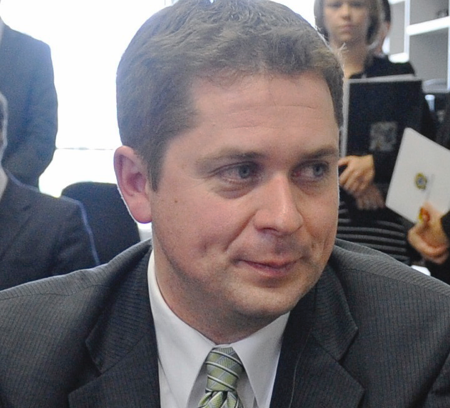
Last week the Conservative Party of Canada picked 38 year-old Saskatchewan MP Andrew Scheer as their new leader, who will challenge current Prime Minister Justin Trudeau in the next national election set to occur before October 21st, 2019. The surprise outcome answers some questions about the future of the Conservatives, but leaves others open to be determined over the years leading up to the national election.

  • Surprise Victory For The Status Quo: Scheer’s victory represented a major upset after fellow Conservative leader Maxime Bernier appeared poised for victory. Bernier’s ascendance to leadership was meant to signify a major shift in the Conservative Party toward more libertarian, free-market focused policies, and away from the establishment wing of the party. However, Scheer’s narrow victory is being seen as a turn inward and a vote for continuity within the party.
  • Drawbacks of the New Voting System: One of the reasons for the surprise election outcome is the new system of voting the Conservative Party implemented this year. The new process allowed for mail-in ballots and included a complex system of ranking voters’ preference for each candidate. Some in the party are already demanding the system be reviewed and are suggesting it will not be used again in the future. The surprise victory of a lesser known candidate who is able to secure enough second-choice votes is precisely the drawback to these types of tiered voting systems.
  • The Candidate Nobody Knew: Despite the fact that Scheer has served in government for the past 13 years, he has kept a decidedly low profile. During his campaign for leadership he offered little in the way of detailed policy proposals, beyond those positions almost universally agreed upon by Canadian Conservatives. Scheer has not served in any senior or cabinet level posts and spent the better part of the past six years as speaker of the House of Commons, a nonpartisan position that does not allow the holder to vote on or introduce any legislation. Scheer’s limited profile may offer the Conservatives a chance to define their candidate to the nation, but Liberals are already seeking to paint Scheer as a radical right-wing social conservative – so Scheer should define himself lest he be defined by the opposition.
  • The Battle To Come: Scheer faces two key challenges in his path to defeating Liberal Prime Minister Justin Trudeau in 2019. First, he must succeed in unifying his own party. Given Scheer’s narrow victory there is residual discord, but the Conservative Party will need to band together behind Scheer as their stand-bearer if they have any hope of success against Trudeau. Second, Scheer will need to help craft a strategy that challenges Trudeau on more than his style. Canadian Conservatives have long resented Trudeau’s status as an international political celebrity, and Scheer has already begun poking fun at Trudeau’s cult of personality. Though Scheer is seen as more personable than former Prime Minister Harper, he will need more than critiques of Trudeau’s panache in order to win – just ask American Republicans who tried and failed to use Barack Obama’s celebrity status against him in 2008 and 2012.

News You Can Use

TRUMP-BOT

As pundits and political prognosticators continually fail at accurately predicting President Trump’s next moves, from foreign policy to domestic politics, Robert Burton, author and former chief of neurology at the University of California San Francisco, has written an op-ed explaining the President’s actions from a strictly analytical perspective. If one reviews Trump’s decisions through the lens of a neural network machine – like Google’s “Deep Mind” or IBM’s “Big Blue” – the President’s actions make much more sense.

If you remove all other factors from decision-making and simply focus on “winning,” the way a machine does, you simply test various strategies and enhance the successful ones while eliminating the failed ones. Using this strategy during the election, it made sense to campaign on major policies like a massive southern border wall or forcing companies to stop outsourcing manufacturing jobs, even though once in office it was likely to prove incredibly difficult to enact such policies. A normal politician would be too wary of getting caught flip-flopping or breaking “pledges.” But, President Trump has displayed an almost machine-like willingness to simply recalculate whenever a strategy isn’t successful. By Burton’s analysis, the President is single-minded in his overall goals, but capable of iterating his strategy as he goes rather than dwell on strategic miscalculations or failures.

SUPER PAC SCHEME    

Thousands of grassroots conservatives gave a super PAC hundreds of thousands of dollars to support Milwaukee County Sheriff David Clarke’s candidacy for the U.S. Senate, despite the fact that Clarke never met with political operatives or donors, never formed an exploratory committee, and repeatedly said he was not planning on running for any office other than Sheriff.

The PAC, which has absolutely no affiliation with Sheriff Clarke, appealed to donors through direct mail ad campaigns in an alleged effort to “draft Sheriff David Clarke for Senate.” The PAC’s organizers claim it is meant to show support and help convince Sheriff Clarke to run for Senate. Yet they have already begun renting out its email lists to other organizations. This PAC is not unique and “draft” PACs for individuals who have made clear that they have no plans to run for office are a common method for convincing grassroots donors to hand over money to shady political operatives and consultants.

NEW ENERGY IN ASIA

This month, teams from both China and Japan have successfully extracted methane hydrate – an energy-dense substance found within water molecules – from the seafloor. Methane hydrate is a fossil fuel that burns similar to natural gas. But, because of the difficulty surrounding the chemical’s extraction, massive, untapped deposits of methane hydrate still exist throughout the world.

While full commercialization of extraction technology is not likely to occur before 2023, this development could radically alter Asia’s energy sector, which to date relies heavily on coal due to the region’s lack of natural gas reserves. This change could also impact diplomacy in the region, as U.S. and Russian natural gas exports have been seen as key factors in dominating the geopolitical stage, especially in southeast Asia.

THE [INSERT STATE HERE] CLEAN POWER PLAN

Despite the fact that President Trump has pledged to halt the implementation of the Obama Administration’s 2015 Clean Power Plan regulations, several state governments are seeking to enact or already have their own versions of the plan. Virginia Gov. Terry McAuliffe recently signed an executive order mandating that the state’s Department of Environmental Quality (DEQ) begin crafting regulations to reduce carbon emissions from power plants.

California is currently considering strengthening its statewide cap-and-trade program. And Connecticut, Delaware, Maine, Massachusetts, New Hampshire, New York, Rhode Island, and Vermont – all members of a multi-state carbon cap compact – are looking at carbon pricing and more stringent renewable energy standard policies. While the Clean Power Plan may be dead in Washington, the fights for and against such measures are moving to the state level as Governors and legislatures begin building an interconnected network of emissions-reduction plans. Look out for corporations and advocacy groups sending money and people to a state capitol near you.

THE CEO PAY MACHINE

Adjusting for inflation, CEO pay has risen 10-fold since 1980. The average Fortune 500 CEO today makes over $20 million a year, roughly 300 times what the average employee makes. Steven Clifford, former CEO of King Broadcasting Co., argues that the CEO compensation “market” is not a market at all, but rather a “CEO Pay Machine” that is determined by boards and compensation consultants. Rather than using data to quantify and analyze CEO pay, companies base CEO compensation on the pay of other CEOs, pay levels that are often achieved by surpassing easy bonus targets.

Such pay incentives are shown to have negative effects on business; they narrow the CEO’s vision, limit creativity and innovation, and focus exclusively on short-term results. To disrupt this “CEO Pay Machine,” Clifford, a former CEO himself, proposes a luxury tax, something he argues the Trump and Clinton voter can agree on. “For every dollar over $6 million that a company pays any executive, it should pay a dollar in a luxury or penalty tax.” Without disrupting this system, Clifford argues, “we are on our way to plutocracy.”

The Trump Doctrine, Mayors Fight the Future, and New Student Debtors

Here’s What You Need To Know

Last week, President Trump gave his first major foreign address in Saudi Arabia in front of leaders from 55 Muslim-majority countries. While the speech received plenty of coverage, much of the reporting missed the most important element – President Trump laid out the foundation of a new foreign policy doctrine that could reshape diplomacy in the Trump era.

  • “Principled Realism”: The overarching philosophy behind the Trump Doctrine is this idea of “principled realism,” which the President explained as pursuing American foreign policy goals through partnerships favoring stability over radical disruption, focusing on real-world outcomes not inflexible ideology, and prioritizing partnerships over perfection. The policy is a further fleshed out version of Trump’s campaign promise of an “America first foreign policy,” not disengaging from global diplomacy, but placing U.S. economic and security interests above all else.
  • Prioritizing Security: The Trump Doctrine places an emphasis on U.S. national security and seeks to achieve this goal through a combination of partnership efforts. First, President Trump has acted on his belief in working with, sometimes, imperfect partners. The Trump Administration has sought to form even closer ties with countries like Saudi Arabia, Egypt, and the Philippines. All of these nations have questionable track records on human rights issues, but play an important role in maintaining global stability. Second, the President is demanding more of America’s long-time allies, when it comes to the issue of global security. While speaking to NATO leaders yesterday, the President bluntly reiterated his calls for member nations to pay their fair share to support the international security pact.
  • Trade As An Economic Issue: In the post-Cold War era, American presidents of both parties have sought to use international trade as a force for policy objectives ranging from human rights to promoting democracy to environmentalism. The Trump Doctrine takes a much more straight-forward approach to international trade, viewing it purely as a tool for economic growth. Through their efforts to renegotiate NAFTA, withdraw from TPP, and potentially review the South Korean trade deal, the Trump Administration has made clear their trade policies will be informed primarily by how they impact the U.S. economy.
  • Why It Could Work: As influential academic Walter Russell Mead recently noted in The Wall Street Journal, “American voters have never shared the establishment’s enthusiasm for a foreign policy aimed at transforming the post-Cold War world.” There is, Mead argues, a “disconnect between the establishment’s ambitious global agenda and the limited engagement that voters appear to support.” Trump’s approach to the world, often hinted at during the campaign and telegraphed in his Inaugural Address, is a response to this disconnect, much like his economic policies are shaped by the disconnect on priorities between many in Washington and the “forgotten man” in the heartland.

President Bush’s approach, whether you believe it was right or wrong, exhausted the American people’s willingness to spend blood and treasure abroad. President Obama swung the pendulum too far in the other direction, declaring he would “lead from behind” and seek ways to leave Iraq and Afghanistan even if our mission was not completed. Trump’s approach may find a more careful balance – engaging in the world only when he can clearly articulate America’s immediate interests in doing so. Only time will tell if he gets the balance right.

News You Can Use

ACTING AGAINST THE ACTIVISTS

Resolute Forest Products’ vice president, Seth Kursman, recently published an op-ed calling on more businesses to fight back against attacks from certain activist groups the way his company did when they were targeted by Greenpeace. Kursman argues major companies with legitimately good records need to stand up to activists who actually brag about how quickly major corporations capitulate to their demands.

The natural instinct of most companies has been to take the abuse from these activist groups, regardless of how absurd or illegitimate their claims are. But Kursman points out that this only encourages these groups to continue using these tactics to bully good corporate citizens. Kursman’s company successfully sued Greenpeace for making false claims and targeting them, and he is now encouraging other falsely targeted companies to do the same.

MAYORS AGAINST THE FUTURE

New York City’s deputy mayor for housing and economic development, Alicia Glen, has gathered leaders from 22 cities around the world to discuss how they can assert their regulatory authority over the major tech firms of the so-called “gig economy” – like Airbnb and Uber. Glen’s idea is for these cities to band together and create collective set of policies that would force companies into regulatory submission, cutting off their ability to simply refocus on a municipality with a more attractive regulatory set-up.

The themes of Glen’s meetings will include fair compensation, health and safety standards, environmental sustainability, equal opportunity, and data security. It is an open question whether these cities can agree on policies and use their numbers as leverage, but an international regulatory cartel could present a major challenge to tech companies’ growth.

WHY DO YOU “VOLUNTOUR”?

It turns out that “voluntourism” – a growing form of tourism in which travelers participate in voluntary work, typically for charity – actually does more harm than good. First, a growing number of “voluntourists” often have the wrong motives: they travel overseas to look good to others rather than help those in need. Those who do want to help sometimes have a condescending savior complex that implies the locals are helpless. Second, the growing industry of “voluntourism” has led to a rise in organizations designed to make money from poverty and who often market their business using stereotypes.

Third, research is beginning to indicate that short-term “voluntourists” often leave vulnerable children feeling abandoned when what they need stable, long-term relationships. Finally, “voluntourists” often take on jobs overseas for which they do not have the skills. If you wouldn’t trust a “voluntourist” to build a school in your own country, why do we encourage them to do it in someone else’s? This trend is just the latest example of a societal shift toward virtue signaling— seemingly selfless acts that are really only done to signal an ideological view point to others, rather than a genuine desire to be virtuous and help those in need.

STUDENT DEBT: IT’S NOT JUST FOR MILLENNIALS

There is a macroeconomic tsunami of student debt carrying over to the parents of Millennials and it is still unclear what impact this new debt crisis may have on the overall economy. The most up to date New York Fed data suggests that from 2005 to 2015, student loan debt held by Americans aged 60-64 increased from $4.85 billion to $38.35 billion. For those aged 55-59, it increased from $13.9 billion to $65.47 billion. Statistics also show Baby Boomers are having just as much trouble as Millennials paying off this debt, with many of these loans already in default.

While no one has crunched the numbers to accurately assess its impact on the U.S. economy, these rising levels of student debt will undoubtedly have ripple effects, ranging from 60% of Boomers in this position admitting they are putting off buying a new home or those in their 50s and 60s working later into life. Both of these consequences further exacerbate the economic plight of younger generations, but also prove that the issue of crippling student debt is not a single generation problem. That is why more and more political leaders will offer solutions to the student debt crisis. It is no longer just pandering to the youth vote, but rather a broad issue impacting many working families.

FINANCE FINDS ITS PLACE IN THE SUN BELT

Finance and insurance jobs in the United States have now rebounded to pre-financial crisis levels, but many of the sector’s new jobs are not in lower Manhattan or Connecticut. These jobs are mostly in Arizona and Texas. New technology driving the rise of online banking allows financial firms to consider locations outside traditional commerce hubs that have a substantially lower cost of living. While New York remains home to a substantial portion of the finance and insurance industry, more and more of those Wall Street “fat cats” will be far removed from island of Manhattan. 

Not-So-Special Prosecutor, Investment Impacts, and Regulatory Rollbacks

Here’s What You Need To Know

Yesterday afternoon, Deputy Attorney General Rod Rosenstein announced the appointment of former FBI Director Robert Mueller to serve as Special Counsel to investigate connections between those close to President Trump and the Russian government. This appointment comes in response to numerous lawmakers calling for a special prosecutor following the firing of FBI Director James Comey. In the wake of this appointment, it’s important to understand what a special prosecutor is today versus what it was 20 years ago, how independent a special prosecutor really is, and what outcomes special prosecutors really provide.

  • The “Special Prosecutor” Of Today Is Not What It Was 20 Years Ago: When many people think of a “special prosecutor,” what they’re actually envisioning is the Office of the Independent Counsel, which was created after Watergate as part of the Ethics in Government Act of 1978. This measure allowed Congress or the Attorney General to request an independent counsel who would then be chosen by a panel of three judges to eliminate any potential political meddling. This measure was most prominently used when Kenneth Starr was tasked with investigating the Clinton Administration as an independent counsel. This statute, however, was allowed to elapse when Congress failed to reauthorize it in 1999. So, there is no longer an Office of the Independent Counsel, but rather it is the U.S. Department of Justice Office of Special Counsel.
  • Special Counsels Aren’t Actually Independent: In the absence of the Office of the Independent Counsel, the Department of Justice has the authority to appoint a “special counsel” to investigate specific issues where the traditional channels of justice are either compromised or insufficient. (NOTE: This is separate from and different than the official DOJ’s Office of the Special Counsel – welcome to government!) The chief difference between the prior independent counsels and the contemporary special counsel is that the position in now subject to Department of Justice oversight. While technically the Attorney General’s appointment of a special counsel is “unreviewable,” President Nixon was able to circumvent this during the “SaturdayNight Massacre,” firing senior Justice Department officials until landing on an Acting Attorney General willing to fire the special counsel. Since the lapse of the independent counsel statute in 1999, that circumvention remains possible.
  • Special Prosecutor Investigations Are Never Satisfactory: Whether looking at investigations conducted by the previous Office of Independent Counsel or the modern-day Office of Special Counsel, the historical trend suggests their results never really satisfy either side. Their investigations often lead to claims of overreach by some and under-reach by others. The last use of a special counsel was 2003, when then-Deputy Attorney General James Comey appointed Patrick Fitzgerald to investigate the leaking of CIA operative Valerie Plame’s name to the press.Some argue Fitzgerald’s investigation overreached by indicting a Bush Administration figure and a journalist for crimes entirely unrelated to the actual leaking or publishing of Plame’s name. Meanwhile, Fitzgerald refused to pursue charges against the actual source of the leak, who was identified to him early in the investigation. The same has been argued of independent counsel Kenneth Starr’s investigation into the Clinton Administration’s White Water real estate scandal, during which Starr was accused of exceeding his investigative mandate by refocusing his efforts on perjury charges against President Clinton related to his extramarital affairs.

Robert Mueller shares a challenge with his predecessors: the politically charged environment that require their independence come with the expectation that they will find wrongdoing. Exoneration or a conclusion that there was no crime committed is almost never a politically acceptable answer for them to give. Once the investigation starts, it must deliver a culprit. Thus, rather than removing political influence from the equation, as they are intended to do in theory, special counsels in reality tend to conform to that influence and expectation.

If one genuinely wants answers about the extent and nature of Russian influence in the 2016 presidential elections, a special counsel may not offer you much value. While Mueller may temporarily calm the tempest in Washington, the Trump Administration may come to regret trading that short term gain for the long term overreaching scrutiny that may result.

News You Can Use

THE FRENCH FOUGHT THE HACKERS, AND THE FRENCH WON

After the prominent instances of campaign hacking during the 2016 U.S. presidential election, the French were prepared to fend off similar attacks during their recent presidential election. Russian hackers’ attempts to break into the servers of elected French President Emmanuel Macron’s campaign were stymied; Macron’s team created and filled fake email accounts to confuse hackers, proving that this type of information warfare can be successfully counteracted through early warning and rapid exposure.Our own National Security Agency closely monitored Russian hackers during the French presidential election process, but Macron’s campaign had been the target of sophisticated cyberattacks since December. Russian hackers are clearly still seeking to influence international elections. Yet high profile national campaigns are starting to effectively inoculate themselves from these attacks.

FREEDOM CAUCUS CELEBRATED AT HOME

Members of the right-wing House Freedom Caucus have been the cause of near-constant frustration for Republican leadership on the Hill and the White House. Back in their home districts, however, they’re much appreciated by their constituents. Citizens living in the districts of key Freedom Caucus members – like Reps. Mark Meadows (R-N.C.), Dave Brat (R-Va.), and Morgan Griffith (R-W.Va.) – see the group as an effective, successful check on establishment politicians, especially with their ability to influence the GOP healthcare bill to a point where they could actually support it.

Given this support in their districts, it does not appear the House Freedom Caucus is going anywhere, and if Republican leadership hopes to achieve key policy priorities, they will have to consider the opinion of these members.

SMALL RULE, BIG INVESTMENT IMPACTS

A recent, obscure regulation from the Financial Accounting Standards Board (FASB) may have a large impact on how major tech firms – like Alphabet, Intel, IBM, and Salesforce.com – invest in smaller companies. The rule, entitled “Accounting Standards Update 2016-01,” requires companies who invest below 20 percent in other publicly traded companies to value those investments on a quarterly basis. The intent of this rule is to better inform investors and creditors about a company’s financial health.

Previously, companies were only required to post decreases in an investment’s value and could continue posting the investment at cost despite potential increases. But, the new rule creates a potential problem for those investing in other companies because it requires quarterly analysis of these often difficult-to-value investments, potentially creating unnecessary volatility on their balance sheets.

The concern, especially in the tech industry where companies investing in smaller startups is particularly common, is that the rule will discourage larger companies from investing in innovative smaller companies that show promise – thus disrupting the tech ecosystem that has produced significant growth and opportunity in the past.

SLOW YOUR REGULATORY ROLLBACK

Several top lobbyists for major players in the energy industry have relayed a seemingly unlikely message to the Trump Administration: slow down on deregulating the energy sector. Big energy leaders have expressed concern at the speed with which the Administration is deregulating their industry.

They argue deregulation needs to be done carefully to ensure the companies most impacted by the changes understand them and that the markets are not unnecessarily disrupted. They also worry that if not done correctly, lawsuits or a future Administration could force rollbacks of the rollbacks. There is truth to these concerns, but it is also worth mentioning that big companies often play a role in crafting regulations. Thus, they have a vested interest in keeping some of them in place since they can afford to comply, while smaller companies, who might serve as competition, cannot.

THE UNFOUNDED BIAS AGAINST EMERGING MARKETS

Today, only 10% of private capital investment goes to emerging markets – countries with a Gross National Income per capita of $12,475 or less like South Africa, Brazil, and Thailand. Yet, a new study highlighted by Village Capital finds that entrepreneurs in emerging markets have the same or higher levels of education, have higher revenues, employee more full-time individuals, and have founded significantly more companies on average than their peers in “high-income countries.”

Cultural bias likely plays a role in this disconnect between investor perception and entrepreneur quality in emerging markets. But, the larger issue may be that the “one-size-fits-all, Silicon Valley-style approach to investing” greatly limits what types of entrepreneurs appear attractive. Investors pay attention to the university the founders attended, the network they belong to, and their potential for exponential growth, rather than looking to other indicators that have more proven track records as predictive of success.

This reliance on pattern recognition has resulted in more than half of global venture capital going to just three U.S. metro areas (New York City, Silicon Valley, and Boston). Investors who are brave enough to break from this traditional Silicon Valley-style approach may have a great opportunity in front of them with emerging markets.

Healthcare Truths, Heritage’s Future, and the Progressive Resistance​

Here’s What You Need To Know

Regardless of anyone’s thoughts on the content of the healthcare bill passed by Republicans in the House last week, there can be little doubt among anyone that the fallout has been confusing. A collection of bombastic, sometimes contradictory claims is swirling in the political and media landscape as critics of the bill rushed to set the narrative surrounding the legislation.

Here are a few of the most egregious inaccuracies being spread about the legislation: 

  • The Bill Classifies Rape Or Sexual Assault As A Pre-existing Condition: This claim was widely spread by Democratic opponents of the bill and echoed by media. Fact checkers at The Washington Post and PolitiFact have both declared this claim false. The truth is the bill in no way specifically addresses rape or sexual assault and does nothing to alter the existing federal policies installed to protect those with mental and physical conditions relating to domestic violence. These individuals are also protected by laws in virtually every state prohibiting health insurance companies from using a woman’s status as a domestic violence survivor to deny coverage. 
  • The Bill Eliminates Protection For Pre-Existing Conditions: Perhaps the most pervasive argument against the Republican measure is that it eliminates the generally popular Obamacare provision protecting coverage for preexisting conditions. In reality, the measure only offers states the opportunity to opt out of the Obamacare requirements regarding preexisting conditions, meaning the national standard would remain to protect those preexisting conditions, and adds in funding for those states to maintain high risk pools that help those who are impacted afford insurance. The issue also only impacts those on the individual market, which is an incredibly small sliver of the national healthcare market. So, the claim is meaningless for anyone receiving insurance through their employer, Medicare, or Medicaid.
  • The Bill Leaves 24 Million Americans Uninsured: Opponents of the bill have also claimed it will leave 24 million Americans uninsured. This figure comes from a Congressional Budget Office (CBO) analysis of an early draft of the bill, so it is not technically based on the version passed by House Republicans. The Washington Post disputed this claim, pointing out that the CBO report does not suggest that any number of people would be “thrown off” of or “lose” health insurance. The figure includes those who only have insurance now to avoid being fined by Obamacare, and would opt not to purchase insurance under the GOP plan. It also worth reiterating the fallibility of the CBO estimates.
  • Insurance Executives Will Personally Make Millions Off The Bill: This claim, put forth by Democratic Wisconsin Senator Tammy Baldwin, is based on the fact that the GOP legislation would repeal an Obamacare cap of $500,000 on how much insurance companies can deduct on their tax returns from their chief executives’ salaries. The wrinkle in Baldwin’s claim, however, is that the cap applies only to how much corporations can deduct – thus having no direct impact on the size of an individual insurance executive’s compensation or tax liability.

News You Can Use

BLAME STATE POLLING FOR 2016 SHOCK?
The American Association for Public Opinion Research recently released a report on how they believe the polling industry got the results of the 2016 presidential election so wrong. Their contention is that while national surveys were relatively accurate in assessing the popular vote, state-level polling had a historically bad year in forecasting the Electoral College. The report cites several reasons for this poor analysis, including the sizable shift in vote preference that occurred during the final weeks of the election, the failure of many pollsters to correctly adjust for over-representation of college graduates, and Trump voters who refused to self-identify when participating in pre-election polling. National surveys are undoubtedly simpler to distill for voters following the horse-race coverage of the election, but it is clear that pollsters’ focus on these at the expense of perfecting state-level polling for the Electoral College helped contribute to the degree of shock most voters felt on Election Day.

WHERE DOES HERITAGE GO FROM HERE?
Presidential historian, former White House aide, and certified Friend of Delve, Tevi Troy, recently opined on how outgoing Heritage Foundation president Jim DeMint’s removal from his post shines a light on some of the troubles the think tank has recently faced and offers an opportunity for the storied home of conservative policy ideas to get back on the right track. Regardless of the rationale for DeMint’s surprise ousting, the think tank is now seeking a new leader and has the chance to pick someone who can help reshape the definition of conservatism in the 21st century at a moment when many conservatives feel in the midst of a political identity crisis. Troy argues in order for this new leader to be successful, they must have a scholarly background, be capable of bringing conservatives together, and above all, they must take on the difficult challenge of building a wall between the scholarly work of the Heritage Foundation and the political activism of Heritage Action. Finding this perfect individual will not be easy. But, with Republicans in control of the federal government, having a source for well-crafted conservative policies is essential.

DATA AND ANTITRUST
As big tech firms’ control grows larger, they increase their control over the 21st century’s most valuable resource: data. This has raised concerns among antitrust officials. But, the traditional approaches and measurements used by these regulators has not been built for this new type of industry and resource. A recent article in The Economist laid out two specific principles on how to rethink antitrust measures in the age of data: First, antitrust regulators can move beyond more industrial assessments of size when reviewing a merger and look instead at the data assets being purchased and the amount being paid. These measurements serve as an indicator of whether or not a company is preemptively purchasing a nascent competitor. Second, regulators could limit the control that online service providers have over user data and offer greater transparency to consumers about what information these companies hold. The process of rebooting antitrust regulations for the information age presents many challenges, but the prospect of only a few tech giants dominating the data economy could require action sooner rather than later. If those tech giants are smart, they will think of ways to self-regulate and demonstrate responsibility and trust with their users before government has too many of their own ideas.

WHERE DOES THE PROGRESSIVE RESISTANCE BEGIN?
Progressive Democratic activists given a platform through leaders like Bernie Sanders and Elizabeth Warren have found a new focus for their outrage and energy: state-level politics. Most recently in Sacramento, progressive activists have begun pressuring California’s Democratic leadership to move further to the left of the political spectrum and serve as a bastion of resistance against President Trump and the national Republican agenda. For example, the California progressives have made aggressive pushes for single-payer healthcare in the state, while also beginning to target moderate Democratic state legislators who previously helped block anti-business environmental measures. Recall the Golden State’s taxpayer revolt of 1978 that foreshadowed Ronald Reagan’s path to the Governorship and then Presidency. Given California’s size, events occurring in isolation in Sacramento could build into national political movements. Even in a swing state like Virginia, a Democratic candidate for governor is focusing his campaign message on Trump rather than his actual opponents.

ARROGANCE IN BLUE
Joel Kotkin, Executive Director of the Center for Opportunity Urbanism, recently published an op-ed in which he describes “the arrogance of blue America.” He argues that many in the liberal elite operate with a sense of superiority based on misconceptions about the value of traditional, largely Democratic urban centers and their contribution to economic output. Kotkin points out that much of the economic output touted from major urban areas can actually be attributed to those cities’ suburbs and exurbs. He also emphasizes that major manufacturing and energy firms based in Trump states – like Texas, Michigan, and Utah – actually employ most of the nation’s scientists and engineers. Kotkin also argues these elites base their thinking on the fallacy that “everyone” is moving to cities, when inreality suburban areas are still seeing the most growth out of any locations. Kotkin’s conclusion is that if liberal elites hope to regain control of elected government, they will have to dissuade themselves of these myths and reconnect with realities about the lives and outlooks of most Americans.

EUROPEAN POWER PLAYBOOK
Guardian writer Paul Mason reviewed the new memoir from one-time Greek political insider Yanis Varoufakis entitled, Adults in the Room: My Battle with Europe’s Deep Establishment. Mason declared the book “one of the greatest political memoirs of all time,” tracking Varoufakis’ transition from political outsider to confidant of left-wing Greek Prime Minister Alexis Tsipras, and finally once again to outsider status. Varoufakis not only offers insight into the handling of the Greek debt crisis; he provides a frank analysis of political power in the 21st century and outlines the network of favors between the powerful, their justifications for their actions, and how they make major decisions that affect us all. With EU policies in question throughout the region, this insider’s look at the internal machinations of the European power elite is a timely read.