Iran Protest Redux, the Emoji Lobby, and Waiving the Red Flag

Here’s What You Need To Know

While people around the world were celebrating Christmas and New Year’s, citizens in Iran were taking to the streets for the largest protests in that country since 2009’s Green Movement. There seems to be no end in sight to the unrest, as more people take part in the demonstrations, the regime takes new measures to suppress them, and violence increases. The outcome of these protests has the potential to dramatically alter America’s relationship with Iran, the broader geopolitical alignment in the Middle East, and the world.

Here’s what you need to know about the protests in Iran:

  1. How Did The Protests Start? Hundreds of people gathered in Iran’s second-largest city, Mashhad, last Thursday to protest the high prices of basic goods, high unemployment and inflation, and general lack of economic opportunity in the country. The Iran Nuclear Deal reached in 2015 was sold by Iranian President Hassan Rouhani as a way to end the country’s economic isolation and bring more prosperity to its people, but the promised benefits have not materialized, especially for poorer Iranians, because foreign investment has fallen short of predictions and access to financial capital remains limited. As the protests gained momentum, economic concerns have given way to grievances against the Supreme Leader Ayatollah Ali Khamenei, the regime, and its expansionist foreign policy. The economy may have been the vehicle with which the protests began, but they are now challenging the very legitimacy of the regime.
  2. What Has Been The Iranian Regime’s Response? Security forces at first showed a degree of restraint, initially dispersing the crowd in Mashhad with water cannons and making few arrests. President Rouhani even stated that Iranians “are absolutely free to criticize the government and protest,” so long as they avoid violence. But that has given way to a crackdown as the protests spread, with more than 450 people arrested in Tehran alone, 22 dead, and access to popular social media platforms like Telegram and Instagram restricted. For its part, the regime has blamed its “enemies” for the unrest, believed to be a reference to Israel, the U.S., and Saudi Arabia.
  3. How Has The U.S. Responded? The Trump Administration was quick to praise the protesters and warn the regime that the world will be watching its response, which is in contrast to some European allies and the cautious approach of the Obama Administration during the 2009 protests. Trump’s response and his emphasis on human rights also gained the support of officials previously critical of him, although some – including former U.S. Ambassador to the U.N. Samantha Power – have used the protests as a means to criticize the President as a political hypocrite due to his so-called “travel ban,” a policy that blocks people from entering the U.S. from eight countries, including Iran.
  4. What Is Different From Prior Protests? Unlike the Green Movement, which was largely a middle-class affair, today’s protests include Iranians of all economic classes, a reality that may make it more difficult to suppress. In addition, the unrest in 2009 was due to electoral uncertainty while today’s unrest reflects a loss of faith in the clerical political system entirely. When he came to power, Rouhani was billed as a reformer, despite evidence to the contrary. Regardless of whether Rouhani’s “reform” administration is replaced due to the regime’s demise or swept aside during an extreme anti-reform crackdown, the experiment to reform the Islamic Republic’s government seems to have failed if it ever really began.
  5. What Else Can The U.S. And International Community Do? By following up sympathetic sentiments with action, the U.S. and its allies and partners can raise the costs for the regime’s clamp down. For example, new economic penalties against key institutions responsible for repression – such as the Central Bank and the Basij resistance force – can help, as well as increased United Nations pressure and free and open broadcasting to counter the regime’s claims.

It remains to be seen how long this unrest will continue, and whether more momentum will lead to greater kinetic activity. Should these demonstrations lead to the fall of the regime, they will – given the regime’s nefarious influence in the Middle East, North Korea, and Venezuela, coupled with its repeated violations of the 2015 nuclear deal – have the potential to be one of the most consequential geopolitical developments of the 21st century.

News You Can Use

CAN AN APPLE A DAY KEEP REGULATORY FATIGUE AWAY?

There is a reason it’s said that “an apple a day keeps the doctor away,” but apples alone cannot relieve the regulatory fatigue felt by apple and other produce growers. In a New York Times profile, a fifth-generation apple farmer shares his experience in placating government regulators and complying with the layers of regulation that impact his farm and its ability to produce apple pies, apple cider, and doughnuts.

The article suggests that the Trump Administration’s efforts to rollback regulations, despite the fearmongering coming from some, taps into discontent experienced by many small businesses across the country – regardless of their political affiliation – who are not outright opposed to regulations, but have rather found their application in practice to be “impractical” and “overkill.”

THE EMOJI LOBBY

Where do emojis come from? Why The Unicode Consortium, of course. The Consortium, a nonprofit group mostly made up of people from large tech companies, is tasked with setting the global standard for the cartoonish icons that are used on phones, tablets, and computers. Although anyone can propose an emoji, there is a strict, involved process that must be followed in order to see one’s emoji dream become a reality. This includes submitting a written proposal to Unicode including the projected usage levels for the proposed emoji, whether it can be used as an archetype or metaphor for a symbol, and ensuring it avoids disqualifying features.

In her ultimately successful campaign to create the dumpling emoji, one journalist and author spent the better part of two years researching and writing her proposal, complete with research on the dumpling’s history and popularity. This just goes to show that when it comes to achieving desired outcomes – in the political, policy, business, or emoji environments – digging deep for the details that matter is how to make a lasting impact.

ENVIRO’S OFFENSIVE AGAINST INSTITUTIONAL NORMS 

Washington Governor Jay Inslee, with the support of The Sierra Club, turned to his executive powers when the state legislature failed to pass his signature cap-and-trade policy and Washington voters refused to approve a carbon-tax the previous year. This is endemic of the new era Delve CEO Jeff Berkowitz wrote about in a December Morning Consult article, warning that environmental activists use new and increasingly aggressive tactics to implement their climate agenda irrespective of law, governing institutions, or, as in this case, the voters’ will.

A state court ultimately determined the Governor’s administration did not have the legal authority to regulate greenhouse gas emitters. The outcome provided a victory for both the rule of law and accountable, democratic government subject to the will of the people, while also exposing the true motives of environmental groups that have become more aggressive in this new Age of Activism.

SULLYING THE WHITE HELMETS

The White Helmets, also known as the Syrian Civil Defense, have rescued nearly 100,000civilians trapped under the rubble resulting from the civil war in Syria, been nominated for the Nobel Peace Prize, and featured in an eponymous Academy Award-winning Netflix documentary. Yet not all of the attention they’ve received is positive and helpful to their cause, as demonstrated by the massive, Russian-backed counter-narrative against the volunteer rescue workers.

The disinformation campaign, propagated by online activists and trolls backed by the regime-aligned Russian government, is floating conspiracy theories and half-truths to damage the political and reputational credibility of The White Helmets. Besides rescue civilians, the group uses cameras to document what is happening in the war-torn country, which in turn helps international humanitarian groups monitor events on the ground. These facts often contradict Syrian and Russian narratives, making delegitimizing the White Helmets, even with phony claims, a priority for both governments.  

WAIVING THE RED FLAG 

In order to alert its users to fake news articles, Facebook began placing red “Disputed Flags” next to stories. However, the tech giant said it was reversing course because the flags did not work as intended. In fact, the flags caused people to click and share the fake articles more than they would have otherwise, leading to the company’s decision to place Related Articles next to fake news ones instead of the flag.

The unexpected increase in click-throughs after Facebook added the fake news warnings seems to suggest people do not trust Facebook’s authority to determine fake news from real news. As long as partisans demand their own set of facts, flagging fake news will only increase interest from those who are inclined to believe it.


Revisiting The Unemployment Rate

Revisiting the Unemployment Rate, Patagonia’s Political Play, and Whose Painting Is It Anyway?

Here’s What You Need To Know

In a Medium post during the summer of 2016, we made the bold assertion that “the unemployment rate is dead” as a political talking point, and maybe even as an economic statistic. At that time, the rate’s decline was largely due to people leaving the labor force, creating a “new normal” that meant the statistic could no longer provide a meaningful indicator of – or a campaign talking point about – how people were doing economically.

Understanding how to interpret this statistic remains important as the tax reform debate continues to unfold. Some are arguing the economy is in danger of overheating and that the proposed GOP tax reform might make that danger worse. Yet incoming Federal Reserve Chair Jerome Powell has made clear he remains concerned about the disappearance of men from the U.S. Labor Force, and that such participation, along with productivity gains, are key to growing the economy. His comments seem to suggest the bullishness on unemployment in some quarters is not supported by economic reality for many Americans.

With that in mind, we wanted to refresh our analysis of the unemployment rate, and see whether it remains, to borrow from our June 2016 post, “divorced from other economic indicators”:

  • Is The “New Normal” Still Normal? It appears so. Since the end of World War II, the participation rate of prime-age working men has steadily decreased from 97% to 88.5% today, and the Congressional Budget Office expects the participation rate of males to continue to decline over the next 25 years. Meanwhile, despite this negative trend, the November 2017 jobs report had the U.S. unemployment rate at a 17-year low of 4.1%. In reconciling these two divergent realties, the “really, really strong economy” touted by some requires a deeper dive into the causes driving the continued decline in labor participation.
  • What’s Driving The Decline In Labor Participation? Three factors recently cited as key drivers are the opioid crisis, economic disruption, and the pursuit of education. Overdoses, fueled by the opioid crisis, are the leading cause of death for Americans under 50 years old, and states’ hit hardest by the opioid epidemic often have low workforce participation. In addition, economic disruption has caused a shift from male-dominated occupations of yesterday’s economy like manufacturing toward traditionally female occupations like education and health services. One positive underlying driver may be the increase in the 16-to-24-year-old population not working because they are “going to school,” yet it remains to be seen what opportunities will be available to them when they reenter the economy.
  • The Unemployment Rate As A Meaningful Indicator: While making for “neat and tidy headline news,” the unemployment rate still provides only part of the economic picture. Rather than offering a foundation for an honest assessment about the economy, its use as a political talking point has been cheapened by the complex realities of today’s changing economy, which already create a muddled message that can confuse an electorate. For example, then-candidate Trump was extremely critical of the unemployment rate, repeatedly calling it “phony” and a “hoax,” but since taking office, he has touted it as evidence of his positive handling of the economy.
  • The Unemployment Rate: Dead Or Alive? Politicians, journalists, and pundits may do well to stop focusing on the unemployment rate itself, and instead evaluate the underlying data from which the unemployment rate is calculated. This would allow policymakers to have an honest conversation with voters about the economy, based on specific factors, which can in turn lead to concrete policy prescriptions to address them.

News You Can Use

WHOSE PAINTING IS IT ANYWAY?

Are Middle Eastern geopolitics behind the misinformation surrounding the buyer of the world’s most expensive painting? After being sold at Christie’s last month for $450.3 million, Leonardo Da Vinci’s Salvator Mundi – a painting that depicts Jesus Christ in Renaissance clothing – was reportedly sold to an intermediary for Saudi Crown Prince Bin Salman. Al Jazeera, the news network based in rival Qatar, quickly accused the Saudi Crown Prince of buying a “Christian painting” that is “contrary to the teachings of Islam,” which was then picked up by other news outlets in the region and around the world.

It was later revealed that the intermediary was actually acting on behalf of the United Arab Emirates, who will display the painting in The Louvre Abu Dhabi, leading to speculation that the public misinformation campaign was a tactic by Qatar to embarrass and undermine Prince Bin Salman as he leads a massive anti-corruption crackdown in his country. The incident shows how careful reporters and the public must be when relying on vague and anonymous sources in the media.

POLICY BATTLES MEET PUBLIC ARENA

When Quartz covered how Google’s Android collected users’ locations, the story included details from an interesting source: Oracle. The two tech giants are locked in an ongoing federal court battle over allegations that Google copied portions of Oracle’s computer code Java, and a large amount of the latter’s $8.8 million in lobbying spending this year has been used to publicly challenge Google on key policy debates.

This campaign, which even included billboard ads in Tennessee, further demonstrates a shift in the influence industry that led to the launch of Delve in December 2015: in today’s fast-moving environment, shoe-leather lobbying alone is not enough to achieve desired outcomes. As policy battles are increasingly played out in the public arena, what you don’t know about your opponents and their advocacy efforts can lead to missed opportunities or unanticipated attacks that undermine your public affairs objectives.

ANOTHER TAKE ON THE ELECTION-MEDDLING NARRATIVE 

Might Russian President Vladimir Putin not be the geopolitical genius the world makes him out to be? That’s the narrative pro-Western liberals living in Putin’s Russia want to highlight, suggesting that America’s fixation on the Kremlin’s election-meddling – and on the image of Putin as a calculating, savvy, and triumphant operator on the world’s stage – reinforces the Kremlin’s domestic narrative.

Putin’s domestic opponents see this compounded further by the U.S. being gripped by what they consider a “Russian-style spasm of paranoia and conspiratorial thinking,” blaming “internal problems on sinister outside forces.” So what is one to do? Take a deep breath, remain calm, and let the facts of the investigations lead where they may.

PATAGONIA’S POLITICAL PLAY

When President Trump reduced the size of two national monuments in Utah, outdoor-clothing brand Patagonia went on the offensive by suing the Trump Administration, alleging that the President’s actions are unconstitutional. In an interview, the CEO was more direct: “The government is evil and I’m not going to sit back and let evil win.”

Patagonia has already waded into the political arena, having criticized the President earlier this year for pulling out of the Paris climate agreement, but the lawsuit demonstrates a step further for the company. Since announcing its intent to engage the administration over the national monuments in Utah, the company’s sales have been up by 7%, which may inspire other companies to follow suit and use political stances to attract – or inspire additional purchases by – like-minded customers.

#FAKEEMBASSY

Last December, a fake U.S. embassy in Accra, Ghana – which according to a Department of State article greeted visitors with “an American flag and a photo of President Obama” – was reportedly shut down. The facility allegedly was operated by Ghanaian and Turkish crime rings for nearly ten years, whose members posed as consular officers and charged customers as much as $6,000 for fake documents.

But the embassy and the documents are not all that’s fake: it turns out the story is, too. An investigation by The Guardian found that the story actually conflates plotlines and images, while adding some imagination, to create a fake U.S. embassy that never existed – giving a whole new meaning to #fakenews.

Prince Harry And Meghan Markle (Nigel Roddis/EPA)

Royal Engagement Tax Consequences, the State of State, and Tis’ the Season for Vulnerability Studies

Here’s What You Need To Know

With the announcement of Prince Harry’s engagement to American actress Meghan Markle, Anglophiles can look forward to another royal wedding taking place in Spring 2018. But while the spotlight will be on the happy couple, it will also shine a light on the unique tax consequences faced by Americans living abroad. The United States, along with the tiny African nation of Eritrea, are the only two countries in the world that tax based on citizenship rather than residency. The American system is a lasting relic of the Civil War-era Revenue Act of 1862, which called for taxing its citizens abroad, in part to punish those who fled the country to avoid wartime service.

The potential ramifications of this unusual system of taxation have resulted in transatlantic tax intrigue. So to celebrate the royal engagement, we’re digging into the Foreign Account Tax Compliance Act (FATCA), to whose consequences both the future Duchess of Sussex – and all Americans living abroad – are subject:

  1. What is FATCA? This law was passed in 2010 to help curb offshore tax evasion, and was a seemingly non-controversial “revenue-generator” in the depths of the recession. FATCA requires U.S. citizens to report any worldwide income, including that which results from foreign trusts, banks, and securities accounts. In order to do this, citizens and green-card holders are required to file paperwork, such as a Report of Foreign Bank and Financial Accounts (FBAR), if they have any foreign bank account that exceeds $10,000 at any point during the year. The Internal Revenue Service (IRS) also requires citizens with more than $300,000 in assets at any point during the year to file a separate document detailing them.
  2. What Are FATCA’s Implications? Besides the added paperwork burden, FATCA can make it difficult for American citizens living overseas because financial institutions used by Americans abroad must comply with IRS demands or face the consequences – which may include the IRS withholding 30% of non-compliant financial institutions’ U.S. sourced income. Rather than allow the American government invasive access to their records, foreign financial institutions may instead refuse to accept American customers, which in turn can hurt their chances of starting a business overseas or even getting promoted at their current job, should that position require banking access.
  3. What Does FATCA Mean For The Royal Family? Markle will have to file her taxes in the United States. This would give the IRS access to review information regarding any of the Royal Family’s finances held in accounts for which Markle is an account holder, and could result in increased scrutiny from the IRS towards, or risk leaked information about, the Royal Family’s finances – which they have preferred to keep opaque.
  4. Is There Relief For Americans Living Abroad On The Horizon? Not yet. Republicans discussed making changes to the tax burdens of Americans overseas as part of tax reform, but the packages that passed the House of Representatives and Senate include no changes to the current system. Interest groups that advocated for these changes, like American Citizens Abroad, have vowed to continue their work to repeal FATCA, noting an increased awareness on this issue – which has since been compounded by the pending royal nuptials.

Americans are renouncing citizenship at a record pace, a trend that has increased since FATCA was passed in 2010. Should the increased spotlight on this law resulting from the royal engagement ultimately lead to its repeal, Americans living overseas may owe a debt of gratitude not only to policymakers in Washington, D.C., but to the Duchess of Sussex.

News You Can Use

TIS’ THE SEASON FOR VULNERABILITY STUDIES

Santa is making his list, the Delve research bullpen is humming at full speed, and an iconic major league baseball franchise is crowdsourcing its managerial vetting process. Before selecting Aaron Boone as manager, the New York Yankees took an innovative approach to evaluating candidates, ditching the discretion typical of such interviews to instead conduct the vetting process in public before the media.

The reason for this process was twofold: to see how the managerial candidates handled the glare of the largest media contingent in baseball, and to allow the media to vet the candidate in the event they found something the team’s background search did not. This public-vetting process, juxtaposed with the reputational damage stemming from other notable cases, means that Santa is not the only one finding out who has been naughty and nice this holiday season.

THE STATE OF STATE

 Secretary of State Rex Tillerson is working towards a private-sector-style “redesign” of the department he heads, and his critics charge that he is gutting it at a time when the United States needs diplomats and development experts more than ever. The fact sheet released by the State Department last month shows that this criticism does not entirely stand up to scrutiny, however.

While some important positions remain unfilled, like Ambassador to South Korea and Assistant Secretary for East Asia, Tillerson has dismissed the notion that he is “hollowing out” the department, pointing to his signing of over 2,300 hiring exemptions to staff up on other critical positions under the hiring freeze that preceded his tenure. With the ranks of senior foreign service officers also at the same levels as they were at the beginning of the Obama Administration, the simplified-narrative that the State Department is being “hollowed out” appears to be overheated rhetoric.

LEAVING (THE TRUTH BEHIND) ON A JET PLANE

Earlier this year, left-leaning Democratic Senator Sherrod Brown proposed a bill to clarify whether privately owned jets need to pay federal excise taxes. Now that his proposal has been incorporated into Senate Republicans’ tax plan, however, his fellow Democrats are attacking it as a giveaway to rich corporations at the expense of working Americans. But does the tax plan that passed the Senate really include a tax break for private jet owners?

According to The Washington Post Fact Checker, that claim is worthy of numerous Pinocchio’s. The change is not a tax “break,” because the IRS has not collected money from the private jet companies, but rather the provision removes the ambiguity that has led to litigation in the past. So when opponents tweet the inaccurate claim that this bipartisan change provides a “private jet tax break,” perhaps they should delete their account, or at least apologize for accusing their fellow Democrat of siding with fat cats.

WHO ARE YOU TO ADMINISTRATIVE LAW JUDGE? 

The Trump Administration has decided to reverse the federal government’s position on a case pending before the Supreme Court and – if the Court rules in its favor – the decision will have a large impact on the administrative state as thousands of agency decisions could be nullified retroactively. Under the Obama Administration, the federal government supported the Securities and Exchange Commission (SEC) in a case brought against them by investment managers who contended that the agency’s use of Administrative Law Judges (ALJs) is unconstitutional.

ALJs are career bureaucrats who preside as the functional equivalent of in-house judges during enforcement proceedings, despite the Constitution’s requirement that all “inferior officers” be appointed by the president, courts, or head of an executive agency. As such, the ramifications of a ruling in the Administration’s and investment managers’ favor would return agency decisions to accountable personnel and deal yet another blow to the administrative state.

ENERGY DIPLOMACY IS REAL

Poland’s state-owned oil and gas company inked its first five-year agreement to purchase American liquefied natural gas, and in doing so, lessened that country’s dependence on Russian energy. The Kremlin-owned Gazprom currently supplies over two-thirds of Poland’s gas, and the Kremlin has used its dominance in the European market as a diplomatic tool against America’s allies.

The United States is on its way to becoming a net oil exporter within the next ten years, which would be the first time since the 1950s. At a time when there is concern about the United States retreating from the world, the ability to provide an alternate source of fuel suggests America can remain engaged, using new tools to counter geopolitical adversaries while fostering closer economic ties with allies and partners around the world.

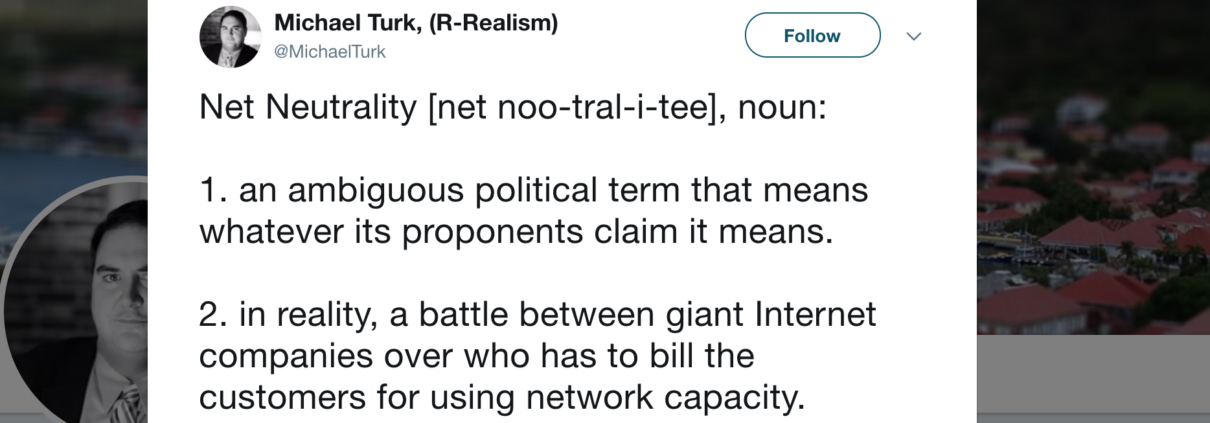
Net Neutrality Tweet

Net Neutrality Hysteria, Political Philanthropy Rising, and a New Bitcoin Order From Chaos?

Here’s What You Need To Know

Last week, the Federal Communications Commission (FCC) released the tentative agenda for its December meeting. This meeting will include the agency’s plan to rollback so-called “net neutrality” rules implemented in 2015, which imposed government regulation of Internet Service Providers (ISPs) like utilities. The announcement has set off a wave of hysteria and misinformation, in a move being described as a “victory” for big telecommunications companies and a damaging loss for consumers and supporters of a “free internet.”

Yet the noise surrounding net neutrality is not supported by the realities of what the FCC is proposing to do. Given that this would be the sixth change regarding this policy over the last ten years, it is appropriate to take a step back from the ledge to evaluate the issue on its merits. Here are the facts you need to navigate this issue:

  • What Is Net Neutrality? The term is generally used to describe “the principle that individuals should be free to access all content and applications equally, regardless of the source, without Internet Service Providers discriminating against specific online services or websites.” However, the current kerfuffle is specifically focused on the 400-page set of rules implemented by the FCC under Chairman Tom Wheeler in 2015 that designated Internet providers as telecommunications utilities under Title II of the Communications Act of 1934 – a “heavy-handed” and clumsy approach to upholding the principle of a free and open internet.
  • Why Eliminate The FCC’s Net Neutrality Rules? In a Wall Street Journal op-ed, FCC Chairman Ajit Pai expressed his desire to see the internet return to the bipartisan framework of the Telecommunications Act of 1996, which called for an internet “unfettered by Federal or State regulation.” In addition, the current regulations have resulted in a 5.6% decrease in broadband network investment – the first time there has ever been a decline outside of a recession. When compounded with the increased cost for smaller ISPs to comply with the rules, as well as the delay of new services on account of uncertainty stemming from them, the unintended consequences of this policy may be harming consumers rather than helping them.
  • The Arguments Cited For Net Neutrality: Proponents of net neutrality are warning that ISPs like Verizon, Charter, Comcast, and others could decide to raise prices, block certain websites, and change the speed that users download certain content. In foreshadowing a doom and gloom scenario, reporters and legislators alike have cited Portugal – where a leading mobile phone provider bundles specific apps together and offers different prices depending on the amount of data used – as an example of what can happen “with no net neutrality,” but Portugal makes a poor example, as Portugal has active net neutrality regulations, as do all countries in the European Union.
  • The Effects Of Rollback On Innovation: A former chief economist at the FCC views deregulation positively, arguing the regulations are anti-competitive and stifle innovation and investment. To illustrate this point, the economist cites AOL’s creation of a mass market for computer networks in the 1990s and the invention of voice-over-internet in the mid-2000s, both innovations that transpired in the aftermath of deregulation.
  • Holding ISPs Accountable: A removal of net neutrality rules will bring things back to how they were prior to 2015. The Justice Department will have the authority to determine if any conduct is uncompetitive, and the Federal Trade Commission (FTC) will again police ISPs and protect consumers. Furthermore, an open, competitive market allows for the public to reward or punish ISPs depending on their actions by choosing who they do business with. Nearly 40% of Americans already have access to more than one broadband provider, and as phone companies expand their fiber options, satellite internet improves, and 4G LTE expands highspeed access to more consumers across the country, that figure will only increase. If an internet provider was a bad actor on net neutrality, it would only increase the incentives for others to compete in that market.
  • So Why Is This Issue So Controversial? Net neutrality has drawn the attention of celebrities, including Cher and actor Mark Ruffalo, who have weighed in on the matter, expressing concern about “less” Americans having internet access and the consolidation of information into “the hands of a few.” Yet Commissioner Pai noted recently that some tech companies are promoting misleading claims about the policy, which benefits them by ensuring they do not have to worry about how much bandwidth their content requires having a financial consequence for them or their consumers. Pai also noted that tech companies themselves are not pure when it comes to a free and open internet, citing recent actions by Twitter against a Republican Congresswoman and other voices the company did not agree with, an issue we raised in August as a potential regulatory issue for tech companies.

A vote to remove the net neutrality regulations will be held on December 14th. Keep these facts in mind when observing the debate over the next few weeks, and remember that despite the heated rhetoric, ending net neutrality is not the end of the world.

News You Can Use

POLITICAL PHILANTHROPY RISING

Philanthropy is booming in America, but some donors may be surprised to discover that their gift is going to political ends. While much has been made of the boon for the anti-Trump economy, traditional foundations and philanthropies are increasingly directing millions of dollars towards combatting the effects of Administration policies, which diverts funding from programs that directly help low-income families such as educational and social service institutions that run soup kitchens and shelters.

Wealthy philanthropists are also transferring millions of dollars to private charities that support political causes, thereby avoiding the need to pay taxes on that money. This represents the dawn of “weaponized philanthropy,” and if philanthropy is politics under a different guise, donors should ensure they know how their money will be used before donating in order to make sure it aligns with their goals.

IF YOU *CAN’T* MAKE IT HERE, WE’LL RAISE TAXES

The New York Times editorial board recently highlighted the proliferation of vacant storefronts in the city, asking whether the online shopping revolution or “greedy” landlords may be to blame. Included in the editorial are two proposed solutions to provide a “lifeline” for imperiled local businesses and their neighborhoods, both of which attempt to tax the city’s way out of this affliction.

One potential cause for the increase in vacant storefronts not mentioned in the editorial may be the $15 minimum wage that began taking effect in 2016 – an idea the Times endorsed. By acknowledging New York City’s increase in vacant storefronts without mentioning or reexamining its support of a $15 minimum wage, which makes it more expensive to operate retail establishments in the city, the Times is failing to provide a full picture of the situation that leads to the right policy prescriptions.

THE LEFT’S ATOMIC DILEMMA

Nuclear power offers cleaner, emission-free energy alternative to fossil fuels, and European countries have used nuclear power as a main component of their energy mix for some time, including up to 76% of France’s electricity generation. Yet in the U.S., where European solutions are often popular on the Left, increasing nuclear power faces ardent opposition from prominent environmental groups and influential Democratic political donors. Axios recently found this influence on full display when one of its reporters got tepid support for nuclear energy from Democratic policymakers attending a United Nations climate conference in Bonn, Germany, even as they look for ready alternatives to fossil fuels.

THE DIGITAL MEDIA BUBBLE

The decline of print media has been well-documented, with people instead visiting websites and news sources that reinforce their worldview – a phenomenon called “filter bubbles.” Yet the struggles facing digital media publications has one editor going so far as to say that there is a “digital media crash” that will result in more companies going out of business because of the lack of a sustainable revenue model.

So what does this mean for consumers and their filter bubbles? We may never know, because although platforms like Facebook and Google capture more advertising revenue than ever before, these companies are making changes to help publishers better monetize their content and potentially stave off this crash.

A NEW BITCOIN ORDER FROM CHAOS?

Over the course of a few days, the value of Bitcoin has shot up and fell down, eventually passing $11,000 per coin this month. That means the cryptocurrency is up more than 1,000% since the beginning of the year, but this growth has been nothing if not extremely volatile. Jeffrey Tucker at the Foundation for Economic Education argues this volatility is the result of Bitcoin’s success, rather than its failure as an alternative to other forms of currency.

Tucker views Bitcoin’s resilience, despite being denounced and scrutinized, as evidence that it is “the product of a dynamic and competitive marketplace,” with the power to disrupt “the systems that have monopolized world finance for the last one-hundred years.” Unless, of course, it is a fatally flawed and speculative currency whose crash will have widespread implications for many beyond just its users before national and international regulators find a way to control it.

Laptop

“Uncovering” Online Reviews, Paradise Leaked, and Activists: Checking In

Here’s What You Need To Know

90% of consumers read online reviews before visiting a business and 67% of consumers are influenced by what they read in those online reviews. But while the majority of people who use these reviews believe they generally give an accurate picture of the product or service, many also agree that it is challenging to tell whether such reviews are truthful or biased.

One reporter’s benign quest for a new mattress resulted in “uncovering” the secret world of online mattress reviews, and even more broadly, illustrated the high-stakes, hard-fought battle for the control of influential and lucrative platforms for influencing what Americans think about various products, services, and more. Because consumers trust review sites, companies – like those in the online mattress industry – have been waging a behind the scenes campaign to influence the reviews of supposedly independent sites, or at least those perceived to be independent by consumers.

So how can you know that the websites you visit, and reviews you read, are legitimate? At Delve, we know how to uncover hidden motives, so just in time for the holiday shopping season, here is our advice for “uncovering” the world of online reviews, so that you can better evaluate the online information you use to make better buying decisions:

  1. Who Is Behind Online Reviews? The reality of online reviews is messy. They can be placed by a hired marketing consultant, a friend of a business, another business as part of a “review-swapping” agreement to leave a fake positive review or a fake review to disparage a competitor, or even a “professional product reviewer” who receives commissions to post reviews on sites like Amazon.com. Thankfully, there are now websites, such as fakespot.com, that verify online reviews by looking for words or phrases commonly used in fake reviews, and whether the reviewer has submitted an unusually high number of positive reviews – which can indicate some sort of financial incentive. Some of these sites also are transparent about receiving compensation, if you scan the fine print of their “About Us” web page.
  2. What Are The Other Financial Implications To Consider? Financial motivations drive the challenges posed by fake online reviews, and there are several ways to monetize this lucrative niche. Review websites may have an affiliate marketing arrangement with vendors, giving the website owner a commission or rebate for every purchase made by a consumer who bought the product or service reviewed. Such arrangements were crucial in helping the online mattress industry quickly grow into a $1.5 billion business. Wirecutter, the popular product review site that was purchased by The New York Times, has used this model to generate between $10 million and $20 million of revenue last year.
  3. What Legal Tactics Are Used To Influence Review Sites? When companies can’t buy off reviewers, some have turned to lawsuits to stifle popular review websites that did not rate their products or services higher than those of competitors. This was the case with various online mattress review websites, eventually leading to the takeover of some of these sites by online mattress companies. Similar to financial arrangements, disclaimers illuminating any conflicts of interest are worth searching out on each site.
  4. Isn’t Government Supposed To Stop Such Practices? There has been some action by regulators. The Federal Trade Commission (FTC) has already settled with a car dealership for deceptive and unfair sales tactics, including fake reviews it planted online. But when it comes to the online mattress industry, where marketing affiliations and incentives may be unclear to consumers, one CEO said, “Honestly, the FTC has to step in at some point and make review sites divulge what they are paid for each bed or brand…This industry is a freight train out of control.” Therefore, using tools and tactics to better evaluating online reviews is the surest way for people to protect their interests.

While businesses are hiring reputation-management firms to help undo damage done by critical reviews and taking a number of other steps, consumers need to understand the motivations and incentives driving the various stakeholders in the lucrative world of online reviews. Use the above analysis as a guide for evaluating online reviews this holiday season, and you will be an educated consumer who can discern an information advantage from the online reviews you see – negative, positive, and everything in between. Happy holiday shopping!

News You Can Use

PRESSURE FOR TAX REFORM…FROM EUROPE?

 Republicans in Congress are continuing their push to get a tax reform bill to the President’s desk by the end of the year, and they may be getting pressure to make good on this campaign promise from an unexpected place: Europe. The Netherlands and France are both working on tax reform plans that focus on simplicity and lower rates, which is notable given Europe’s high tax burden.

Recent momentum on Capitol Hill suggests Republicans know that their political future depends on being able to make tax reform law. While that may be pressure-enough, should these two European countries implement their tax reform plans – which may help entice businesses looking to leave Britain after Brexit – other businesses and investors around the world may look there for opportunities too, rather than to the world’s biggest economy in the U.S.

PARADISE LEAKED

Who leaked the Paradise Papers? Despite the coverage of the 13.4 million financial documents related to how politicians, celebrities, and high-net-worth individuals use offshore accounts to protect their money from higher taxes, little attention is paid to how this information was obtained and who was behind it. This begs the question, writes Holman Jenkins Jr. of The Wall Street Journal Editorial Board, as to whether the International Consortium of Investigative Journalists may unwittingly be doing the bidding of an intelligence agency.

Just as Wikileaks is viewed as a likely front for Russian intelligence, could that – or a different – intelligence agency have hacked these documents and provided them to ICIJ to embarrass a particular target, or achieve a particular objective? Given the heightened scrutiny surrounding the source and motivations of cyberattacks, Jenkins’ suggestion that only after uncovering who hacked these documents and their motivations can we then make “more intelligent inferences” about the Paradise Papers’ significance may be the most important aspect of the entire investigation.

THE KREMLIN’S NOT-SO-SUCCESSFUL FACEBOOK CAMPAIGN

Longtime political digital media strategist Patrick Ruffini has run digital campaigns in numerous U.S. states as well as other countries, and when it comes to the Kremlin’s Facebook influence campaign, he’s not impressed. Rather than a “catastrophic success,” Ruffini uses his past experience to argue that the Kremlin’s Facebook campaign was less-successful than portrayed. The Kremlin spent $100,000 in advertising on Facebook, reaching as many as 126 million Americans.

Yet, this is a tiny fraction of the 33 trillion posts Americans viewed on the social media platform between 2015 and 2017 – and for context, the Trump and Clinton campaigns spent $81 million to mobilize their respected supporters on the platform. Ruffini cautions against letting the relatively small number of poorly-targeted ads placed by the Kremlin, which were designed to enable extremist voices on the political fringes rather than target persuadable independent voters, push through legislative initiatives that could curtail free speech – a position he shares with a longtime Democratic consultant.

GREEN DOOM AND UNANTICIPATED INNOVATIONS 

Whether it was the prediction that 20th century London “will be buried under 9 feet of manure,” or that the United States’ abandonment of the Paris Climate Agreement is a “disaster,” governments and supposed experts predicting doom and gloom environmental scenarios is a constant. However, due to unanticipated innovations in the free market, we have largely avoided the negative fates often predicted. Twenty-five years after the prediction of a street buried under feet of manure, the combustible engine, and the advent of the affordable, personal automobile made the horse – and the waste that exposed 19th century residents to biohazards and lethal diseases – irrelevant as a transportation source.

Indeed, despite the criticism leveled against its on-again, off-again climate policies, the U.S. has actually reduced carbon emissions more than any other country on earth over the last 16 years, an amount four times greater than the country with the second largest reduction and equal to the reductions of the next eight countries combined. With any new predictions from governments and experts come proposed solutions, but the facts suggest that the free market and a level playing field have been making both a moot point.

ACTIVISTS: CHECKING IN

The Eaton Hotel in Washington, D.C. is opening in 2018 and it will be the first in a chain of hotels to cater to activist and activist-minded travelers. Owned by the same parent company as the Langham Hospitality group, rooms for the 4-star property will go for between $250 and $300 a night. But are there any ideological constraints on who can stay at the Eaton? Not necessarily, although the founder and president believes that the property is for those with generally more “progressive” values, and that the clientele will be “self-selecting.”

To cater to this clientele, the hotel will have featured events and speakers – on topics ranging from climate change to race relations, several activist-artists in residence, a cinema that screens films about social good and human rights, a coworking space, a wellness center dedicated to “new age health,” and other services tailored to this “shared social mission.” In an era of greater ideological divides than ever before, it remains to be seen whether a hotel that segregates by ideology proves as alluring a “shared social mission” as one that appeals to engaged activists on both sides of the ideological spectrum to come together to find consensus.

Curtain

Pulling up the Curtain on the Political Hanger-on, Zero Stars From Yelp, and a “Confirmation Bias Tour”

Here’s What You Need To Know

Last week, it was announced that former Trump presidential campaign foreign policy advisor George Papadopoulos plead guilty to lying to federal agents about his contacts with Russians connected to the Kremlin. After this revelation, the President took to Twitter to refer to Papadopoulos as a “young, low level volunteer named George,” the White House Press Secretary called him a “volunteer” with an “extremely limited” role, and a former campaign advisor said that Papadopoulos was “the coffee boy.”

All of this begs the question as to how the 30-year-old was able to represent the Trump campaign on occasions such as a panel at the 2016 Republican National Convention and in an interview to Russia’s Interfax News Agency, if he was indeed just “the coffee boy.”

The investigations into Russian-meddling in the 2016 election continue, but the Papadopoulos episode – that of a young, relatively-unknown person who was an unpaid advisor on another presidential campaign before joining the Trump campaign – bears some resemblance to that of a classic political hanger-on, who seeks an advantage by associating with a political campaign. With people looking to capitalize on their experience or access gained through campaigns, we want to pull up the curtain on political hangers-on, so that you can better recognize and assess the claims made by individuals, consultants, and firms that approach you:

  • What Makes A Political Hanger-On?  Someone who attaches to a political campaign for personal gain, like currying favor for a future job or appointment, using it as a springboard to elected office, or monetizing “access” to policymakers. Affiliating with a campaign, even as an unpaid volunteer or in helping with fundraising, is a way to burnish one’s resume and credentials. And should the campaign win, it can lead to lucrative new opportunities.
  • Why Do Campaigns Let This Happen? Showing broad support is crucial in a campaign, particularly when trying to show policy depth and expertise. Unpaid policy advisors – particularly on presidential campaigns – are often quite influential, with direct access to the candidate and may help craft policy platforms, speeches, and talking points. However, given the large number of candidates in the Republican primary, and Trump’s nontraditional background, he was unable to get the most experienced unpaid advisors during the campaign. This can lead to a cascade effect, where more inexperienced people fill the orbit around a campaign.
  • What Are The Risks They Pose? Perception is reality in politics – and your business. When a person affiliated with an organization behaves badly or uses poor judgment, it hurts the entire organization. Papadopoulos is an example of this, whose announced plea agreement took the spotlight off of the Republicans’ tax reform rollout and led to the President personally pushing back on the questions raised by the indictments.
  • What Can You Do To Protect Your Interests? You need to know who you are dealing with when approached by individuals making claims of access or experience related to political campaigns. If not properly vetted, companies that associate with them may put themselves at political and reputational risks from any distractions or embarrassments that their poor judgment can cause. When we are vetting an individual’s professional biographical claims for a client, here are some of the methods we use:
    (1) check the campaign’s disclosure reports with the Federal Election Commission to see if the individual was paid by the campaign, or at least getting expense reimbursements;
    (2) pull the campaign’s press releases to see whether the individual’s affiliation with the campaign was announced in its own press release, or was only one name among other advisors in one long press release, or not announced at all;
    (3) review news reports and social media to see if the person was a repeat surrogate on TV/radio, or quoted in press releases by the campaign on their topics of expertise;
    (4) analyze the individual’s social media connections and interactions between their accounts and those of known campaign leaders.

Going into any election season, a surge of new faces and volunteers will affiliate with political campaigns at every level. After election night, these individuals go onto other opportunities. When people approach your company with claims of access and experience from political companies, trust but verify their claims – and don’t be caught unprepared down the road when political and reputational damages cost more to mitigate.

News You Can Use

ZERO STARS FROM YELP

As top lawyers for Google, Facebook, and Twitter went to Capitol Hill last week to testify in front of the Senate Intelligence Committee, another tech company decided to wade into the debate by calling for Congress to take action against what it deems to be the “anticompetitive practices” of Big Tech. Yelp, the Phoenix-based online review company, suggests that the internet has become less diverse and more centralized with more power concentrated in a few dominant companies, thereby making those companies, and their users, easy targets for bad actors.

Two tech companies accounted for 99% of every new dollar spent in online advertising last year, and one of those companies also has a 97% market share of all smartphone and tablet search engine traffic. With Big Tech facing continued reputational challenges, tech companies with less market dominance may become more active in pushing for increased regulation as a way to soften their competitors’ market position. In the case of Yelp, though, this attempt to redirect criticism away from themselves toward their competitors might back fire, since the same scrutiny has been applied to them.

A “CONFIRMATION BIAS” TOUR

In the wake of defeats and challenges, politicians, corporate executives, and political organizations often embark on “listening tours” to connect with targeted constituencies. Third Way, a center-left think tank, embarked on one such post-election listening tour across the country to hear from voters and provide Democrats a “path out of the wilderness.” The think tank, which argues for a pragmatic, moderate, and centrist Democratic platform over that of a decidedly left-wing platform as a means to achieve electoral success, visited with targeted voters in rural and working class cities and thought they would encounter voters who listen to each other and find more that unites them than divides them.

But they were disturbed to find some voters on a visit to Wisconsin who were negative about the future, bitterly divided on ideological issues, and of the view that “centrist ideals just perpetuate a broken system.” When they released their report on this visit, however, it glossed over these findings, making no mention of these sentiments and instead noting that the people in the town have “gotten away from partisanship,” and are putting their “differences aside to work together.” In largely reinforcing what their organization already believes, it appears that the $20 million “New Blue” campaign was less of a “listening tour,” and more of a “confirmation bias” tour.

A RISING TIDE LIFTS THE POOREST 

At the same time the American middle class is struggling and disruption is being caused by globalization, the speed of people being lifted out of poverty around the world is historically unprecedented. Over the last 25 years, more than 1.25 billion people escaped extreme poverty, and the more than 40% of people who still live in extreme poverty reside in just two countries: India and Nigeria.

Economic liberalization reforms in these countries have meant that incomes have increased and the poverty rates have declined, despite remaining too high. However, as a means to explain this miraculous drop in extreme poverty, political leaders and academics alike suggest free-market capitalism as the tide that has lifted the world’s poorest people out of poverty faster than anyone else.

EXPLORING, NOT REPORTING 

When is a political candidate not really a political candidate? When they are “exploring” a run. While exploratory committees have been a common practice among presidential candidates for some time, now potential candidates in down-ballot races are increasingly using this practice. By setting up an exploratory committee rather than announcing their candidacy outright, candidates are able to raise and spend funds to “test the waters” without having to report these finances to the Federal Election Commission (FEC) unless and until the close of the reporting period after they officially declare their candidacy.

The FEC requires anyone who has decided to run for office or is actively campaigning to register with them as soon as the campaign raises $5,000. Yet, candidates who avoid this requirement by setting up an exploratory committee are testing the limits of the legal definitions of a candidate while doing so. The recent increase in this practice could make it more difficult to assess the fundraising, spending, and strength of political campaigns in the future.

CNN REALLY IS FAKE NEWS

It was a rough day at the office for CNN. With the President in the midst of his trip to Asia, CNN falsely reported that the President irresponsibly dropped a whole box of fish food into Japanese Prime Minister Shinzo Abe’s koi pond – which, besides being trivial, was based on an edited video clip that did not provide the full context of the event.

If not enough, later that day CNN ran a story which took a portion of the President’s speech to a group of Japanese business leaders out of context, choosing instead to run a snarky headline that provided a misleading and incomplete picture of what he said. The “fake news” phenomenon does exist, and it does provide real political and reputational challenges. Unfortunately, sloppy reporting that is loose with the facts only feeds into the counter narrative assailing parts of the media as “fake news.”

The Facts on Tax Reform, Till Kingdom Come, and Grassy “Know-it-All”

Here’s What You Need To Know

Yesterday, House Republicans unveiled the detailed draft of their long-awaited tax reform legislation, which will be marked up by the House Ways and Means Committee on Monday. Even before it was released, Republican efforts on tax reform have been slammed by Democrats as a “middle-class con job,” “a cruel joke,” and kicking “working families to the curb.” This oppositional messaging will only grow louder as Democrats try to scuttle the bill from passing Congress and reaching the President’s desk.

As The Washington Post noted yesterday, “In their haste to condemn the GOP tax plan, Democrats have spread far and wide the false claim that families making less than $86,100 on average will face a hefty tax hike. Actually, it’s the opposite. Most families in that income range would get a tax cut.” To help clear your confusion as the tax reform battle heats up, here are the facts on what it means for Americans’ bottom line:

  • It’s The Brackets, Stupid: Republicans are reducing the number of tax brackets from seven to four – 12%, 25%, 35%, and 39.6% – and moving most Americans into a smaller bracket than they are in now. Nearly 80% of households will be in the 12% bracket or pay no income taxes. Yet many are concerned they will pay more because the headlines are focused on which deductions are being eliminated or capped. That’s the wrong focus. The plan works because it broadens the tax base by removing or curtailing deductions and taxing that larger tax base at a lower rate. So the focus shouldn’t be on what is happening to which deductions, but at what new (and in most cases lower) rate Americans will be taxed.
  • The Standard Deduction: Overall, the bill raises the standard individual deduction to $12,000 from the current rate of $6,350, and the standard deduction for a married couple to $24,000, from $12,700. However, in the spirit of simplification, the new system will eliminate the personal exemption, so it is not quite the near-doubling that it seems at first. Still, taxpayers will get a larger standard deduction than they have now and more taxpayers will opt for this easier filing mechanism that will reduce the more than $20 billion and 1.35 billion hours it already costs Americans to file their taxes. In addition, the child tax credit will increase from $1,000 to $1,600 per child up to 14 years of age, and add a $300 credit for each parent and, for the first time, include a $300 credit for non-child dependents as well. The income level at which the child tax credit is phased out will also nearly double.
  • The Mortgage Interest Deduction: After initially backing the tax reform framework that said the GOP plan “retains tax incentives for home mortgage interest,” homebuilders shifted, becoming some of the plan’s staunchest opponents over worries about the potential negative impact that dis-incentivizing homeownership could have on their bottom line. Since the homebuilders dropped their support of the framework, the newly released draft bill reduces the level of loans for which interest can be deducted from $1 million to $500,000 on new loans, meaning current homeowners would still retain their current deduction. Given the median new home price in the U.S. is currently around $320,000, this reduced cap will only impact buyers in expensive housing markets or at the high-end of the real estate market.
  • The State and Local Taxes (SALT) Deduction: This itemized deduction allows taxpayers to deduct state/local property taxes and either state income or sales taxes, but it generally benefits wealthy residents of high-tax states – and blue-state politicians who can raise taxes and have the federal government soften the blow to their constituents’ wallets. Last-minute legislative maneuvering is satisfying some concerns on this issue, allowing a deduction for property taxes to remain in place, with a cap of $10,000. However, according to analysis by ATTOM Data Solutions, the average American household’s property tax bill is $3,296, and “there were nine counties in the country with a population of at least 100,000 that had average annual property taxes of more than $10,000,” meaning most households will not be affected by the proposed cap.
  • Surely Someone Pays More? No tax reform will work for every single household, and some will end up with higher tax bills under this plan. Those earning between $260,000 and $425,000 are most vulnerable at first blush, given the small upward shift in their tax bracket. However, removing the alternative minimum tax, increasing and expanding the child tax credit, and lower rates on the first $260,000 of their earnings should protect many of those high-earning households.

The stakes are high given Republicans’ failure to repeal Obamacare, and Democrats are hoping to convince Americans they’re going to pay more so the rich and big corporations can pay less. The above facts will help you understand that their rhetoric does not quite match the reality.

News You Can Use

INSUFFICIENCY OF THE PLAINTIFFS’ BAR

The United States is the most litigious society in the world, thanks in part to lawsuits driven by plaintiff attorneys looking for the next class action settlement worth billions of dollars. But after a California judge tossed out a $417 million jury award against Johnson & Johnson, it is clear that talcum powder is not going to be that next settlement – due to what the judge called “insufficiency of the evidence.”

Johnson & Johnson appealed the original verdict in the case, where a woman with advanced ovarian cancer, and who used Johnson & Johnson’s talcum powder for years, brought a suit against the company claiming that the product’s main ingredient, talc, caused her illness. A new judge looked at the facts of the plaintiff lawyers’ evidence and found it did not withstand scrutiny, however, because no causal link exists between talc and an increased risk of ovarian cancer, among other flimsy assertions propagated by the plaintiff lawyers. In failing to bring a case to court that was built on a solid foundation of facts, the plaintiff attorneys spent time, money, and energy on a strategy that was ultimately not built for success.

TILL KINGDOM COME? 

Speaking at the Future Investment Initiative conference in Riyadh last month, Saudi Crown Prince Mohammad bin Salman announced that the Kingdom will return to moderate, open Islam and will do more to tackle extremism. Prior to the conference, the 32-year-old Prince bin Salman has been talking in private about the need to moderate for some time, and under his rule the country has seen sweeping domestic changes that have brought back public concerts and will allow women to drive beginning in June 2018.

Prince bin Salman’s Vision 2030 plan charts a more modern course for the Kingdom, including economic and social reforms, reducing reliance on oil revenues, and creating jobs for its younger population. His remarks at the Future Investment Initiative conference are the latest indication that he has ambitious plans for the future of the Kingdom, but with challenges posed by an influential and ultraconservative segment of the population, as well as continued human rights violations, it remains to be seen whether the Kingdom’s modernization drive will achieve the results he seeks.

KILLING ECONOMIC THEORIES OF POPULISM

The populist wave sweeping the globe is often-linked to economic factors like inequality, joblessness, and free markets. Economist Tyler Cowen takes issue with these theories, proclaiming them “dead” in his examination of the economic growth rate of countries where populist leaders have made recent gains. Citing countries like the Czech Republic, Poland, and Ethiopia, Cowen finds that countries with populist-style rulers are experiencing above-average economic growth, contrary to the notion that economically-disadvantaged voters are embracing populism because they have fallen on tough financial times.

This is even the case in the U.S., where Cowen notes that Trump supporters in the Republican primary had a median income of $72,000 – “which is hardly poverty,” he notes. To explain the rise in populism, therefore, Cowen suggests viewing this phenomenon through a cultural, rather than economic, lens as citizens worry about immigration, trade, and demographic and social change in their respective countries.

RATING CITIZENS  

We rate restaurants, rideshares, and movies – but how about each other? In China, it is already happening. Ant Financial, an Alibaba-affiliated company that also runs a popular third-party payment app, generates a “Sesame Credit” score by evaluating online and offline data like one’s job, spending, saving, and friends who use Sesame Credit, to determine how trustworthy someone is. Scores fall between a range of 350-950, and users with higher scores gain privileges unavailable to those with a lower score – such as renting a car without a deposit or expediting airport security.

This private system foreshadows the Chinese government’s plan to launch a social credit system in 2020 to determine the trustworthiness of all of its 1.3 billion residents. While this system would help China overcome the fact that many of its citizens lack a traditional credit history, the policy implications that arise from a national database that rates citizens – and rewards or penalizes them based on their rating – are immense, especially when the algorithm evaluates one’s political ideology.

GRASSY “KNOW-IT-ALL”

The library at the National Archives released approximately 3,100 never-before-seen files from the Federal Bureau of Investigation, Central Intelligence Agency, and other agencies related to the 1963 assassination of President Kennedy, as well as the full text of more than 30,000 other files previously released in part. This is because of a 1992 law passed by Congress that requires all records related to the assassination be released no later than 25 years later – October 26, 2017 – unless the President certifies a continued delay due to national security concerns.

President Kennedy’s assassination was a pivotal event in history “when everything seemed to change,” and historians, researchers, and students of history alike who have waited for years to see these files face a daunting trove of documents. Here at Delve we know that digging into public records is not for the faint of heart, given all of the redactions, coded language, and technical jargon. That is why we think you may find former New York Times reporter and author Philip Shenon’s suggestions helpful on how to make better sense of the newly-released JFK assassination files.

EPA Building

Ending Sue and Settle, Taxation Without Legislation, and Dividers Gonna Divide?

Here’s What You Need To Know

Last week, Environmental Protection Agency (EPA) Administrator Scott Pruitt issued a directive to end so-called “sue and settle” practices within the agency. Hailed by business interests and conservatives as a “victory for democratic consent over legal extortion,” and lamented by environmental activists, this move will have a profound impact on energy and environmental policy battles well into the future.

So what is “sue and settle,” and how will Pruitt’s move to limit the practice change the strategies and tactics of environmental activists going forward?

  • What Is Sue And Settle? Special interest groups use this strategy to file lawsuits in order to force federal executive agencies to adopt regulations that advance their interests and priorities. Rather than go to court, the groups reach a settlement with the agency that furthers their interests. In doing so, sue and settle circumvents the regulatory process set by Congress, avoids the transparency that comes with legislating, and allows for changes that otherwise would not be implemented to be enacted on a quicker timetable. Between 2009 and 2012, the Obama Administration’s EPA chose not to defend itself in at least 60 lawsuits brought against it by special interest advocacy groups, resulting in settlements that created 100 new regulations – including the Clean Power Plan – that are estimated to cost tens of millions, and even billions, of dollars in compliance costs.
  • So What About The Money? In addition to policy incentives, sue and settle also provides a major profit incentive for special interest groups. A 2011 Government Accountability Office report stated that millions of dollars were awarded to environmental organizations for litigation against the EPA between 1995 and 2010, including Earthjustice, Sierra Club, and the Natural Resources Defense Council. The practice is not uncommon among different interest groups, targeting different agencies. For example, the nonprofit Center for Food Safety, which files lawsuits over genetically-modified foods and farming practices, received more than half of its 2012 revenue from legal fees collected through successful litigation. The settling agency also covers attorneys’ fees for the groups, millions of dollars in the case of the Center for Food Safety. This is because the groups are considered to be the “prevailing party” in a settlement with an agency.
  • How Is The EPA Limiting This Practice? Administrator Pruitt’s directive limits sue and settle in several ways. To increase transparency and accountability, the agency is now required to make public any notices received from groups that intend to sue it; any complaints or petitions received about an environmental law, rule, or regulation it oversees which is before the courts; and provide time to receive and consider public comment on pending settlement agreements. Notably, the directive also calls for the EPA to publish attorneys’ fees and no longer automatically pays them when the Agency settles out of court. This will immediately save taxpayer dollars while simultaneously increase the cost for special interest groups to sue.
  • How Will Green Activists Respond? Environmental groups, like the Sierra Club, have already made it clear they will not be deterred from challenging the EPA in court. They are digging in for “trench warfare” in which they are anticipating lawsuits aimed at “making the EPA enforce its own rules and abide by agreed-upon timelines.” Green activists will also likely continue to pressure regulators and legislators in the court of public opinion to further their policy goals by using sympathetic groups to promote their message.
  • What Are The Next Steps For Policymakers? Other cabinet officials may do well to follow Pruitt’s example and limit sue and settle practices in their respective agencies. In addition, legislators in both the House of Representatives and Senate have pushed for curbing sue and settle for some time. With Pruitt’s directive issued, the burden is now on Congress to write legislation that prevents a future Administrator, in a future Administration, from easily reviving this practice.

Curbing sue and settle at the EPA may be a win for transparent government and the judicious use of taxpayer dollars, but this victory is far from permanent. What’s more, environmental groups are already adapting their tactics to compete in policy debates going forward. However, it remains to be seen whether these adapted tactics will be enough to compensate for the ending of sue and settle, which has previously provided major sources of revenue and policy advancements in the past.

News You Can Use

THE ROAD TO UNINTENDED CONSEQUENCES

Sometimes well-intentioned government proposals miss the mark, creating perilous public affairs challenges for groups concerned about the unintended consequences of these proposals. That appears to be the case with the Stop Enabling Sex Traffickers Act (SESTA), which would hold website operators accountable for enabling sex trafficking. In order to deter sex trafficking, SESTA would make online services liable for the illegal content, like sex trafficking, that they monetize through ad revenue.

While agreeing on the need to fight sex trafficking, tech companies oppose SESTA because they believe that if implemented, the legislation’s sweeping provisions would lead to steps that would constrict and fundamentally alter the free flow of information that is the foundation of the internet. This conundrum highlights that even reasonable concerns about the unintended consequences of well-intentioned legislation can be difficult to raise in the face of an emotionally-charged and important issue like this one.

TAXATION WITHOUT LEGISLATION

The Canada Revenue Agency (CRA) caused widespread confusion after announcing that it is changing the way it interprets existing law regarding employee discounts. The guidance, which now classifies some perks like employee discounts at retail stores to be taxable income, will have a disproportionate impact on low-wage earners, who rely on such discounts as a supplementary benefit to their taxable hourly wage. Employers will also face an additional administrative burden to track discounted items sold to employees.

Public resistance from employees, employers, and others has led to members of the elected Liberal government blaming CRA bureaucrats and calls for the plan to be scrapped. With governments looking for new ways to raise revenues, and more often than not facing resistance from the public to pay more, such changes to taxation without legislation through reinterpreted rules and practices may continue to be a trend.

THE FINTECH FIGHT OVER YOUR DATA

Consumers who use financial apps like Mint, Expensify, and Venmo to control their spending and saving habits are finding themselves in the middle of a struggle between their apps and their banks. Traditional banks are uncomfortable with allowing financial apps to access consumer financial data, preferring instead to reach specific agreements with the apps on what information can be shared, or outright refusing to provide access at all – resulting in customer complaints.

Data has become the world’s most valuable resource, and financial apps provide services for users and in some cases monetize their data by selling it to third parties, a practice also sometimes utilized by banks themselves. With uncertainty surrounding the Dodd-Frank financial reform law, which includes provisions that outline the sharing of consumer financial data, and Republican hostility to the Consumer Financial Protection Bureau (CFPB), which is appointed by Congress to make rules on these issues, it remains to be seen how long it will take for policymakers to provide clarity to the various factions involved in this uniquely 21st century issue.

DIVIDERS GONNA DIVIDE?

Are Americans divided for the sake of being divided? The answer appears to be yes. The partisan divide between Democrats and Republicans has grown wider on a variety of issues over the last two decades, suggesting that party affiliation is the main driver of policy positions. This partisan lens is further illustrated by the fact that millennials overwhelmingly supported a tax plan they were told was a proposal from Sen. Bernie Sanders, and were less enthused when learning that the features were actually part of President Trump’s plan.

George Washington warned against partisanship in his Farewell Address in 1796, and lamented that factionalism could have negative impacts on the republic. In an effort to bridge today’s hyper-partisanship, remedies that take steps to this end have included re-examining extreme party loyalties, exploring outside of one’s ideological comfort zone, and “making politics boring again” by returning it to a politics about government policy.

WETHINK TO WECODE IN A WEEK

In last week’s TL;DR, we noted WeWork’s partnership with the Aspen Institute to study the future of work and cities as an innovative avenue to influence future policies on labor issues. Since then, the $20 billion coworking startup made a splash almost immediately through its acquisition of the Flatiron School, a coding academy and programming school.

Flatiron’s coding academy delivers a 15-week, $15,000 vocational education that is oriented to deliver “fulfilling careers in today’s tech-oriented world.” This acquisition, which will bring Flatiron courses to its employees and members, suggests that WeWork is betting that the future of work includes innovative high-skill programs that can disrupt the traditional four-year college degree path.

Three Keys To Narrative Building, Not Soda Fast, And Online Dating: Swipe Right?

Here’s What You Need To Know

From the courtroom to the boardroom to the campaign trail, a compelling story is an essential part of achieving a desired outcome. The same holds true in public affairs challenges that bring with them political, financial, and reputational risks. It is not enough to just have the facts; the facts need to be presented in a clear, compelling way that resonates with your target audience.

Crafting a compelling story, or narrative building, is more important than ever given today’s fast-moving and uncertain Attention Economy. The way to withstand scrutiny, and influence public opinion, is to build your public affairs campaign on a foundation of facts that provide an understanding of the threats and opportunities confronting you, whether they are competing industries or companies, activist group protests, political opponents, or others.

In order to gain a competitive advantage, here are Delve’s three keys to effective narrative building that will help you be ready if and when you face a public affairs challenge in the court of public opinion:

  1. Gather The Facts: Facts are the foundation of any compelling narrative. Due diligence when gathering your facts means that you start your research knowing what you know and don’t know, identify good sources, follow any new leads that arise in the process of gathering your facts, and use any new information that comes to light to shift your analysis. By presenting a factual case, any public affairs challenge, from countering a historical misconception to arguing even the trickiest hot button issue, becomes manageable.
  2. Ask The Right Questions: What are the patterns of behavior? What themes are emerging? What are the similarities and differences between words, actions, and associations? What are the myths vs. the facts? Does research confirm or disprove “conventional wisdom”? Good questions begin to fill out the picture of the story you are trying to tell. In analyzing the results of good questions, one can make connections between data from different sources, seek confirmation of existing analysis, anticipate conflicting information, and ultimately build a narrative that stands out.
  3. Build A Fact Pattern: Competitive intelligence, great analysis, and facts and figures alone are worthless if nothing is clear to the target audience. A fact pattern is a way of presenting information analysis in a clear and concise story that can be easily understood without any special knowledge. When it comes to the facts, guard against the curse of knowledge and ensure they are presented in a linear and easy to follow manner.

When done properly, narrative building informs your strategy during a public affairs challenge and allows you to change direction if necessary. Use these three keys to anticipate and prepare for whatever comes next, and transform your drumbeat messaging based off of well-researched and well-written narratives into concrete victories.

News You Can Use

NOT SODA FAST

Advocates of soda taxes often frame them as a tactic to halt obesity and improve public health, but the uproar and subsequent repeal of the tax on sweetened beverages after only two months in effect in Cook County, Illinois – which includes Chicago – suggests that there is more to the matter. The controversial measure, which put a one-cent tax per fluid ounce on every sweetened beverage sold, including sports drinks and artificially-sweetened diet sodas, had a rocky start since it went into effect.

The soda tax confused the public, ran afoul of existing state laws, and caused the U.S. Department of Agriculture to threaten to withhold millions of dollars for the State of Illinois because local governments cannot tax food stamp purchases, including sodas. Initially, Cook County tried exempting sweetened beverages purchased with food stamps, but that left them in the position of taxing diet sodas while allowing lower income families to buy sugary sodas tax free. This hypocrisy exposed the reality that the soda tax is merely another tax on middle- and working- class citizens under the guise of public health.

WETHINK

WeWork, the $20 billion startup that began with coworking spaces and then branched out to living space and fitness centers, is now making a move into the realm of public policy. The company recently announced a partnership with the Aspen Institute to create a series of studies on the future of work and cities.

WeWork and other similar coworking spaces have revolutionized how people live and work in cities around the world, and the data collected and analyzed from its workspaces everyday will provide key insight into how work is done in the 21st century. This partnership also provides WeWork an innovative avenue to influence future policies on these labor issues, which may inspire other companies to follow suit.

ONLINE DATING: SWIPE RIGHT?

It was not long ago that the rise of online dating websites and apps were being blamed for undermining serious relationships and destroying the art of courtship. However, new data has emerged that presents the first evidence of how online dating has affected society – and it suggests a different narrative altogether.

Since the introduction of the first dating websites in 1995, researchers discovered that the increasing popularity of online dating has correlated with a rise in interracial marriages and that married couples who meet online have lower rates of marital breakup than those who meet traditionally. While not causation, this correlation provides a basis for further study on the matter, and in particular, how traditional social patterns where people meet partners through their connections differ from new social links created when complete strangers become partners using online dating platforms.

VETOING FREE SPEECH?

Are efforts to pacify college campuses and satisfy critics undermining free speech? After one university implemented a hecklers’ “veto” over events that present an “undue risk” to the campus, further actions limiting free speech seem to be appearing elsewhere throughout academia. The latest example is an academic journal’s decision to withdraw an article because of “serious and credible threats of personal violence” caused by people who disagree with it, despite the fact that the study the article was based on went through the appropriate academic scrutiny before publication. With protests on college campuses surrounding free speech escalating, policies used in academia to mitigate controversy leave some to wonder whether they are helping to de-escalate the situation or are instead contributing to it.

RATING FINANCIAL CRIME VULNERABILITY

A bank based in Malta became the first financial institution to receive a rating to determine its vulnerability to financial crime risk. Sigma Ratings’ mission is to “support global business and banking growth by enhancing transparency and standardizing metrics for good corporate behavior,” and their independent rating is derived from an algorithm that places a financial institution on a scale from one to ten, with the upper number demonstrating a positive outlook regarding risk.

Rated companies can utilize their rating as a competitive advantage to position themselves as a market leader and standard-bearer on compliance issues related to money laundering, terror financing, sanctioned entities, and other national and multinational requirements aimed at staunching the flow of money for illicit dealings. In addition, this development points to a new tool for financial institutions, business partners, consumers, and regulators alike to find out what they don’t know when it comes to financial crime vulnerability.

Iran Deal Or No Deal, A Not So Charitable Donation, And Is Free Trade Too Hard?

Here’s What You Need To Know

In his remarks to the U.N. General Assembly last month, President Trump harshly criticized the Iran nuclear deal as an “embarrassment” and “one of the worst and most one-sided transactions the United States has ever entered into.” Yet despite his seemingly clear opposition to it, President Trump has twice certified the Iran nuclear deal since taking office, and faces another upcoming certification deadline this week. So, what is the deal?

There are a number of moving parts on this key issue, contrary to the simplistic rhetoric used on the campaign trail during the Republican presidential primary, and President Trump is expected to announce his Administration’s policy toward Iran soon. Therefore, with some help from certified Friend of Delve and Iran deal warrior-scholar Omri Ceren, here are some facts to help you navigate the developments as they unfold in real-time:

  • What Is The Joint Comprehensive Plan Of Action (JCPOA)? This is the official name of the agreement that was negotiated between Iran and the Obama Administration, the U.K., France, Russia, China, and Germany in 2015, which is intended to stop Iran from acquiring nuclear weapons. In exchange for placing limits on its nuclear program, Iran received relief from oil and financial sanctions, including roughly $100 billion in previously frozen assets. Crafted explicitly to get around Congressional opposition, the JCPOA was also submitted by the Obama Administration to the U.N. Security Council for approval before Congress had the chance to even review the controversial agreement, which irked legislators from both parties.
  • Why Is The President Required To Certify Compliance Every 90 Days? Due to these concerns about the JCPOA and the way it was implemented, Congress passed the Iran Nuclear Agreement Review Act of 2015 (INARA) as a way to reassert themselves in the process. Among other provisions, this law requires the President to certify to Congress that Iran remains in compliance with the JCPOA every 90 days.
  • Why Did President Trump Certify The Iran Deal Twice Already? He did so “reluctantly,” giving his Administration more time to determine the way forward on this issue. The Administration is also currently undertaking a six-month comprehensive Iran policy review, which is expected to be completed by an October 31st deadline.
  • What Happens If The President Doesn’t Certify Compliance This Time? The JCPOA does not immediately become null and void. Instead, Congress will have 60 days to decide whether to reapply sanctions against Iran. If Congress does reapply sanctions, this move would violate the terms of the JCPOA, although the exact consequences in this scenario are unknown beyond speculation.
  • Does Iran Appear To Be In Compliance With The Deal? While proponents of the deal note that the deal “relies on verification,” the International Atomic Energy Agency (IAEA), which oversees this verification, does not have access to certain Iranian military sites. In addition, Iran attempted to buy illegal nuclear technology 32 times since the deal was implemented. However, the Chief of the IAEA says that Iran is upholding its compliance, despite having never fully certified this claim.
  • Where Do The Key Players Stand? President Trump has accused Iran of violating the “spirit” of the deal, and is expected to announce that he will not certify compliance – a move supported by U.S. Ambassador to the U.N. Nikki Haley and national security hawks in Congress like Senator Tom Cotton (AR). In addition, European allies who helped negotiate the deal will likely, if begrudgingly, end up going along with the U.S. should it reapply sanctions. However, Secretary of State Tillerson and Defense Secretary Mattis support remaining in the deal while working to improve aspects of it, and Iran has said it could walk away from the deal if the U.S. does not uphold its commitments.

Given the space between what the President and some of his advisors are saying, the way forward may ultimately be more symbolic rather than substantial by putting the onus on Congress to act or not act on the deal’s future.

News You Can Use

YOU’VE BEEN FOIA’D

College students in Virginia are about to hear a lot more about the state’s upcoming off-year elections than they expected. While they are likely familiar with organizers coming to campus to register voters, they may be surprised to learn that a left-leaning environmental group is about to invade a lot more of their safe space. Through Freedom of Information Act (FOIA) requests to every state-supported college and university in Virginia, progressive political group NextGen Virginia received the public, personal information of around 40,000 current students at Virginia Tech, Radford University, and 16 other schools.

NextGen Virginia, which is part of billionaire environmentalist Tom Steyer’s political organization, requested publicly available student directory information such as names, phone numbers, emails, and addresses in order to help register and turn out millennial voters in November’s off-year election. While some universities concluded they must provide the information under FOIA, others cited it in their refusal to furnish the same. What remains to be seen is whether this tactic will become commonplace during future political campaigns, or if it will generate enough public opposition and legislative action to render it politically untenable.

IS FREE TRADE TOO HARD?

Has support for free trade eroded because trade and logistics are complex? According to Ryan Peterson, yes. Peterson is the CEO of software startup Flexport, which helps eliminate the complexity of global trade and logistics. In lowering the barriers that prevent more people around the world from fully participating in connected commerce, he suggests that millions more can be pulled out of poverty.

But can making trade easier really make it more popular? A survey by the Pew Research Center showed that people hurt financially by free trade agreements oppose them by a ratio of nearly two to one. If Flexport and other such technology initiatives hope to change these attitudes, they will need to make sure the benefits of their innovations reach the people and regions who have been hurt by trade in the past.

A NOT SO CHARITABLE DONATION 

When political donors are caught in scandal, candidates and party committee often donate these tainted contributions to charities to help distance themselves from the controversy. Not surprisingly then, after Democratic megadonor and film producer Harvey Weinstein admitted to sexually harassing women over the past three decades, the Democratic National Committee (DNC) followed this well-worn path. However, their charitable donation was not that charitable, perhaps due to the trouble the committee has had raising money.

The DNC donated just 10% of the $300,000 Weinstein has contributed to it over the years, and gave those funds to left-leaning women’s groups such as EMILY’s List, Emerge America, and Higher Heights that will likely spend the funds in ways that  further the political goals of the liberal grassroots. Despite headlines to the contrary, these facts suggest that the DNC is doing little more than window dressing in confronting its association with the Hollywood mogul.

THE FEARLESS GIRL FALLACY 

In advance of this year’s International Women’s Day in March, a bronze statue of a defiant girl was placed in front of Wall Street’s iconic Charging Bull statue. The statue, entitled Fearless Girl, was commissioned by State Street Global Advisors as part of their push to encourage more women onto corporate boards and was a viral success.

However, with news that the firm’s parent company just paid $5 million to settle allegations it underpays women and minorities, the Fearless Girl campaign looks less like simply putting gender and diversity issues “front and center,” and more like a proactive measure to mitigate the fallout from a federal investigation into their contracting practices. In the end, this story serves as further proof that messaging alone cannot bridge a credibility gap if the facts do not support doing so.

HOW MUCH TO TRUST?

Author Rachel Botsman co-parented her three year old daughter with Amazon’s Alexa Voice Service for a few days and described how her daughter’s “easy embrace of Alexa,” was “slightly amusing but also alarming.” Her daughter’s embrace of Alexa was not unusual, and is endemic of the broader trend of robots increasingly becoming integrated with everyday life.

As companies create new technologies that become central parts of our daily routines, Botsman writes that people are no longer “trusting machines just to do something, but to decide what to do and when to do it.” This shift raises questions about how these technologies will be used and regulated in the future. Companies, policymakers, and the public will need to think through the implications of this new era, and how to create policies for it.