
Where Will the Midterm Wave Break, Forecasting Failure, and It’s Not Me, It’s HQ2
Here’s What You Need To Know
Last week in The Hill, Delve CEO Jeff Berkowitz detailed steps Republican candidates can take to buck the historical trend and survive this year’s midterm elections by focusing on local issues, gaining an information advantage on their own vulnerabilities and those of their opponents, and engaging early and often to succeed on Election Day. But, in looking at these campaigns from the outside, how can you tell if candidates are doing the right things behind the scenes, and know if the wave will break in their favor, or overwhelm them?
- Evidence Of Local Support: Candidates who survive waves focus on their states and districts, spend time building the relationships with neutral organizations, and reap the rewards with volunteers and sustained fundraising. You can tell quickly if campaigns are doing the little things right if their campaign finance reports are filled with donations from constituents, which have been correlated to actual vote totals.
- The Key Cash Advantage Number: As we have written about this cycle’s “wave” potential and in the past, incumbent cash advantages mean a great deal at this point in the election cycle. Primaries can drain money from challengers, especially in the crowded fields we have seen form in many moderate districts. Incumbents should not only be raising money from their constituents, but they also need to be consistently out-raising all of their challengers individually.
- Presidential Approval Ratings, Localized: Despite conventional wisdom assuming otherwise, President Trump is far more popular in swing-districts than he is nationally, and, similar to any president, as his approval rating goes, so goes the district. National Democrats are trying to localize races to mitigate this problem, but crowded primaries favor the most partisan candidates, and Democratic party nominees may end up being locked into a message out of step with the district.
- Candidate Quality Matters: Incumbents can even be protected by fate if the challenging party nominates a weak candidate. As the crowded Democratic primaries start to sort themselves out, there are going to be a few incumbents that would otherwise be in a lot of danger who win re-election because their challenger was not vetted properly for skeletons in their closet, lacks the ability to broaden their message and appeal beyond core Democratic voters, is strategically or politically inept, or lacks the discipline to avoid scandals or missteps when the media spotlight intensifies. Democratic partisans are already buying into the idea that anyone they nominate will win in November (despite some evidence to the contrary), suggesting that the odds of nominating another candidate who is either politically inept or not properly vetted may increase exponentially.
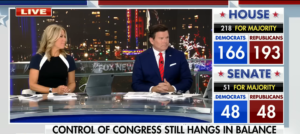
Over the next five and a half months, there is going to be a lot of discussion about whether or not Democrats can ride the midterm wave to a majority in either chamber of Congress. To break through the noise and see which incumbents are actually threatened by a wave, the details of their campaign finance reports, local approval of the President, and the quality of their challengers could tell you more than any pundit.
News You Can Use
IT’S NOT ME, IT’S HQ2
Subscribe to Receive Insights
"*" indicates required fields
After being cut from the list of finalists for Amazon’s second corporate headquarters, known as HQ2, a number of cities have begun making changes based on what they have learned from their unsuccessful bids. For Detroit, that has meant improving the regional transportation network, while in Cincinnati, the city is focused on developing home-grown tech talent; both cities are focusing on particular shortcomings gleaned from postmortem phone calls with Amazon.
As cities evaluate what will make them attractive places for business and provide opportunity in the 21st century, their desire to strive in the face of defeat is admirable. Additionally, after being criticized for presumably choosing the city that only “shows them the money,” Amazon’s constructive feedback on what would attract business and opportunity demonstrates that this competition is about more than just incentives.
I.P.-GO?
Related Posts:

With new rules that were designed to both “act as a magnet for many Chinese companies that otherwise would list in the U.S.,” as well as attract highly-valued U.S. biotech startups, Hong Kong’s stock exchange is hoping to lure companies that would otherwise list their initial public offerings (IPOs) on the New York and Nasdaq stock exchanges.
Yet, despite these revised rules and some companies already showing interest in listing there, Hong Kong’s limited experience in the biotech field – as well as the interest in the exchange from U.S.-based biotech “unicorns” that may see it as an opportunity to maintain their high valuations without being profitable – presents challenges companies and investors should consider before taking the plunge. The volatility of both these factors, as one analyst noted, make the Hong Kong exchange “almost like investing in bitcoin,” suggesting that a deluge of Chinese and U.S. firms choosing Hong Kong over more the established exchanges may be premature.
FORECASTING FAILURE
From 18 spectacularly wrong predictions made at the time of the first Earth Day in 1970 to the futility of energy-technology forecasts dating back to the industrial revolution, Nobel prize-winning physicist Dennis Gabor was onto something when he said that “the future cannot be predicted.” With competing viewpoints regarding energy and the environment commonplace in the media landscape, it can be difficult to make sense of the constant flow of information on all sides of the public policy debate, let alone understand it in the context of insights that inform a company’s or organization’s public affairs strategy.
That is why here at Delve we embrace this uncertainty, operate from a standpoint of “what you don’t know can hurt you,” and provide our clients with an information advantage that they can use to take actions that help them achieve their objectives. Because when you know what you don’t know, you are better prepared to overcome challenges and adapt to the competitive landscape that exists – rather than the one predicted that has yet come to pass.
RX FOR LOWER HEALTH CARE COSTS
Efforts to deregulate the health insurance market in a way that improves choice for consumers will provide welcome relief from high premiums for many in the near-term. However, in a piece published in RealClearHealth, American Enterprise Institute resident fellow James Capretta argues that insurance deregulation in the individual health care market alone is not enough, as the “mishmash of large public subsidies for insurance enrollment, government regulations, and some private activity and incentives” leave lifetime costs, which are already high and expected to rise higher, relatively unchanged.
His policy prescriptions to tackle rising costs focus on creating a “well-functioning marketplace that rewards value, innovation, and efficiency” through “ambitious” legislative proposals. It remains to be seen, though, whether promising developments at the state level to control costs could be replicated by other states, not to mention by a paralyzed and polarized Congress who would need to shepherd an ambitious proposal into law at the national level.